The short answer
Source a cordless vacuum as a complete cleaning system. Identify the head, airflow path, filter, battery and control mode behind every claim, then review behavior under the intended application and maintenance conditions. Use a scenario worksheet to connect accepted evidence with RFQ terms, production identity and reviewed design changes.
Introduction
Buyers sourcing a cordless vacuum should evaluate suction as the behavior of the complete cleaning system under the intended load. The motor, battery, control mode, filter, airflow path and floor tool all influence what happens in use. A maximum pressure figure cannot show whether the offered combination remains useful on the surfaces customers need to clean.
The practical purchasing question is therefore how the appliance balances airflow, brush operation, handling and available electrical power. A configuration that looks strong with an open inlet may behave differently when a powered head contacts carpet or when a filter reaches a defined maintenance condition. Supplier evidence should make those operating conditions visible before the buyer approves specifications.
This guide focuses on whole-system selection and RFQ acceptance for manually operated cordless dry vacuums. The vacuum suction terminology guide explains the measurements themselves. Here, the goal is to connect those measurements to configurations, operating modes and purchasing decisions. All suggested evaluations are proposed controls, not reports of completed RoboMeka factory testing.
Understand what an operating point means for procurement
An operating point is the combination of pressure and airflow the system reaches under a particular set of conditions. The motor and fan provide an available performance relationship; the installed airflow path and cleaning interface impose resistance. Changing the nozzle opening, filter condition or mode can change that relationship and the resulting behavior.
This matters because maximum sealed pressure and maximum free airflow represent different conditions. They should not be combined into an invented best-case appliance state. Ask the supplier for relevant air-performance information and the setup behind it, then examine evidence for the actual head, wand, filter and controls included in the offer.
The public description of ASTM F558-24 explicitly distinguishes laboratory air-performance measurements from conditions at tools and floor surfaces during cleaning. Its scope also specifies particular designs and motors. For a cordless proposal, have the laboratory confirm the applicable method rather than assuming every vacuum can claim evaluation under the same procedure.
Procurement does not need to redesign the fan to use this information. It needs to ask whether the submitted evidence describes the production assembly and the relevant operating conditions. A specialist engineering review may be necessary when reports use different methods, but the commercial team can still keep configuration identity and unresolved limitations clearly documented.
Treat the powered head as part of the system
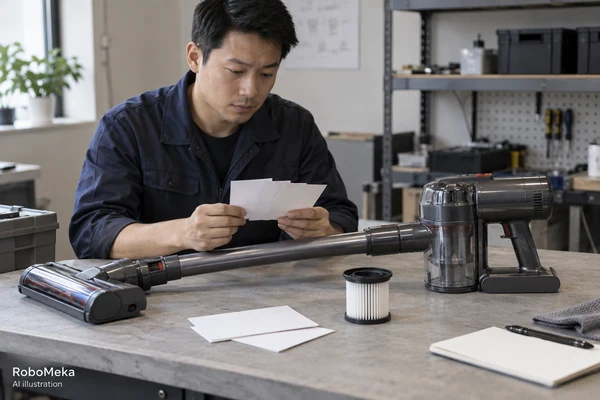
A powered floor head consumes energy and changes the cleaning interface. Brush geometry, rotation, inlet clearance and floor contact can influence how debris is loosened and admitted. A head that is comfortable on one surface may resist movement or behave differently on another. Request the actual included tool when evaluating a proposed cordless range.
Ask suppliers to identify head options separately. If a quotation offers a general-purpose brush and an optional alternative, the buyer should understand which performance statements apply to each. A photograph of one tool beside a specification measured with another creates an evidence gap even if both parts fit the same wand.
Consider interaction between suction and handling. A close seal may increase local pressure but make movement difficult on certain surfaces. Opening an inlet can improve movement or debris entry while changing air behavior. These are design tradeoffs to evaluate against customer use, not reasons to assume the strongest seal always gives the best cleaning experience.
Use the cordless stick vacuum configuration overview to start the tool discussion. Describe hard flooring, rugs, upholstery or other intended surfaces and request the appropriate proposed attachments. If pet hair is a priority, connect the selection to the pet-hair vacuum evaluation guide instead of relying on suction pressure to predict hair removal.
Review the airflow path beyond the motor
The complete path includes the head, wand, connections, separator, container and filters. Restrictions or leakage at any point can affect operation. Ask suppliers which assembly revision appears in their evidence and whether alternate filters or accessories change its applicability. A familiar outer housing does not prove that the internal airflow path is unchanged.
Filter claims deserve particular attention. A supplier might offer different media or assemblies for different market positions. The buyer should examine both filtration evidence and the effect of the offered filter on system performance. Use the sealed-system filtration guide to distinguish filter-material descriptions from claims about the assembled appliance.
Request a defined maintenance condition for any sustained-performance statement. A clean, empty assembly and an appliance approaching its prescribed service interval should not be described as interchangeable. The definition must follow a suitable method and the manufacturer's instructions. Buyers should not improvise hazardous loading or operate beyond approved conditions simply to force a dramatic result.
Maintenance instructions also affect the commercial proposition. Ask what users must clean, replace or dry before reassembly and how the appliance communicates a blockage or other relevant condition. A design whose performance depends on frequent maintenance can still be suitable, but those actions need to fit customer expectations and appear clearly in the product information.
Make control modes an explicit purchasing requirement
Mode labels such as eco, normal and boost are not standardized promises of a particular operating point. Request a description of each offered mode, including whether it is fixed, automatically adjusted or limited by operating conditions. Keep every performance statement attached to the relevant mode and avoid comparing different suppliers by mode name alone.
Automatic adjustment requires an understandable explanation. Ask what the system responds to, how it changes operation and whether the same behavior applies with every attachment. The supplier need not disclose proprietary source code for the buyer to request enough information to evaluate user experience and verify the claims proposed for retail copy.
Thermal or electrical protection can also change behavior. Request the manufacturer's documented operating limits and indications, including how the user is expected to respond. A temporary reduction in power may be an intended protective action; it may also affect the promised cleaning task. Both the engineering reason and the commercial consequence should be understood before acceptance.
The public scope of IEC 62885-2:2026 includes mains-operated and cordless household dry vacuums and additional cordless provisions. Ask the laboratory to identify relevant requirements for the proposed model, attachments and controls. The existence of a performance standard does not establish that a supplier's preferred mode has been evaluated or that every product category is covered.
Build a system acceptance worksheet
The worksheet should connect each customer scenario to an exact assembly, control behavior and evidence requirement. It is not a table of universal target values. Populate limits and decision rules with the supplier and technical reviewer before qualification, using methods appropriate to the product and the claim being considered.
| Customer scenario | Configuration to identify | Evidence or decision to record |
|---|---|---|
| Routine hard-floor cleaning | Standard head, complete wand, filter and normal mode | Relevant pickup, debris entry and handling observations |
| Carpet or rug cleaning | Offered carpet-capable tool and stated control setting | Operation under floor contact and agreed movement criteria |
| Above-floor use | Handheld assembly and included accessory | Task suitability with the actual grip and attachment load |
| Automatic mode transitions | Applicable sensors, software revision and tool | Defined behavior, indications and reproducibility limits |
| Prescribed maintenance interval | Documented filter and container condition | Performance relevance and required user maintenance |
| Approved design change | Changed component and affected configurations | Evidence needed before extending existing acceptance |
With those scenarios defined, send your cordless suction-system requirements together with the planned attachment bundle and unresolved supplier claims. A configuration-specific brief allows the quotation to address the way the whole appliance will be used.
Separate useful power from a catalogue maximum
Cordless designs draw from a finite battery and may distribute electrical power across the suction motor, brush motor and controls. A larger motor input rating does not independently establish better use of that energy. Ask for the conditions under which the input is specified and how the offered operating modes relate to the intended cleaning proposition.
Battery state can influence system behavior, depending on the design and controls. If a supplier promises sustained suction, ask what is sustained, where it is measured and over what defined condition. A constant control setting is not automatically proof of constant air performance at the tool. The evidence should support the exact wording under consideration.
Keep operating duration and cleaning effect connected in the decision, while using separate evidence for each. A mode that removes the target debris quickly may have a different duration from a low-power setting. The cordless runtime evaluation guide provides the detailed testing framework; this worksheet records which mode and assembly purchasing is actually approving.
Avoid broad efficiency claims without a defined comparison. Lower electrical input could reflect a different task, head, mode or measurement condition. If the supplier proposes a percentage improvement, ask for the reference configuration, method and supporting results. Otherwise, describe the documented product characteristics without turning them into an unsupported superiority statement.
A hypothetical floor-head selection decision
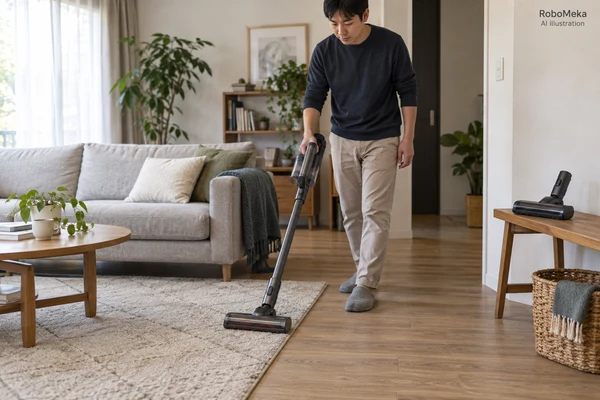
Consider a hypothetical importer comparing two proposed floor-head packages for the same cordless body. Package A emphasizes a high maximum-pressure result measured in a laboratory setup. Package B includes a different head and clearer application evidence. The initial information does not establish a winner because the documented conditions and offered assemblies differ.
The buyer's worksheet defines a normal hard-floor task, a rug task and an above-floor accessory task. Both proposals must identify the same body, battery and filter revision before their head options can be compared meaningfully. If a supplier changes the control setting between demonstrations, that change is recorded as part of the configuration rather than ignored.
Suppose one head admits larger debris more readily but creates a handling compromise on the specified rug. The buyer requests evidence to quantify the relevant tradeoff under the agreed method. Depending on the target customer, a single compromise head or a two-tool package might be appropriate. The decision concerns the whole retail offer, including instructions and accessory cost.
Now imagine an optional filter is proposed during quotation revision. The buyer asks whether the selected head and operating mode retain relevant performance evidence with that filter. Approval is limited to the documented assembly until the supplier explains the effect of the change. This prevents the purchasing team from combining individually attractive components into an unevaluated system.
The example contains no actual test results or assumed product availability. Its purpose is to show why a cordless suction decision needs an application worksheet and configuration control. A defensible approval identifies the acceptable task, tool and mode, together with the evidence supporting each choice and the limitations customers need to understand.
Translate the worksheet into supplier acceptance terms
Write the RFQ around a named baseline assembly. Require the supplier to identify deviations, quote alternative tools separately and state which evidence supports each option. Include the battery, filter and control revision when those affect the claim. This level of definition reduces the risk of approving a demonstration configuration that differs from the production offer.
Set decision rules before comparing qualification results. Define the relevant application criteria, reporting conditions and acceptable variation with the technical reviewer. The sample approval guide explains how to record outcomes and limitations. A purchasing threshold should be tied to a method and a customer requirement, not copied from an unrelated competitor's specification.
Require proposed substitutions to identify affected evidence. A brush change, seal revision, filter substitution or software update can alter system behavior even when the retail model name remains unchanged. Ask for an impact assessment and targeted verification where appropriate. Do not demand identical testing for every cosmetic revision, but do not treat every change as cosmetic either.
Connect factory controls with the approved system
Proposed factory testing should focus on characteristics relevant to the accepted design and identified production risks. Ask how the supplier checks assembly identity, operation and any agreed airflow-related controls. Request traceability and handling of failures. A production check may help detect defects without reproducing the full application evaluation used for initial qualification.
Shipment inspection should verify the actual head, filters, battery and version identifiers in sampled finished units, together with agreed functional checks. It should also confirm that packaging and instructions describe the approved bundle. These controls help maintain consistency; they cannot establish every performance claim if the original qualification evidence was incomplete.
Maintain a claim-to-configuration record for the commercial team. When a package changes, review its title, technical fields, mode qualifiers and accessory illustrations together. This closes the gap between engineering approval and retail communication, allowing buyers to offer clear product choices without relying on a single number to explain the entire cleaning system.
Frequently asked questions
Why can a high-suction cordless vacuum feel difficult to push?
The interaction between the head, floor surface and airflow can affect movement. A close seal may change local pressure and handling, while brush geometry and floor contact also matter. Evaluate the actual offered head on the intended surfaces and ask for agreed movement criteria alongside cleaning evidence instead of judging the appliance by pressure alone.
Is automatic mode suitable for every supplier comparison?
Automatic mode can be relevant to real use, but different control behavior can make an unqualified comparison difficult. Identify the inputs, attachment and software revision, then use an agreed evaluation approach. Record changes in operation and retain any limitations rather than assuming two modes with the same label respond identically to the task.
Can a different filter change the approved suction claim?
Yes, a filter change can affect the airflow path and the relevance of earlier evidence. Ask the supplier to identify the substitute and assess affected performance and filtration statements. The required follow-up depends on the design and claim, but approval should stay with the documented configuration until the change has been reviewed appropriately.
Should the maximum-power mode be the main purchasing criterion?
Only if that mode represents the product's intended customer task and its limitations are acceptable. Buyers should understand the normal operating proposition, higher-power option, handling and available duration together. Keep evidence mode-specific and avoid combining maximum suction from one setting with longest runtime from another in an unqualified product description.
Conclusion
A cordless vacuum's suction proposition belongs to a complete system operating under defined conditions. Evaluate the head, airflow path, filter, battery and controls together, then connect customer scenarios to accepted evidence. Configuration discipline makes the purchasing decision more useful than a ranking based on maximum pressure alone.
To scope your next offer, prepare a cordless vacuum system inquiry with the target surfaces, debris, attachment choices and control preferences. Use that brief to request a coherent assembly, relevant evidence and acceptance terms that remain clear when the project reaches production.