The short answer
Pascals measure pressure difference, while air watts describe air power at a specified operating point. Neither alone establishes cleaning performance. Ask for the measurement method, location, configuration and mode, then evaluate pickup, handling and maintenance on the surfaces your customers actually need to clean.
Introduction
Pascals, air watts and electrical watts answer different questions. Pascals describe a pressure difference; air watts describe air power at a stated operating point; electrical watts describe power consumed. None independently tells a distributor how much debris a complete vacuum will remove from a customer's floor. The purchasing decision needs a documented measurement method and a representative pickup evaluation.
This distinction matters when quotations put a large suction number beside a small product image. Two suppliers may report numbers measured at different locations, with different attachments and battery settings. Treating them as directly comparable can produce a range that looks strong on a spreadsheet but disappoints in normal use. A clearer specification starts with the cleaning task and works backward to evidence.
The following framework is a proposed buyer evaluation, not a report of RoboMeka testing. It helps importers request meaningful information about cordless vacuum configurations, review laboratory reports and prepare application trials. The same reasoning can inform robot vacuum purchasing, although robot coverage and autonomous behavior require additional assessment.
What does a suction pressure figure actually describe?
Pressure is force per unit area. In vacuum specifications, a pascal figure normally describes a pressure difference relative to surrounding air, but the measurement location and restriction must be stated. A number at a motor inlet is not automatically the pressure available at a cleaning head after air passes through tubes, bends, separators and filters.
Ask whether the published figure is a maximum sealed suction value, a value under a specified flow restriction or another measurement. In a nearly closed measurement condition, pressure can be high while airflow is very low. That does not resemble every real cleaning task, where air must travel through the head and transport loosened debris into the container.
A higher measured pressure can be relevant when all other conditions are comparable. It cannot justify a claim of proportionally better cleaning. Head geometry, brush contact, floor sealing, debris size and the user's movement all affect the result. Do not translate a percentage increase in a pressure specification into a matching percentage improvement in pickup without separate evidence.
Why does the measurement location matter?
Imagine one quotation reports pressure near the motor and another reports performance with the complete wand installed. The first number omits some restrictions in the customer configuration. Even if both instruments are accurate, the comparison is incomplete. Ask for a drawing or photograph of the setup, identification of installed components and a clear statement of whether the head was attached.
The same problem appears when a seller combines a maximum-pressure value from one setting with runtime from another. A buyer may assume both apply simultaneously. Keep pressure, airflow, operating mode and battery conditions together in the record so a product page cannot accidentally assemble an impossible operating state from individually valid numbers.
How do air watts differ from motor watts?
Air power relates the pressure difference to the volume of air moving through the measurement point. In consistent SI units, pressure in pascals multiplied by volumetric flow in cubic meters per second gives watts. The useful comparison requires pressure and flow from the same operating point. Multiplying unrelated maximum values creates a number that may not represent an achievable condition.
Electrical input power includes the energy consumed by the appliance, not just useful air power. Depending on the design, consumption also supports a brush motor, controls and other components, with losses along the way. A larger electrical rating therefore cannot establish better pickup or efficiency. Ask what the advertised watt figure measures before including it in a comparison table.
ASTM F558 concerns measurement of vacuum cleaner air performance characteristics. Its existence supports asking for a defined air-performance method; it does not turn an unspecified catalogue number into a verified result. A laboratory should identify the applicable edition, configuration and reporting conditions for the product being evaluated.
Can buyers convert pascals directly into air watts?
No universal conversion exists because pressure alone does not provide airflow. A hypothetical operating point of 8,000 Pa and 0.020 cubic meters per second corresponds mathematically to 160 W of air power. Without that simultaneous flow value and a suitable measurement method, an 8,000 Pa claim cannot be converted into 160 air watts or any other fixed number.
The example illustrates units only. It is not a result, target or expected capability of any RoboMeka product. It also does not establish floor pickup: two assemblies can have similar measured air power while differing in how their heads contact carpet or admit larger debris. Keep the engineering measure and the application outcome as separate evidence fields.
Which specification fields make quotations comparable?
Build a short evidence table that follows every proposed retail configuration. The goal is to expose mismatches early, before samples or artwork are approved. An unanswered field should remain marked unknown; filling it with the largest number from a marketing brochure makes the comparison less useful.
| Field | What the supplier should identify | Why the buyer needs it |
|---|---|---|
| Pressure | Method, restriction and location | Distinguishes unlike suction claims |
| Air power | Simultaneous flow and pressure conditions | Prevents invalid conversion from Pa |
| Electrical input | Appliance or component rating | Separates consumption from air performance |
| Configuration | Head, wand, filter and dust container | Connects evidence to the retail bundle |
| Power mode | Selected setting and automatic behavior | Links output to realistic operation |
| Battery state | Charge preparation and relevant condition | Explains differences during cordless testing |
| Pickup | Surface, debris and movement procedure | Shows whether the assembly suits the task |
Request the report identifier and the exact model designation. A component report may help explain a design choice but does not automatically substantiate a complete appliance claim. Where a family of models shares evidence, obtain the technical basis for that coverage. A similar shell or model name is not enough to establish identical performance.
The cleaning product RFQ framework can hold these requirements alongside packaging and service expectations. Put critical evidence requests in the initial inquiry, so a supplier can price a suitable configuration and flag missing information before the commercial discussion becomes anchored to an incomplete specification.
How should pickup testing complement the numbers?
Which floors and debris belong in the evaluation?
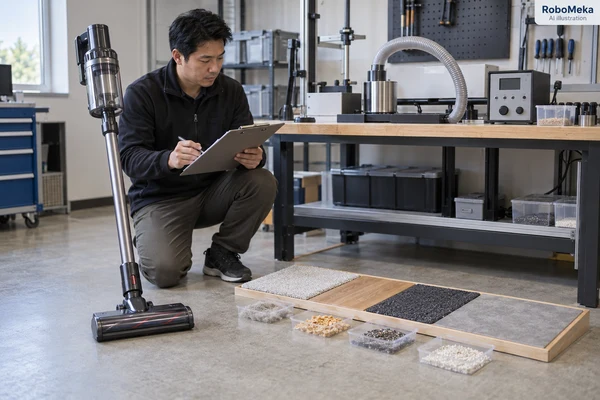
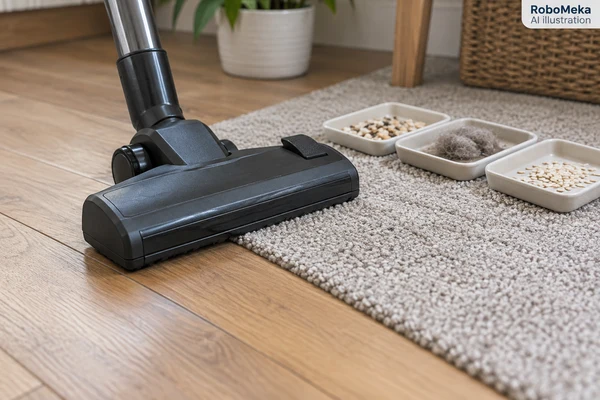
Select surfaces that represent the intended market: for example, sealed hard flooring and a specified carpet type. Confirm suitability in the product instructions. Define debris that the appliance is designed to collect, using a controlled and safe procedure. Avoid improvised hazardous powders or materials that could damage the appliance or expose operators.
Separate fine material, larger particles and fibers when their behavior matters. A combined mixture may be useful later, but it can hide a particular weakness during diagnosis. Document how material is distributed, the test area, number of passes, movement speed and direction. For a buyer trial, consistency and traceable observations matter more than an impressive demonstration video.
Measure residual debris using an appropriate method, or use a clearly described visual rubric when measurement equipment is unavailable. Do not present a subjective inspection as a laboratory percentage. Record material pushed ahead of the head, debris scattered to the side and material left at edges separately. These outcomes can affect customer satisfaction even when the center of the floor looks clean.
What should happen between repeat runs?
Restore the surface and the appliance to the agreed starting condition. Inspect the head, empty the bin when required and follow filter preparation instructions. Alternate or otherwise control run order where floor preparation or operator practice could favor one candidate. Retain every valid run, including less flattering outcomes, and explain excluded results.
IEC's cordless vacuum performance standard listing identifies a formal performance-measurement scope for household cordless dry vacuums. A purchasing trial is not automatically an IEC test. When a retail claim requires standardized evidence, commission the applicable method through a competent laboratory instead of attaching a standard number to an informal demonstration.
Before requesting samples, prepare an inquiry brief describing your floor mix, debris and intended power mode. These details make the proposed configuration and evidence request more useful than asking for the highest available suction number.
What changes when the filter and container are used?
A clean, empty appliance is a useful reference condition, but customers also operate machines between maintenance events. Add a defined, permitted loading condition when it is relevant to the purchase. Stay below the marked fill limit and within the manual. Record the loading material and quantity so the result can be reproduced rather than described loosely as a dirty-filter test.
Observe whether pickup, sound, warnings or operating behavior change. Do not infer the cause immediately: a tangled brush, obstructed passage and loaded filter can create different problems. Inspect accessible parts according to the instructions and repeat only after documenting what changed. This approach turns a disappointing run into information the supplier can investigate.
Maintenance requirements deserve their own evidence. Dyson's filter-care guidance illustrates that a manufacturer's cleaning and drying instructions are model-related operational requirements. Do not copy that schedule to another platform. Obtain the actual manual and confirm which filters may be washed, how they must dry and when replacement is appropriate.
An air-performance claim measured with a fresh filter should not quietly imply constant performance under every service condition. If the intended proposition includes sustained cleaning, define the loading and maintenance conditions under which that proposition will be assessed. Keep the replacement filter specification linked to the approved sample, because changing it may alter the system being sold.
How can a buyer compare two hypothetical proposals?
Consider a distributor reviewing Candidate A with a prominently advertised pressure figure and Candidate B with a lower figure plus a complete-head pickup report. This is a hypothetical purchasing exercise, not a ranking of real products. The distributor wants a vacuum for mixed-floor apartments and has not yet received comparable laboratory evidence.
First, the buyer places both pressure figures in an unverified column because the measurement locations differ. Next, the buyer requests a common configuration description and schedules identical application trials. Candidate B's report is relevant only if its model, head and conditions match the offer. Candidate A remains eligible; incomplete documentation is a reason to investigate, not proof of poor performance.
Suppose the hypothetical trials show that A needs additional carpet passes while B needs more frequent removal of fibers from its brush. The purchasing team should report both observations. It might request a different head for A and a maintenance revision for B, then retest those changes. Averaging everything into a suction score would conceal the actual choices.
A decision worksheet can use four gates: relevant pickup, acceptable handling, sufficient usable runtime and supportable maintenance. Only after those gates are met should secondary preferences influence selection. Weighting every field equally can allow an impressive headline number to compensate mathematically for a failed essential task, which is rarely a sensible retail proposition.
How should claims be written after evaluation?
Write the narrowest accurate claim supported by the evidence. If a test concerns one mode, one attachment and one surface, retain those qualifications where the claim appears. A short headline can link to a clear conditions note, but the note must not reverse the ordinary meaning of the headline. Review packaging, distributor sheets and online listings together.
Avoid unsupported comparative wording such as strongest, deepest cleaning or twice the performance. A comparison needs identified alternatives, comparable procedures and current supporting records. Even a correct numerical pressure comparison should be described as pressure, not as a cleaning improvement. Marketing clarity helps retailers answer complaints without relying on an explanation that customers never saw.
Agree change control before production. A revised filter, head seal, motor controller or battery setting can affect the relevance of previously approved data. The supplier should identify changes that require engineering review or retesting. Retain the approved bill of materials reference, artwork wording and evidence record together so shipment inspection checks the configuration actually authorized for sale.
How should conflicting documents be resolved?
If a quotation, sample label and test report use different values, request a written reconciliation before choosing which number to publish. The difference may reflect another mode, component revision or measurement location rather than an error. Preserve the original documents and identify the approved source for the final claim. A revised spreadsheet alone does not explain why a discrepancy occurred. The purchasing team should be able to trace the published figure back to one applicable record and understand any remaining limitations. This also gives shipment reviewers a clear reference when checking the final product label and instruction sheet.
Frequently asked questions
Is a higher Pa rating always better?
No. A higher pressure measurement may matter under comparable conditions, but pickup also depends on airflow, the head, brush action and the surface. Ask where and how the figure was measured, then compare complete machines on representative tasks. Do not interpret a larger pressure number as an automatic cleaning advantage.
Are air watts the same as electrical watts?
No. Air watts describe air power at a measurement point, while electrical watts describe consumed power. They are different parts of the energy picture. Request a clearly identified method and configuration for air-power claims, and evaluate cleaning results separately before deciding which product belongs in a retail range.
Can a robot vacuum be compared with a stick vacuum by suction alone?
That comparison misses important differences in head design, movement and operating strategy. A robot must navigate and cover the area, while a manual vacuum depends on the operator's passes. Compare each product against its intended cleaning task, including time and interventions, rather than ranking different categories using one pressure specification.
Should an importer require a laboratory report for every number?
The evidence should match the significance of the claim and the destination market's requirements. Important public performance claims deserve documented, applicable support. Early internal screening can use clearly labeled buyer trials. Ask a competent specialist which formal methods and report coverage are needed before approving final consumer-facing wording.
Conclusion
Vacuum suction specifications become useful when their definitions, conditions and limitations travel with the numbers. Pressure, air power and electrical input describe different things; representative pickup and maintenance evaluation connect those measures to customer requirements. Choose a configuration based on a coherent evidence package rather than a single maximum value.
Discuss your vacuum selection criteria with RoboMeka by preparing the destination market, floor types, attachment bundle and evidence you need. The inquiry brief can help structure a configuration discussion; final performance, availability and claim wording require confirmation for the specific model.