The short answer
Approve suction and power claims only when the supplier identifies the appliance configuration, measurement method, operating conditions and relevant evidence. Compare corded and cordless products against their intended customer roles, then connect accepted specifications to quotation terms, production controls and shipment inspection so published claims remain traceable.
Introduction
When sourcing a vacuum cleaner, buyers should check whether each suction and power claim belongs to the exact appliance being quoted, uses a defined measurement method, and supports the intended cleaning application. The strongest number on a supplier sheet is only useful when its measurement location, attachments, operating mode, power supply and reporting conditions are clear.
This becomes particularly important when a distributor compares corded canisters, cordless sticks and compact handheld products within one range. Electrical input, maximum pressure and useful cleaning performance describe different things. Ranking every proposal by one headline value can reward incomplete documentation while overlooking the product that better fits the customer's work.
This guide explains how to turn supplier specifications into purchasing evidence and acceptance decisions. It covers manually operated vacuum cleaners across power sources, with separate treatment needed for wet cleaning and autonomous robots. The suggested factory testing and shipment inspection controls are recommendations for a sourcing project, not claims about completed RoboMeka evaluations or confirmed product capabilities.
Start with the product role in your range
Define what the vacuum is expected to replace or complement before asking suppliers for stronger suction. A corded model intended for longer floor-cleaning sessions has different commercial priorities from a lightweight cordless appliance used for frequent small jobs. A handheld sold for upholstery also needs its own application brief. Similar-looking numbers cannot remove those differences.
Describe the expected floor mix, debris, attachments and normal session in practical language. For example, a hypothetical distributor might require one product for whole-room cleaning and another for stairs and furniture. Those are purchasing roles, not promises that any given architecture will succeed. The supplier should explain which proposed configuration supports each role and what evidence remains outstanding.
Make the power-source decision visible. For a corded proposal, request rated supply voltage, frequency, input power and the offered market variant. For a battery model, identify the battery and charger together with normal and higher-power modes. Do not interpret a mains watt rating and a battery capacity value as competing measures of cleaning strength.
The cordless stick vacuum product overview provides a starting point for discussing portable configurations. If a supplier proposes a combined washing appliance, use the wet and dry floor cleaner overview to frame a separate application discussion. Dry suction evidence alone cannot qualify water handling, roller washing or recovery of dirty liquid.
Build an evidence record for every advertised claim
Require a claim register that connects each proposed catalogue statement with an identifiable source. A suitable entry records the wording, unit, model and revision, measurement method, report reference and limitations. Add the person responsible for reviewing it and the decision date. This makes an attractive quotation reviewable without assuming that every supplied document proves every specification.
Distinguish a motor specification from an assembled-appliance result. A motor supplier's data can help explain a design, but a production vacuum adds separators, filters, seals, tubes and cleaning tools. Ask where measurements were taken and which of these parts were present. If the document describes a component, label it as component evidence in the purchasing file.
Ask whether maximum values occur together. A pressure claim from a restricted inlet and a runtime claim from a low-power setting might each be legitimate under their own conditions. Combining them into one unqualified product description could imply a performance state the offered appliance never achieves. Keep the conditions attached when information moves between engineering, purchasing and marketing.
For the underlying terminology, refer to the guide to vacuum suction, pascals and air watts. This sourcing checklist uses those distinctions to decide what evidence a supplier must deliver; it does not assign a universal conversion between pressure, electrical power and cleaning performance.
| Supplier-sheet item | Evidence the buyer should request | Purchasing consequence |
|---|---|---|
| Maximum suction pressure | Measurement point, restriction, installed components and mode | Keep as a qualified specification until comparable evidence exists |
| Air-power figure | Simultaneous pressure and flow, applicable method and setup | Compare only matching measurement conditions |
| Electrical input | Rated supply, appliance configuration and measurement basis | Assess supply compatibility separately from cleaning ability |
| Cordless performance claim | Battery identity, charge condition, head and control mode | Bind the claim to the quoted battery and accessory bundle |
| Pickup statement | Named surface, debris, procedure and complete-appliance results | Use to judge the specific customer application |
| Production consistency | Approved revision, agreed checks and change records | Connect sample acceptance to the shipped configuration |
Read standards as scope statements, not quality badges
The public description of IEC 62885-2:2026 covers performance measurement for mains-operated and cordless household dry vacuum cleaners. It identifies scope limitations, including separate treatment of cleaning robots and broad exclusions for handheld dry vacuums. Ask the laboratory to identify the applicable clauses and edition for your actual product before requiring a report.
An older report is not automatically worthless. It may contain useful, traceable data, but the reviewer should explain whether a different edition, method or configuration affects the intended comparison. Request a written relevance assessment rather than replacing a date check with an unsupported assertion that all historical results are equivalent.
Similarly, the public scope of ASTM F558-24 concerns specified vacuum designs and air-performance measurements. ASTM explains that those measurements do not represent all conditions at tools and floor surfaces during cleaning. Its stated motor and appliance scope also means a buyer should obtain laboratory confirmation before applying it to an unfamiliar design.
The commercial decision should therefore distinguish three approvals: whether the reported measurement is credible, whether the method fits the product, and whether the result supports the buyer's application. A standard number printed on a quotation cannot complete those approvals. Neither performance reporting nor an impressive air-power figure establishes electrical safety or market conformity by itself.
Compare corded and cordless proposals without distorting the decision
For corded equipment, document the intended supply variant and normal use arrangement. Check that the quotation, rating information, plug configuration and applicable evaluation records identify the same version. A report for a different voltage or motor variant needs a clear explanation of relevance. Avoid assuming that changing only a plug preserves every electrical and performance characteristic.
For cordless equipment, require the battery identifier and the mode used for each performance statement. A higher-power setting can impose different demands on the battery and change operating duration. Ask suppliers to present the offered mode combinations together, including any automatic power adjustment. The buyer needs to understand the product customers receive, not assemble a fictitious best-of-every-setting specification.
Compare both architectures against the same commercial job while retaining their different operating conditions. Session continuity, appliance weight, storage, outlet access and charging arrangements may affect the selection alongside pickup. A procurement team can document these tradeoffs without inventing a single score that claims to express every customer priority.
At this point, send your vacuum application and power-source requirements with the intended surfaces, attachments, destination market and outstanding evidence questions. A clear brief helps a supplier respond with configuration-specific information and identify deviations before sample or quotation decisions.
Review the report behind the headline
A report should identify the sample sufficiently to connect it with the quotation. Request the model, hardware revision, motor or assembly variant where relevant, filters, container condition, accessory set and control software if it influences operation. Photographs can clarify identity, but a photograph without traceable references cannot substitute for the written configuration.
Read the result alongside the method and conditions. Check units, measurement position, operating mode, environmental controls and reported uncertainty where relevant. Ask whether repeat measurements or multiple samples support the number. The appropriate sample plan depends on the purchasing decision; one tidy graph should not silently become a guarantee about every future production unit.
Review exceptions rather than hiding them in an attachment. If the supplier removed a filter, used a different nozzle or applied a special setup, determine whether that condition matches the proposed claim. A technically valid result may still be unsuitable for consumer wording. Ask for a corrected claim or a relevant evaluation when the evidence does not match.
Create three practical review states: accepted for the stated use, conditionally accepted with a defined limitation, and awaiting evidence. Give every open item an owner and deadline. This prevents missing information from turning into assumed approval when the project moves from samples to packaging artwork or a purchase order.
A hypothetical distributor worksheet
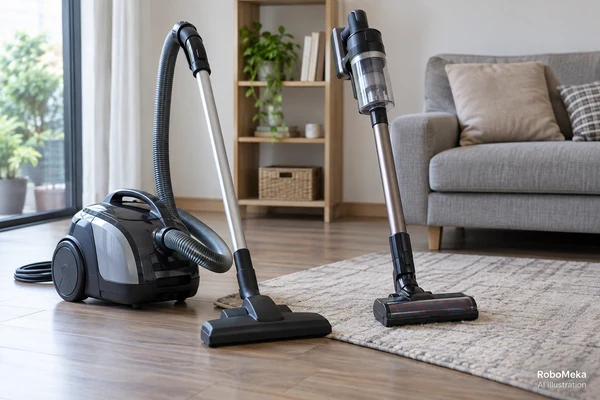
Consider a hypothetical buyer selecting a corded floor vacuum and a cordless companion for a household range. Supplier A provides a large maximum-pressure figure with no setup information. Supplier B provides a smaller number accompanied by a report for a named assembly. The buyer should not declare B the better cleaner from that difference alone; B has supplied more reviewable evidence.
For the floor model, the worksheet records carpet and hard-floor requirements, the included head, supply variant, storage needs and the proposed claim wording. For the companion product, it records stairs, upholstery, normal mode, battery and handheld accessories. Each product retains its own role even when both sit in the same retailer comparison document.
The buyer requests missing measurement conditions from A and examines B's report against the offered configuration. If B tested a different filter or motor, the evidence gap remains despite the more complete presentation. The next decision is whether a justified extension, corrected quotation or additional evaluation can close that gap.
Suppose the cordless proposal also includes a higher-capacity optional battery. The worksheet treats it as a separate bundle until compatibility, weight, operation and claim conditions are documented. A larger battery does not automatically upgrade the accepted suction statement. The purchasing decision stays attached to a specific product combination throughout the review.
Record the outcome in language another colleague can use: which configuration is under consideration, which statements are supported, which tradeoffs are accepted and what remains unresolved. This original worksheet structure is a proposed way to organize buying decisions. It contains no measured supplier results, price assumptions or implied comparison of RoboMeka products.
Write acceptance criteria that survive a purchase order
Resolve evidence gaps before agreeing the commercial baseline
Keep an unanswered question distinct from a rejected product. A supplier may be able to provide a missing setup photograph, explain a model-code relationship or correct a mistranslated unit without changing the design. Ask for the smallest piece of relevant evidence that resolves the issue. If the issue concerns actual performance, request an appropriate evaluation rather than a more confident sales explanation.
Decide which gaps prevent quotation comparison and which can be closed later under explicit conditions. For example, an unknown battery bundle may make two cordless prices incomparable immediately, whereas a minor document-reference correction might have a clear resolution path. Record the practical effect of each gap so commercial urgency does not silently lower the technical requirements.
Preserve the agreed specification in the order
Convert accepted evidence into a short technical annex. Identify the approved appliance and accessories, the claim conditions, relevant report references and the agreed inspection approach. Put any required performance limits beside their methods and tolerances. A target without a method invites disagreement; a method without an agreed decision rule leaves the buyer unable to resolve a marginal result.
Ask suppliers to state deviations explicitly in their quotation. If a filter, motor, battery or tool differs from the requested baseline, it should appear as an alternative rather than disappear inside a generic model description. Use the principles in the cleaning-product RFQ guide to keep commercial and technical assumptions visible.
Agree how changes will be reviewed after sample approval. Changes to airflow-path geometry, sealing materials, filter media or control settings can affect the applicability of earlier evidence. The supplier should identify the changed item and explain the proposed verification. The buyer can then decide whether the existing approval remains valid or needs a targeted update.
Plan factory testing and shipment inspection separately
Recommended factory testing can include documented checks that relate to the agreed design and production risks. Ask which characteristics are monitored, how equipment is maintained and how results connect to a batch or serial record. The aim is a credible control plan, not a promise that a quick end-of-line check reproduces every laboratory performance method.
Shipment inspection should confirm that sampled finished goods match the approved configuration, labeling and accessory bundle, together with agreed functional checks. Define the sample plan and acceptance rules before inspection starts. The pre-shipment inspection guide explains how this release activity differs from initial product qualification.
Finally, retain the evidence behind published claims where purchasing and content teams can retrieve it. If a model changes, review the affected wording and technical documents together. This document discipline supports clear customer communication and makes later questions about suction or power easier to answer without reconstructing the project from scattered supplier messages.
Use the same identifiers when collecting early service feedback. A complaint about weak pickup becomes more useful when the team knows the tool, filter, mode and product revision involved. That information can guide a targeted investigation and improve later purchasing requirements without treating one customer's observation as a statistically representative result for the entire range.
Frequently asked questions
Should buyers always select the highest suction number?
No. First check what was measured, where it was measured and which configuration produced the result. A higher number can be relevant under comparable conditions, but it does not independently establish better floor cleaning. Select the product against its intended application and keep the supporting evidence attached to the exact offer.
Is a motor report sufficient for a complete vacuum claim?
A motor report can support a component specification, but the assembled vacuum introduces filters, seals, separators, tubes and tools that affect operation. Request appliance-level evidence for appliance-level wording. If only component data is available, record that limitation and avoid presenting the result as verified performance of the retail configuration.
Must corded and cordless products use identical purchasing criteria?
They should meet clearly described customer needs, but their operating conditions require different evidence. A corded proposal needs supply-variant information; a cordless proposal needs battery, charging and mode identification. Compare useful application outcomes while retaining those distinctions, and do not treat electrical wattage or battery capacity as interchangeable measures of pickup.
What should happen when a supplier changes a filter after approval?
Ask for the replacement filter identity, the reason for the change and an assessment of affected claims. Determine whether relevant performance and conformity evidence still applies to the revised assembly. Approve any needed verification before accepting the substitution, then update the configuration record so purchasing, inspection and marketing use consistent information.
Conclusion
A sound suction and power sourcing decision connects the customer application, quoted configuration, measurement method and accepted evidence. Keep component figures separate from complete-appliance claims, compare power sources through their actual product roles and record the conditions behind every specification that reaches the catalogue.
For your next project, prepare a vacuum suction and power inquiry brief with the proposed product role, destination market, attachment bundle and supplier documents you need. Use that brief to establish a reviewable quotation and a practical acceptance plan before committing to production.