The short answer
A useful RFQ defines the customer application, exact product bundle, evaluation evidence and after-sales responsibilities. Ask suppliers to price the same baseline, identify deviations and separate optional costs. Unknown specifications should remain open questions, not become assumed capabilities.
Introduction
A useful cleaning robot RFQ tells suppliers what the product must do, which configuration they should price, what evidence the buyer will review, and who will support it after delivery. It is not simply a request for a catalog and the lowest unit price. For importers and private-label teams, a well-structured request for quotation makes differences visible before money is committed to samples, artwork or inventory.
Start with the application, not a favorite specification. A cordless vacuum, indoor robot, lawn mower and pool cleaner solve different jobs even when they share a purchasing department. If your brief combines all four without separate schedules, suppliers may answer the easy parts and leave critical assumptions unstated. Use one project cover sheet and a configuration sheet for each proposed product.
This guide offers a practical RFQ framework and a hypothetical comparison exercise. It does not describe a completed RoboMeka customer project or promise a particular price, minimum order or delivery time. Explore the product families first if your range is not yet defined, then use the framework below to turn customer requirements into questions that engineering and purchasing can answer together.
What should a cleaning robot RFQ contain?
Explain the customer and the job
Name the destination market, sales channel and intended user. A dealer-installed mower and an online retail robot vacuum have different handover needs. State whether buyers expect installation assistance, app onboarding, replacement consumables or local repairs. These details influence the configuration and the support cost, even before volume is discussed.
Describe the physical application in ordinary language. For a vacuum, identify floor types and typical debris. For a mower, describe lawn layout and installation constraints. For a pool robot, record dimensions, surfaces and required cleaning zones. Avoid substituting a broad label such as premium or professional for a measurable task. A supplier cannot quote a reliable solution to an undefined promise.
Separate present facts from forecasts. An estimated annual demand is not a purchase commitment, and a target launch date is not an agreed shipping date. Label quantities as initial order, optional replenishment and planning forecast. This lets suppliers explain where component sourcing, customization or packaging changes affect feasibility without treating every forecast as a guaranteed order.
Rank requirements instead of marking everything essential
Use three classifications: mandatory, preferred and open for recommendation. Mandatory requirements should have a clear business reason and an acceptance method. Preferred requirements should identify the trade-off you would consider. Open items invite the supplier to propose a documented alternative. This structure helps distinguish a real mismatch from a negotiable detail.
For example, a local-language manual may be mandatory, while an additional upholstery attachment is preferred. The exact display arrangement might remain open. If a requested feature is unavailable, require the supplier to mark a deviation instead of silently substituting another version. A shorter response with transparent gaps is more useful than a complete-looking spreadsheet filled with unqualified agreement.
How do you define the exact configuration?
Treat the sellable bundle as the unit of comparison
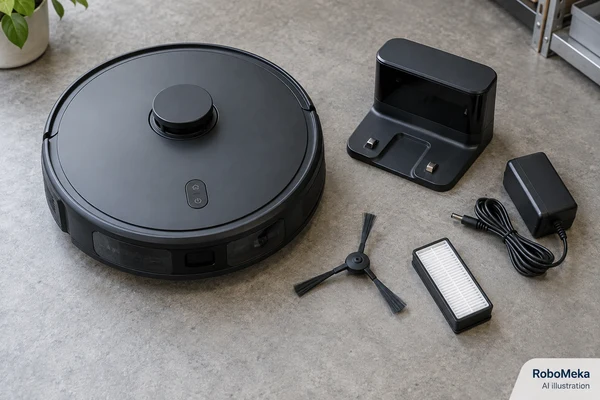
The quoted unit should include the product, power arrangement, standard accessories, documentation and packaging that the customer will actually receive. For a robot vacuum, the robot alone is not equivalent to a robot with an auto-empty station. For a mower, necessary installation accessories may sit outside the base price. Identify each included and excluded item explicitly.
Record model references and revision identifiers where available. Battery, charger, dock, brush, filter, firmware and app dependencies can change the commercial proposition. You do not need unrestricted access to every proprietary design detail, but you do need enough information to identify the approved supply configuration and recognize a proposed substitution before production starts.
Ask suppliers to separate standard options from development work. A printed logo, a new housing color, an exclusive accessory and a new app feature should not appear as interchangeable customization choices. Request separate cost, validation, ownership and timing assumptions for each. Use the OEM and ODM workflow to clarify which changes require engineering review rather than artwork approval alone.
Ask for measurement conditions, not just headline numbers
A performance field should contain a value, a method and the conditions that make the value meaningful. Runtime without mode and attachment details is incomplete. Cleaning coverage without floor layout is difficult to interpret. A slope figure without its unit and operating context can lead to an inappropriate mower selection. Ask what was measured and what the evidence does not establish.
Different appliance types also call for different methods. The IEC publication for mains-operated vacuum performance and its cordless vacuum performance publication have distinct scopes. These listings help frame questions; they do not prove that any proposed model has passed a test. Ask the supplier or laboratory to identify the appropriate method and edition for the actual product.
A practical RFQ response table
| RFQ field | Buyer input | Supplier response required |
|---|---|---|
| Product application | Surfaces, debris, layout and operating routine | Proposed model and application limitations |
| Bundle | Required robot, dock, charger and accessories | Exact included items and optional extras |
| Performance | Required outcome and evaluation conditions | Method, configuration and available evidence |
| Customization | Mandatory and optional changes | Feasibility, development scope and exclusions |
| Quality approval | Sample review and production release process | Records, responsibilities and open conditions |
| Service | Target market and support channel | Parts, repair information and escalation plan |
| Commercial scope | Quantity bands and requested delivery basis | Separate prices, validity and timing assumptions |
Give every requirement a short reference number so questions can be answered precisely. Keep the RFQ version on the cover sheet and update a change log when assumptions change. Otherwise, one supplier may price an old accessory list while another prices the revised bundle. The spreadsheet can look comparable even though it no longer describes the same request.
What evidence should you request before sample approval?
Build a document register
Ask for a specification sheet, operating instructions, maintenance instructions, configuration identification and available test documentation. Add market-specific documentation as a separate review item rather than accepting an assortment of logos as proof. Record each document's model coverage, revision, issuer and current status. Missing evidence should have an owner and an agreed resolution point.
Keep technical qualification separate from legal conclusions. The appropriate conformity assessment depends on the product, destination and supplied configuration. A buyer should have suitably qualified reviewers assess applicable requirements. A generic RFQ template cannot establish that a particular electrical appliance, radio device or battery-powered product is ready for sale in every market.
For battery shipments, identify who will obtain transport documentation and coordinate with the carrier. IATA's battery guidance is a current starting point for air-transport questions, not a substitute for shipment-specific classification and acceptance. Do not ask a sales quotation to stand in for the work of a trained dangerous-goods specialist.
Define what the sample decision means
A sample can support an application trial, an appearance approval or a particular functional check. It does not automatically establish production consistency or long-term reliability. Write down which decision the sample is intended to unlock and which decisions remain open. If packaging is provisional, record that packaging approval is still pending rather than calling the entire product approved.
Ask how the approved sample will be identified and retained. Photographs, revision records and accessory lists can help connect later inspection to the evaluated configuration. If a component or firmware revision changes, require notification and a decision on whether the change needs further evaluation. This is more useful than relying on an informal promise that production will be the same.
Mid-project CTA: turn the brief into a configuration discussion
If you have a target customer but no settled specification, send your requirements for a configuration discussion. Include the product category, destination market, application, expected first-order quantity and unresolved questions. RoboMeka can review the brief against the proposed project scope; availability, pricing, customization and timing require individual confirmation. The website currently prepares a downloadable inquiry brief, which you can email to info@RoboMeka.com.
How should quotations separate price and responsibility?
Keep one-time and recurring costs apart
Request separate lines for the product bundle, optional accessories, tooling or development, artwork setup, sample charges and any recurring software or service fees. Ask whether replacement consumables are sold individually or in packs. A low base price can be difficult to compare if necessary items appear elsewhere or if the quotation leaves a continuing fee unmentioned.
State the delivery basis, named location, currency, quote validity and payment assumptions for review. Do not infer transport, insurance, duties or local handling from a unit price alone. Have your logistics and finance teams confirm the exact allocation of costs and risks before accepting contractual terms. The purpose of the RFQ is to expose assumptions, not to replace their specialist review.
Separate requested dates from confirmed milestones. Sample readiness, artwork approval, material availability, production completion, inspection release and transport departure are different events. Ask what starts each lead-time estimate and what happens if an approval is delayed. A single line promising delivery in a certain number of days is ambiguous unless its starting point and dependencies are clear.
Specify the after-sales operating model
Describe who receives the customer's first complaint, who diagnoses faults, who authorizes repairs and who supplies replacement parts. Ask for a practical escalation route and the information required to investigate a case. This matters particularly when the importer owns the brand but the supplier controls firmware, diagnostic tools or specialized service procedures.
For connected devices, include app ownership, update responsibilities, service continuity and customer-data questions. NIST's consumer IoT profile considers cybersecurity outcomes at the connected-product level. Use it to frame questions about the whole system rather than assuming the physical robot is the only component that needs support. Its existence does not certify a supplier's platform.
How do you compare two incomplete quotations fairly?
Use a hypothetical normalization exercise
Suppose Supplier A quotes a robot with a charging dock, while Supplier B quotes a robot with an auto-empty station and two spare bags. The numbers cannot be treated as a direct price ranking. First ask both suppliers to quote the same baseline bundle. Then retain the auto-empty option as a separately priced alternative with its own maintenance and consumables discussion.
Now suppose only Supplier A identifies the battery revision, while Supplier B provides a longer runtime claim without test conditions. Mark these as different evidence gaps, not as proof that either product is better. Request clarification and hold the relevant comparison open. Unknown should remain unknown until the supplier supplies usable information or the buyer completes an appropriate evaluation.
Finally, compare launch responsibilities. If one offer includes translated documentation review and the other leaves translation to the buyer, account for the work separately. This is a hypothetical purchasing example, not an actual supplier comparison or an estimate of market prices. Its value is showing how an apparently simple price difference can conceal different deliverables.
Set decision gates before negotiation
Decide which gaps prevent shortlisting, sample ordering and production approval. A missing optional color may be negotiable. An unidentified charger or unresolved core application requirement may prevent meaningful evaluation. Keep mandatory requirements separate from weighted preferences so a high score on convenience features cannot conceal a critical unresolved issue.
Record the reason for every acceptance, rejection or conditional approval. Include the evidence reference and the person responsible for the next step. If purchasing chooses a lower-cost option with fewer features, that can be a sound decision when the product still meets the defined use case. The problem is not compromise; it is an undocumented compromise that surprises the service team later.
What should happen after the quotation is accepted?
Convert agreed RFQ answers into controlled order documents. Preserve deviations, open actions and approved revisions rather than assuming the final purchase order automatically contains them. Make sample approval, production checks and shipment inspection distinct milestones. The manufacturing review page can help your team organize questions about the proposed order and the evidence available for release.
Do not confuse a production-lot sampling decision with a guarantee that every unit is defect-free. ASQ's sampling overview explains the role of drawing conclusions about a population from a sample. The actual inspection plan, defect definitions and release authority should be agreed by qualified parties before goods are presented for inspection, not negotiated around an inconvenient finding.
Close the project brief with a handover register. Record the final manual, carton artwork, accessory list, approved software version, service contacts and spare-part references. Keep these records accessible to sales and support as well as purchasing. A clear RFQ creates value only if its decisions survive the transition from sourcing discussion to delivered product.
Frequently asked questions
Can I send one RFQ for all four product categories?
Yes, but use separate configuration schedules. Keep common company, market and commercial information on a cover sheet, then describe each product's application and evidence needs individually. A pool cleaner's coverage requirements should not be forced into the same performance fields as a cordless vacuum or dealer-installed mower.
Should I disclose my target price?
You can share a target when its scope is clear. State whether it includes the full accessory bundle, customization, packaging or transport. Ask suppliers to identify what fits the target and what requires a trade-off. A target price should guide a discussion, not encourage an undisclosed reduction in specification.
Does a sample approval replace pre-shipment inspection?
No. A sample evaluates the identified unit or configuration under the chosen conditions. Shipment inspection addresses the supplied production lot and agreed release criteria. Both can be useful, but neither automatically proves all other requirements. Keep the approval records and inspection scope separate, with clear responsibility for unresolved items.
What if a supplier cannot answer every technical question?
Ask it to identify which answers need engineering, laboratory or software-team input and when those answers can be supplied. An honest open item is better than a guessed specification. Evaluate the importance of the missing information and postpone the affected decision if it is necessary to qualify the product.
Conclusion
A cleaning robot RFQ works when it makes the application, configuration, evidence and responsibilities explicit. Comparable prices follow comparable scope. Build one controlled baseline, invite clearly identified alternatives, and retain unknowns until they are resolved. The resulting quotation should support a purchasing decision, not simply provide a number for a spreadsheet.
For your next project, prepare a cleaning-product inquiry brief with the intended application, target market and first-order plan. Add any must-have features and the questions your team has not yet answered. Email the completed brief to info@RoboMeka.com to start a model-specific discussion without assuming unconfirmed performance, certification or delivery commitments.