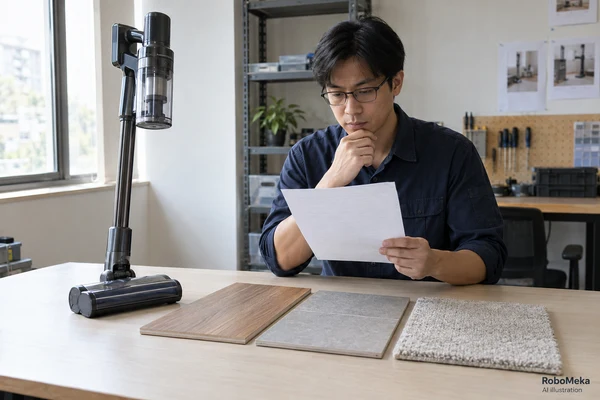
The short answer
Choose a vacuum configuration by matching the customer's floor, debris and complete cleaning routine with documented intended use. Separate dry pickup from wet cleaning, confirm surface care restrictions and select tools for essential tasks. Use representative application reviews while keeping demonstrations, formal performance evidence and shipment checks within their actual scope.
Introduction
Buyers sourcing a vacuum cleaner should define the permitted cleaning task before choosing suction, battery size or accessories. Floor material, surface finish, debris condition and the route through the home determine whether a dry vacuum, a wet floor cleaner or a combination of products is appropriate. A broad multi-surface description cannot replace those details.
The central purchasing question is straightforward: can the proposed configuration complete the customer's normal routine within both the appliance instructions and the floor manufacturer's care requirements? A machine can collect visible debris successfully while still being unsuitable for a particular finish, liquid or rug. That makes intended use a purchasing requirement, not a footnote for customer support.
This guide explains how importers can translate floor and use-case requirements into a practical assortment brief. It offers proposed evaluation steps and hypothetical buying examples; it does not report completed RoboMeka factory testing or establish performance for a specific model. Begin with the intended household, then connect each promised task to evidence and an approved bundle.
How should buyers describe a floor beyond its material name?
Hard floor is too broad to define compatibility. Record the material, surface treatment, installation condition and cleaning restrictions that matter to the target customer. Sealed wood, textured tile, resilient flooring and a delicate polished finish can require different care even when a retailer places them in the same category. Obtain actual care guidance for representative surfaces.
For a dry vacuum, review the parts that touch the surface: wheels, brush materials, support strips and the underside of the head. Look at joints and transitions where particles may become trapped. An apparently soft roller does not establish that every other contact point is appropriate, and a clean head can behave differently after picking up ordinary grit.
For carpet, describe the construction and the task. Loose particles on a short-pile rug are a different requirement from routine cleaning across a thick fitted carpet. Record whether brush agitation is permitted and whether the surface has loose edges or decorative fringe. Avoid using one convenient sample to support an unrestricted carpet claim.
Why does the flooring manufacturer's advice belong in the RFQ?
The appliance supplier understands the machine, while the flooring supplier defines the care conditions for its surface. Put both sets of instructions into the evaluation record. If they do not overlap, a successful demonstration does not resolve the conflict. Choose a compatible method or narrow the product's advertised application rather than asking customers to interpret contradictory guidance.
Installation preparation also matters. Newly installed floors may have unfinished transitions, residual installation debris or care restrictions before normal use. Ask whether the intended customer is maintaining an occupied home or cleaning after building work. These are separate applications, and a household cleaning proposition should not quietly absorb construction cleanup requirements.
Where is the boundary between dry vacuuming and wet cleaning?
A dry vacuum should collect only the materials its documentation permits. Do not infer liquid capability from a removable bin, a washable filter or photographs of a kitchen. Manufacturer instructions demonstrate how explicit this boundary can be: the Miele canister vacuum manual prohibits vacuuming water, liquids and damp dirt for the models it covers.
A wet floor cleaner needs its own surface and liquid restrictions. Wet capability does not mean universal carpet extraction, outdoor drainage, unlimited spill recovery or compatibility with any detergent. Review the exact model manual, the permitted cleaning solution and the intended state of the floor. Confirm which modes and attachments belong to each approved task.
The distinction can exist even within one manufacturer's product family. BISSELL's CrossWave HF2 guide describes that model as a hard-floor cleaner and distinguishes other models with area-rug modes. This supports checking model-specific permissions; it does not establish equivalent capability for another supplier's wet cleaner or every product carrying a similar category name.
Compare the proposed cordless stick vacuum configuration with the wet and dry floor cleaner category at the level of documented tasks. Product-category pages identify options for discussion. The purchasing decision still needs the offered model's instructions, approved surface list and configuration-specific evidence.
Which debris descriptions produce useful supplier answers?
Describe debris by condition as well as familiar name. Ordinary dry crumbs, loose indoor dust and fibers create different handling questions from sticky food residue or moisture. Ask the supplier which materials are permitted and which require prior removal or another cleaning method. An RFQ that says all household dirt encourages answers too broad to evaluate.
Size matters where a head must admit particles, but admission alone is insufficient. Consider whether the intended routine involves corners, joints or several passes around furniture. Record the customer's likely frequency of cleaning and acceptable preparation. Removing large objects before vacuuming can be a reasonable instruction when stated clearly; it should not disappear from product demonstrations.
Exclude materials outside the household product's documented use, including relevant hazardous or hot materials. A more powerful motor or a filtration label does not expand intended use automatically. If a customer requires specialized debris collection, identify that requirement early and assess an appropriate equipment category with competent technical advice.
How can claims stay accurate without becoming vague?
Use task language that customers can understand and the evidence can support. Routine dry debris on approved hard floors is more informative than an undefined cleaning excellence claim. If an application needs a particular floor head or mode, keep that condition near the statement. Do not combine observations from different configurations into one unrestricted promise.
Separate exclusion from inconvenience. A floor that is prohibited by the manual is not simply a lower-scoring surface. Conversely, a permitted surface that needs additional passes may remain suitable for a different customer segment. Keeping those decisions separate makes the assortment rationale clearer and avoids hiding an essential limitation inside an average score.
What should a floor and task selection matrix contain?
Use a small matrix to connect the customer's routine to evidence and bundle choices. The following is a purchasing framework, not a standardized laboratory method. Replace its example descriptions with the actual surfaces and tasks relevant to the destination market. Every essential row should end with an explicit decision, an open question or a documented exclusion.
| Customer situation | Compatibility question | Evidence to request | Bundle implication |
|---|---|---|---|
| Daily dry hard-floor cleaning | Are all contact materials appropriate? | Approved surfaces and head identity | Confirm the supplied floor head |
| Mixed flooring with rugs | Which carpet constructions are permitted? | Manual and representative sample review | Confirm mode or head changes |
| Approved wet floor washing | Which surfaces and solutions are allowed? | Model-specific wet-use instructions | Include required tank and roller parts |
| Stairs and upholstery | Is the handheld task supported? | Accessory permissions and handling review | Select the relevant small tool |
| Compact apartment storage | Can the complete bundle be stored? | Dimensions and installation instructions | Choose a practical dock or holder |
| Renovation cleanup request | Is the debris within intended use? | Explicit material restrictions | Reassess the equipment category |
Treat compatibility as an entry condition before comparing convenience or cost. A desirable carton size cannot compensate for a missing essential cleaning application. Once every essential task is supported, rank the remaining tradeoffs using the buyer's own priorities. Keep unanswered questions visible instead of allocating optimistic scores to missing information.
Send your floor and use-case requirements with the main surface types, dry or wet cleaning needs and desired retail bundle. A concrete application brief gives the supplier a basis for confirming permissions, identifying missing information and proposing samples that answer the purchasing question.
How can application samples be reviewed without overclaiming?
What should a first application review establish?
Start with the approved instructions and representative surface specimens. Check that the sample carries the expected head, wheels and relevant controls. A proposed review should observe access, movement, debris admission and any visible surface interaction during permitted use. Keep photographs of the starting condition so pre-existing marks are not mistaken for a machine effect.
Use reasonable tasks and state what they represent. A short demonstration can reveal an obvious handling problem or show that a head cannot reach a chosen location. It cannot establish universal floor protection, lifetime durability or standardized pickup efficiency. When a public claim requires formal performance evidence, commission an appropriate method and record its scope.
Record the complete route, including moving between surfaces and changing tools where required. A product may perform individual tasks acceptably while creating excessive interruptions across the actual home. That matters to assortment selection even when no individual observation constitutes a technical failure. Keep task completion and transition effort as distinct purchasing notes.
How should uncertain surface interactions be handled?
Stop a proposed trial when the documented use conditions are unclear or the sample shows an unexpected interaction. Do not continue until visible damage appears simply to produce a decisive video. Clarify the floor finish, head condition and instructions first. Any further investigation should use an agreed method appropriate to the concern.
If the evaluation team changes the head, mode or specimen, start a new identifiable record. Do not combine the best part of each trial into a single result. The cleaning-product sample approval guide explains how configuration records help preserve the connection between the sample observed and the product ordered.
Why should the buying brief include the complete room route?
Floor area alone misses many of the tasks that shape daily satisfaction. A compact room with several chairs may require more turning and repositioning than an open room of the same size. Include likely furniture clearances, transitions, storage location and stairs where relevant. The purpose is a representative route, not an artificial obstacle course.
Check edge access in the orientation customers will actually use. A head's overall width does not tell the buyer how close its active cleaning area can approach a wall. Under-furniture access also depends on handle angle, connection geometry and the appliance body. Ask for dimensions, then verify critical clearances using the offered configuration.
Moving between rooms can expose small but important requirements. A consumer may need to park the vacuum briefly, carry it upstairs or detach the wand for a seat. Record whether the product supports the intended pause and carry behavior according to its instructions. Never imply that a machine stands independently unless that behavior is actually supported.
How should the bundle follow the task rather than the accessory count?
Choose a primary floor head for the main cleaning routine, then add tools only for defined additional tasks. A larger accessory count can raise carton volume and customer confusion without improving the intended use. Conversely, removing a necessary tool to reach a target price can leave the main retail proposition incomplete.
For a mixed-floor household, establish whether one approved head covers the intended surfaces or whether a change is required. If a change is needed, evaluate where the unused head is stored and how easily a user identifies the correct one. Instructions, part labels and storage provisions belong to the bundle decision alongside the tools themselves.
For a wet-cleaning bundle, include the post-use routine in the application comparison. Tank emptying, permitted roller cleaning and drying space can affect whether the product suits the intended household. Ask for actual care instructions and replacement identifiers. Avoid selecting a product from a floor-cleaning demonstration while leaving its necessary maintenance entirely out of the buying discussion.
The vacuum accessory sourcing guide develops interface and bundle controls separately. Use that review after defining the tasks here, so accessory compatibility serves a clear application plan rather than becoming an unrelated catalogue exercise.
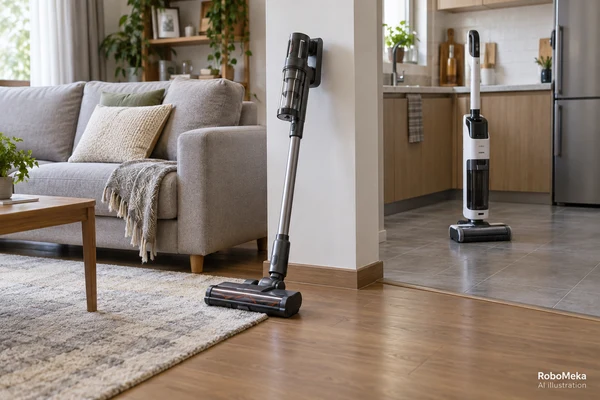
How would a hypothetical importer choose between two assortments?
Consider an importer targeting households with mostly approved hard flooring, one small rug and upholstered dining chairs. Its initial brief requests one machine for everything. The supplier offers a dry stick platform and a wet floor-cleaning platform, but only the dry option has documented permissions for all the proposed dry upholstery tasks.
The importer separates daily dry pickup from periodic wet floor washing. It asks whether customers expect one purchase to cover both, and whether that expectation is supported by the offered configurations. No test result is assumed. If the wet platform does not support the rug or seating task, the retailer cannot solve the mismatch through broad photography or a multi-purpose label.
One possible assortment is a complete dry-cleaning bundle with wet cleaning presented as a separate category. Another is a wet-floor product aimed at buyers already owning a suitable dry vacuum. The choice follows customer requirements, merchandising position and documented use. Neither is inherently superior, and the final decision needs actual product evidence and commercial quotations.
What should be frozen before production approval?
Retain the approved surface statements, essential exclusions, selected head and accessory identities, instruction revision and proposed application images together. This makes it possible to check whether later packaging still describes the purchased configuration. A last-minute image substitution can create a new application claim even when the technical specification sheet stays unchanged.
Factory testing and shipment inspection should have distinct roles in the agreed plan. Application evaluation establishes the basis for the selected configuration. Shipment inspection can verify that sampled cartons contain the approved head, components and instructions. It cannot turn an untested surface claim into a demonstrated result or establish long-term finish protection.
Require disclosure when wheels, brush materials, head geometry or approved cleaning solutions change in ways relevant to intended use. Review the affected application evidence before accepting a substitution. Tie those controls to the pre-shipment inspection brief, with particular attention to components whose similar appearance can conceal a different material or revision.
Frequently asked questions
Can one vacuum be suitable for every floor type?
Do not assume universal suitability. Check the exact appliance configuration against each surface manufacturer's care instructions, including restrictions on brush agitation or moisture. A multi-surface label may describe a limited set of approved applications. Record the essential surfaces in the purchasing brief and confirm any required head or mode changes before approval.
Does a washable filter mean a vacuum can collect liquids?
No. Washability describes an authorized maintenance procedure for a particular component. It does not establish wet pickup capability for the complete appliance. Confirm liquid collection in the exact model's instructions and review its restrictions. Dry vacuums should remain within their documented intended use regardless of removable bins or washable parts.
Should buyers choose a separate tool for every surface?
Only when the intended tasks and approved configuration justify it. One suitable head may cover several surfaces, while another bundle requires changes. Evaluate task coverage, tool identification, storage and compatibility before increasing accessory count. Every supplied tool should have a clear purpose that customers can understand and the product documentation supports.
Is a successful floor demonstration enough to approve claims?
A demonstration can support a narrow observation under recorded conditions. It does not prove universal compatibility, lifetime floor protection or standardized cleaning performance. Keep the claim within the evidence, confirm both appliance and surface instructions, and request appropriate specialist evaluation when a broader or quantitative claim forms part of the retail proposition.
Conclusion
Good vacuum selection starts with a defined floor and task combination. Describe the surface condition, distinguish dry pickup from wet cleaning, identify essential room tasks and select the bundle that supports them. Keep compatibility decisions separate from convenience scores so an unsupported application cannot disappear inside a favorable overall comparison.
Prepare a vacuum application inquiry with RoboMeka covering the target household, permitted floor care, debris conditions and preferred bundle. Those details support a focused configuration discussion and a sample plan that connects customer requirements to reviewable evidence before packaging and purchasing decisions are finalized.