The short answer
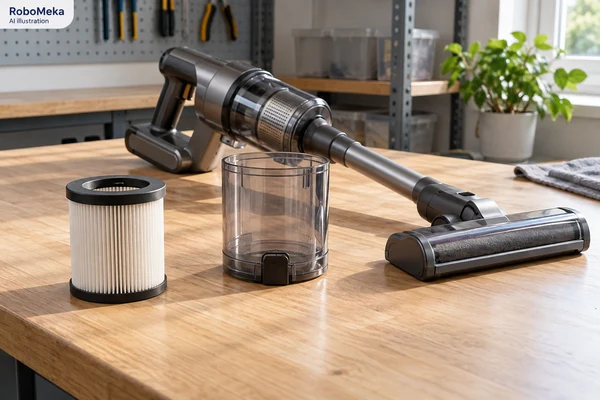
Compare bagged and bagless vacuums through the whole disposal sequence, including preparation, opening, containment, closure and replacement supplies. Evaluate handling separately from operating filtration. A clean-looking demonstration cannot establish dust-free emptying, quantified exposure reduction or a health benefit.
Introduction
A vacuum's cleaning job is not finished when debris reaches its container. Someone must open that container, dispose of its contents, check the relevant parts and prepare the appliance for use again. Bagged and bagless designs distribute that work differently, and the difference matters to a buyer building a practical product range.
Evaluate the complete disposal sequence: how the appliance is isolated, what the user touches, where the opening points, how remaining debris is handled, and how the collection system closes afterward. Keep these observations separate from filter-efficiency or health claims. An attractive emptying mechanism is not evidence of a medical benefit.
This guide is a proposed design and sample-review framework for importers, distributors and private-label brands. It does not report measured airborne dust, completed RoboMeka tests or clinical outcomes. All handling must follow the exact appliance instructions and remain limited to the materials the product is intended to collect.
What is being compared?
In a bagged arrangement, collected material is retained in a replaceable bag that is removed according to the manufacturer's procedure. In a bagless arrangement, the user empties a reusable container and performs the specified care. Actual designs vary, including removable containers, sliding mechanisms and automatic docking systems.
Do not merge these designs into a simple clean-versus-dirty ranking. A bag can have a useful closure feature yet still be inconvenient to source locally. A reusable bin can be straightforward to empty yet require occasional removal of trapped fibres or additional cleaning. The buyer needs to understand both the routine and its dependencies.
The scope here is ordinary supported household debris. Do not infer suitability for hazardous dust, liquids, hot material or industrial collection from a convenient container design. Those applications require their own appropriate equipment and evidence.
Filtration and emptying are different evidence questions
Filtration concerns how the operating system handles particles under a defined method. Emptying concerns an off-cycle handling process with its own openings and user actions. A filter designation does not automatically describe what happens when a bin is opened over a waste container.
Similarly, a closed bag after removal does not by itself establish a whole-appliance filtration claim. Examine the operating system, disposal system and maintenance procedure separately. Combining them into a broad “dust-free” statement can obscure which part has actually been evaluated.
Use the sealed-system and filter guide for the filtration question. This article adds the disposal workflow, which should be documented without converting a visual impression into a quantified exposure or allergy-reduction claim.
What can an ordinary buyer trial establish?
A supervised trial can record steps, handling difficulty, visible spills, debris remaining in the container and clarity of reassembly. It can reveal a latch that is hard to reach or a bin opening that does not align with the intended waste receptacle.
It cannot establish invisible-particle exposure simply because no dust cloud was obvious in a video. If the project requires a quantified airborne-release comparison, use an appropriate professional method with defined conditions, instrumentation and limitations. Keep that separate from routine usability observations.
Map the disposal sequence for each sample
Write down the required isolation step, accessory removal, opening action, discharge position, remaining-debris care and closure. Record whether the user must support the whole appliance or only a detached container. These details affect comfort and the space required to empty it.
Keep the evaluation consistent with the supplied manual. Do not tap, shake or reach into parts that the instructions do not authorize. If debris cannot be removed through the permitted process, record that limitation and ask the supplier for the approved next step.
| Stage | Bagged system question | Bagless system question |
|---|---|---|
| Prepare | How is access to the bag compartment made safe? | Must the wand or floor head be removed first? |
| Release | How is the collar or holder disengaged? | Which latch opens the bin and in what direction? |
| Contain | Does a specified closure engage during removal? | Can the opening be positioned within the intended receptacle? |
| Restore | Can the correct bag be seated clearly? | Can the lid, seals and container be refitted correctly? |
| Replenish | Is the approved replacement bag available? | Which reusable components need care or replacement? |
Compare complete sequences rather than counting buttons. One easy release action may be followed by an awkward closure. A slightly longer routine may be simpler to understand if each state is visible and the component is easier to support.
Examine the bin opening and discharge path
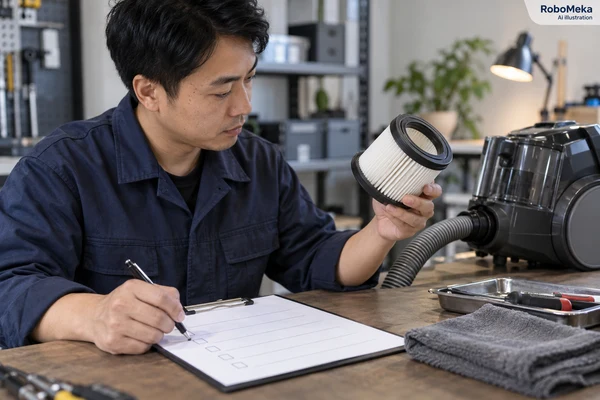
For a bagless sample, look at where collected material must travel when the container opens. Internal shoulders, narrow regions or protruding structures may hold permitted fibres. Observe the actual sample with the agreed debris rather than assuming a larger nominal volume solves the problem.
The Dyson V12 Detect Slim user manual describes a defined opening sequence and a bag-assisted disposal method for that appliance. It demonstrates why instructions and mechanism must be evaluated together. It does not authorize the same handling procedure for every other vacuum.
Check how the mechanism behaves at the permitted fill level. Do not overfill the bin to create a dramatic test. Record whether the fill indicator is visible in normal use and understandable when mixed household debris occupies the container unevenly.
Clear volume is not always usable capacity
The apparent size of a transparent vessel may differ from the permitted collection volume. Internal components and the marked fill limit matter. Ask the supplier to define any capacity statement and ensure the carton and product page use the same basis.
A buyer should also consider emptying frequency within the intended task. A compact bin may suit brief spot cleaning but interrupt a longer routine. Treat that as a customer-fit question rather than assuming the largest container is automatically the best design.
Review bag closure and replacement availability
For a bagged sample, examine the specific collar, holder and closure arrangement permitted by the instructions. Observe whether the user can remove the bag without catching it on adjacent parts. Check that the intended replacement seats correctly and that the compartment closes without force.
Miele's TU HyClean Air page identifies an automatic closure feature for its listed bag system. This is a design example, not evidence that every bagged vacuum provides the same closure or result. Obtain the exact offered system's documentation and evaluate its normal procedure.
Availability is part of usability. Ask for the bag part number, package quantity, market-specific supply plan and any approved successor policy. A convenient system loses practical value if customers cannot reliably identify or obtain the intended consumable.
Avoid false economy in substitution
A low-priced bag or container seal that appears similar may not be an approved replacement. Its fit and material can affect the intended system. Keep replacement instructions linked to the actual configuration and avoid broad “fits all” claims without appropriate support.
For range planning, use the vacuum price-factor guide to compare package contents and support costs. Disposal convenience and consumable availability should appear in the comparison alongside the appliance purchase price.
Send Your Requirements with your preferred disposal routine, target customer, local consumable arrangements and accessory bundle. These details help define a collection system that your sales and service teams can explain.
Design a controlled usability trial
Use permitted, non-hazardous household test material in an agreed amount. Choose a suitable waste receptacle and keep the setup consistent between samples. Record the starting fill condition and the operator's level of familiarity.
Ask evaluators to follow the actual instructions without live coaching unless safety requires intervention. Note where they stop to reread, grip the wrong component or cannot determine whether a lid is secure. Those observations can guide design, labelling or documentation changes.
Record active handling time separately from any later washing or drying requirement. A bin that empties quickly but needs an involved cleaning sequence may suit some customers and not others. The buyer should see the whole routine rather than a carefully selected fast moment.
Keep observations factual
Use descriptions such as “fibres remained behind the internal rib after the permitted emptying step” or “the evaluator reopened the compartment to confirm seating.” Such records are actionable. Vague labels such as hygienic, premium or effortless do not tell engineering or support what to improve.
If an observed spill occurs, document the sequence and whether the instructions were followed. Repeat the relevant permitted task after reviewing the setup. Do not hide unsuccessful runs, but do not convert a single unexplained event into an unsupported universal conclusion either.
Assess latches, hinges and accessible seals
With the appliance safely isolated, inspect the relevant closing surfaces and user-accessible seals. Check for obvious assembly issues, unclear orientation or components that can be trapped during closure. A seal is not improved by forcing the lid shut.
Ask the supplier which parts are replaceable and who may replace them. A damaged lid may require a complete bin assembly or a specific service part. This distinction affects local inventory, repair time and the economic decision between repair and product replacement.
Short sample trials do not establish long-term durability. If the project requires a cycle-life claim, agree an appropriate method and qualified evaluation with a defined configuration. Ordinary repeated opening during a usability review should not be advertised as a comprehensive endurance test.
Cleaning permissions need part-level clarity
Some components may be washable while adjacent assemblies are not. Instructions should distinguish a bin, filter, cyclone, motor housing and electrical contacts clearly. Avoid a generic statement that the whole collection system can be rinsed.
Document any required drying state before reassembly. A product page can summarize this routine, but the supplied model-specific instructions remain the controlling reference. If translated wording changes the meaning, correct it before release.
Consider automatic emptying as another workflow
A robot dock or another automatic collection arrangement transfers some disposal steps away from the appliance, but it does not eliminate the final waste-handling task. The user still needs to service the dock's collection system and resolve supported maintenance issues.
Evaluate the receiving bag or bin, access clearance, replacement process and any relevant connection seals. Keep automatic transfer performance separate from the final emptying operation. A successful transfer does not prove that every customer will find the receiving container convenient.
The self-emptying robot dock guide addresses that broader system. Do not copy its claims into a handheld or stick vacuum simply because both products use a similar-looking bag or lid.
A hypothetical product-range decision
Suppose a distributor serves two customer groups. One values reusable containers and accepts periodic bin care. The other prefers removing a closed consumable and is comfortable purchasing the approved bags locally. The same collection design need not be the best fit for both.
The distributor can compare the observed routines, customer instructions and supply dependencies before selecting a range. It should not invent medical preferences or label one group as needing a health outcome the product has not demonstrated. Practical ownership choices are sufficient to justify a differentiated assortment.
Record the decision in terms of supported use and service readiness. If the preferred bag is unavailable in the destination market, that is a commercial gap to resolve. If a bagless mechanism requires more dexterity than the intended user can comfortably provide, that is an application concern to evaluate, not something a filtration statistic can offset.
Connect the approved sample to factory and shipment checks
The release record should identify container, lid, latch, seal and consumable revisions relevant to the accepted disposal routine. Ask how changes to these items will be communicated. A small moulding change can affect handling even when the appliance's headline specifications stay the same.
Factory testing and assembly checks should follow an agreed scope appropriate to the design. Request evidence of correct component installation and relevant function. Do not assume that every production unit undergoes a lengthy customer-use trial.
Shipment inspection should verify the exact consumables, accessories and instructions in the released package. Check that artwork shows the correct disposal mechanism and does not suggest contact-free operation when the approved routine includes manual care. Use the manufacturing review process to discuss those controls without treating general factory imagery as test evidence.
Make the support photograph specific
Ask the supplier for clear images of the released collection assembly in the permitted service positions. A support page should show the actual latch and seating features, not a similar model whose release action differs. Images can reduce ambiguity without making unsupported statements about dust exposure.
Pair each photograph with the relevant configuration identity and a short action description. Keep warnings and isolation requirements in the sequence. If a later design changes the opening direction or replaces a catch, preserve the older instructions for customers who still own that version.
Use early service questions to improve clarity. A repeated question about whether a lid is fully closed may indicate that the instruction needs a better illustration, not that the user needs a longer explanation of filtration technology.
Frequently asked questions
Are bagged vacuums always better for dust handling?
No universal conclusion follows from the category name. Evaluate the exact bag, closure, holder and replacement procedure, as well as the operating filtration system. An ordinary visual trial can assess handling convenience but cannot establish a health advantage or quantify airborne exposure.
Does bagless mean there are no consumables?
No. A reusable bin does not eliminate filters, seals or other parts that may require care and replacement. Obtain the actual maintenance schedule and approved part identities. Compare the complete ownership routine rather than treating the absence of a collection bag as zero ongoing cost.
Can a buyer claim dust-free emptying after a clean-looking demonstration?
A visual demonstration alone is not adequate evidence for an unrestricted dust-free claim. It may document the handling sequence and visible spills under specific conditions. Stronger particle-release or health-related statements require appropriate methods and review, with the configuration and limitations stated clearly.
Should customers wash every removable collection component?
Only components explicitly permitted by the exact manual should be washed, using the specified method. Removable does not mean waterproof or dishwasher-safe. The instructions should distinguish the bin from filters, cyclones, motor sections and electrical parts, and explain any drying requirement before reassembly.
Conclusion
Compare bagged and bagless collection through the disposal job the customer must perform. Review the opening path, closure, remaining care, replacement parts and instructions, while keeping filtration and health claims separate. A well-defined ownership routine is more useful than a broad promise based on container type alone.
Ask for Product Catalog and include the collection style, customer tasks and consumable-support expectations for your market. Email your brief to info@RoboMeka.com to discuss configuration-specific requirements and the evidence needed before approval.