The short answer
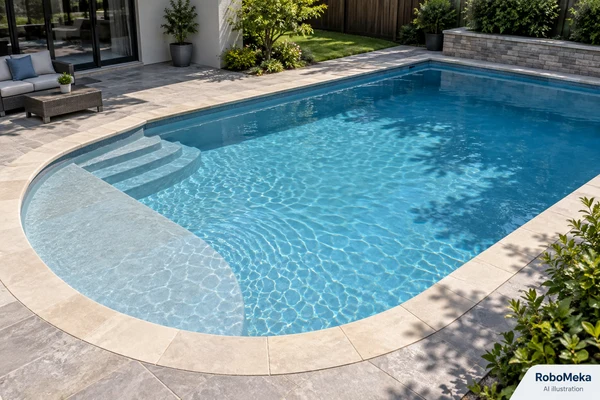
Evaluate pool-surface compatibility as the combination of the exact robot, approved brushes and tracks, and the condition of the finish. Material labels such as vinyl, fiberglass and tile are useful screening terms but cannot establish performance or absence of marking across every installation.
Introduction
Two pools described as tiled can give a robotic cleaner very different surfaces to work on. One may have small textured mosaics and frequent grout joints; another may have broad, smooth tiles. Add different wall transitions, surface condition, and brush configurations, and a simple suitable-for-tile label becomes a poor substitute for application review.
The same problem appears with vinyl liners and fiberglass shells. The material name helps screen products, but it does not describe every installation or establish that a particular robot will clean without unacceptable marking, loss of traction, or missed areas. Importers need a compatibility process that dealers can repeat with useful customer information.
This guide treats compatibility as a relationship between the exact cleaner, its approved brushes and tracks, and the condition of the pool finish. It proposes a documentation and sample-review method; it does not report completed RoboMeka surface tests or promise that any listed configuration is available from RoboMeka.
What does pool robot surface compatibility mean?
Compatibility should answer several questions at once. Is the finish included in the manufacturer's approved application? Is the fitted cleaning and drive configuration the one intended for that finish? Can the robot perform the required floor, wall, or waterline task? Is the existing surface in a condition suitable for automatic cleaning?
A positive answer to one question does not settle the others. A machine may be permitted on a finish but deliver only floor cleaning in a particular pool. Conversely, a demonstration of successful climbing does not establish long-term surface compatibility. Separate permission to use, observed cleaning performance, and durability evidence in the purchasing file.
Maytronics' cleaning-performance guidance distinguishes brush configurations for different coatings and advises checking brush and track condition. Its combinations apply to its products. Use the distinction to frame questions for another supplier rather than transferring those named brush recommendations across brands.
Start with the finish as installed
Vinyl liner pools
Record the liner manufacturer or specification if available, installation age, printed pattern, visible wear, wrinkles, repairs, and areas where the liner does not appear properly supported. Ask the owner or installer about known restrictions. A buying decision should not assume that a visibly distressed liner is an appropriate surface for a routine product demonstration.
Photograph existing marks before evaluation, with the owner's agreement. Use fixed viewpoints and enough detail to identify the same area later. A dated condition record protects the usefulness of the trial: without one, it may be impossible to distinguish pre-existing wear from a new observation after cleaning.
Maytronics Australia's pool-care guide notes that vinyl liners need careful handling around cleaning tools and automated cleaners. This is general care guidance, not approval for an individual robotic model. The purchasing decision still needs the exact cleaner's application statement and the liner supplier's advice for the installed finish.
Fiberglass pools
Fiberglass describes the shell construction, while the robot contacts the exposed finish. Record that finish's condition, any repairs or resurfacing, and the profile of steps, seats, and wall transitions. If the pool has been recoated, obtain the coating information rather than relying solely on the original shell description.
Ask the pool professional to assess questionable areas before a trial. A chalky appearance, rough patch, or visible damage should not be diagnosed from a sales photograph. The cleaner supplier can assess its product application, while the pool specialist establishes whether the finish itself is sound and ready for the intended use.
Tile pools
Describe tile size, texture, joint condition, and any changes between floor and wall materials. A mosaic floor and a smooth tiled wall should appear as two entries in the application brief. Note missing tiles, sharp edges, raised joints, and other defects for professional assessment before introducing the cleaner.
Do not ask the robot to remove deposits or stains that require a different treatment process. The supplier should define the normal debris task the product addresses. A demonstration that removes loose sediment is useful evidence for sediment pickup; it is not evidence of stain removal or restoration of a damaged finish.
Match the machine configuration to the application
Brushes are an approved component choice
Request the installed brush part number, material description, intended finish range, and replacement options. If different versions are offered, ask how the distributor or customer identifies them. Similar color and shape are not sufficient for parts control, especially where a private-label range shares housings across several variants.
Ask whether a replacement changes maintenance, preparation, or cleaning scope. Any initial conditioning or installation procedure must come from the manufacturer. Do not encourage dealers to trim bristles, add abrasive material, or combine parts to improve apparent traction. Those changes would create a configuration the original compatibility statement may not cover.
Tracks and wheels affect the contact system
The drive components also deserve identification and inspection. Confirm the approved track or wheel version, fit, wear guidance, and service procedure. Check for trapped debris before a controlled evaluation. A hard foreign particle caught in a contact area changes the test and can compromise both performance observations and surface inspection.
Keep service replacements consistent with the approved configuration. An informal substitute may appear to fit but change contact behavior or interfere with movement. Require supplier confirmation for superseded parts and update the compatibility matrix when a revision changes the applications the distributor can support.
Cleaning mode belongs in the claim
Specify whether the required result concerns the floor, walls, waterline, or all supported zones. A buyer focused on wall coverage needs evidence from walls with representative finishes. Do not let a successful floor demonstration stand in for it. The wall and waterline evaluation guide helps define those observations separately.
The same principle applies to a robot with several modes. Record the selected mode and its purpose during a trial. Compare models against the same customer task rather than selecting whichever mode produces the most attractive short video for each sample.
Use a compatibility matrix that can drive a quotation
| Application detail | Information to retain | Purchasing consequence |
|---|---|---|
| Pool finish | Material, texture, condition, repair history | Establish the actual application |
| Robot identity | Model and relevant revision | Prevent approval transfer between versions |
| Brush configuration | Part number and approved finish scope | Quote and ship the correct version |
| Drive components | Track or wheel part identity | Control service replacements |
| Cleaning requirement | Floor, walls, waterline, specific zones | Match evidence to the promised task |
| Operating conditions | Manufacturer limits and recorded trial conditions | Define where findings apply |
| Surface observations | Before-and-after condition record | Identify changes requiring review |
| Remaining uncertainty | Exclusion, supplier review, or additional trial | Keep unresolved claims out of sales copy |
A matrix is more useful than a free-text email saying all pool types. It allows procurement, sales, inspection, and service staff to reference the same approved combination. Keep the supporting manual and written supplier clarification attached to the relevant row, with the date reviewed.
If your target market includes mixed pool finishes, send RoboMeka your surface compatibility requirements. Include representative finish photographs, required cleaning zones, destination market, and the brush or service options you need evaluated before selecting a sample configuration.
Design a sample review around observable results
Set the scope and protect the evidence
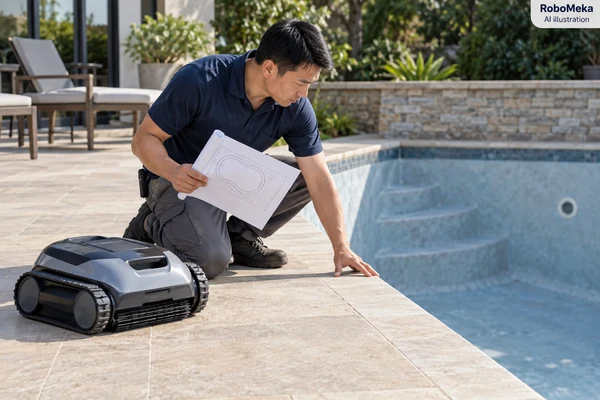
Begin with documentation confirming that the application is supported. Obtain the pool owner's permission and record the existing condition. The trial should use a sound pool finish and normal permitted operating conditions. Keep swimmers out, follow electrical and retrieval instructions, and stop if the operator observes damage, abnormal behavior, or a situation outside the approved procedure.
Use an intact, correctly assembled sample with the agreed filter and contact components. Document sample identity and condition before the test. This sounds administrative, but it is essential when buyers later compare results from a supplier's demonstration unit and a unit received from a production shipment.
Observe travel separately from debris removal
Record slipping, repeated reversals, failure to approach a wall, and incomplete transitions without assuming their cause. A cleaning failure might involve geometry, setup, maintenance, or an unsupported application. Observation should come before diagnosis. Give the supplier the sequence and conditions so technical staff can propose an approved next step.
Then assess the debris task. Use agreed, suitable material and keep the starting condition consistent where practical. Photograph the same zones before and after. Record whether debris remains untouched, is moved elsewhere, or is captured. A robot that travels across a tile floor without collecting the target debris has not met the cleaning requirement.
Examine the surface without creating another variable
Compare the recorded areas after the run using consistent lighting and viewing positions. If a mark appears, stop evaluation and obtain an appropriate technical assessment. Do not scrub it aggressively, apply an unapproved solvent, or run additional cycles to determine whether it disappears. Such actions can obscure the original observation or create further damage.
The report should describe what was seen and where. Avoid diagnosing permanent abrasion, staining, or coating failure from an unclear image. A pool professional or relevant finish supplier may need to evaluate the area. Preserve the sample configuration and records while the cause is investigated.
Understand what a short trial cannot prove
A few representative cycles can reveal application problems and support a limited performance decision. They do not establish years of service life or eliminate every surface risk. Request the supplier's relevant durability evidence and warranty terms separately. A credible purchasing file distinguishes short application evaluation from longer validation work.
If factory testing is proposed, ask which surfaces and components it covers, how specimens represent actual pools, and what acceptance criteria are used. Do not label a general motor run or leak check as surface-compatibility testing. The test name should describe the question the test actually answers.
Consider a hypothetical mixed-finish product range
A distributor may serve vinyl-lined residential pools, molded fiberglass pools, and tiled installations through the same dealer network. One universal SKU would simplify inventory, but only if its documented scope and representative evidence support those applications. Inventory convenience cannot establish compatibility by itself.
Suppose a supplier proposes one robot body with two approved brush configurations. The distributor then has to decide whether to stock separate finished SKUs, configure units through an authorized process, or narrow the applications offered. Each approach affects labeling, training, spare parts, and the chance of a customer receiving the wrong setup.
The commercial comparison should include those operational costs. Separate SKUs may require more inventory but clearer selection. An approved conversion process may reduce finished stock while demanding trained staff and traceable parts. A narrower range may be the most supportable option when one finish represents only occasional inquiries.
Mixed finishes within one pool need equal attention. A hypothetical installation might combine a vinyl-lined floor with a separate molded entry structure. The buyer should identify the area the robot will actually contact and obtain confirmation for that combination, rather than selecting whichever material occupies most of the pool. Record any boundary between approved cleaning areas and features left for manual maintenance. This also helps service teams avoid recommending a configuration that solves a traction complaint on one surface while leaving another part of the same application unreviewed.
This scenario is a procurement exercise, not a claim that a particular RoboMeka model has interchangeable brushes. Confirm available configurations, permitted service work, and application evidence in the supplier discussion before building an assortment around them.
Make shipment inspection relevant to compatibility
Inspection at dispatch should compare production goods with the approved configuration. Check model labels, brush and track identity, included accessories, visible damage, assembly, and the correct instructions. Use the agreed sampling and inspection plan. A visually similar substitute should be referred back to the buyer rather than treated as an equivalent part without evidence.
Retain photographs that show identifiers and contact components clearly. Record any accepted revision against the purchase order. If a change could affect cleaning behavior or finish compatibility, decide whether an additional sample review is needed before releasing the associated sales claim.
This process does not require pretending that every shipped unit underwent an installed-pool test. It requires an honest distinction between product validation, batch inspection, and individual field application. Those activities answer different questions and should have different records.
Build service guidance around the full combination
A service form should collect the model, component version if known, finish, affected cleaning zone, observed behavior, and maintenance history. Ask whether the issue began after a part replacement, pool repair, or change in normal conditions. These details are more useful than repeatedly asking whether the cleaner is suitable for tile.
Link maintenance advice to the exact manual and approved parts. The pool cleaner maintenance guide provides a framework for owner care, while the pool cleaner filter selection guide helps distinguish collection issues from contact or movement issues. Avoid changing several variables simultaneously when reviewing a complaint.
Frequently asked questions
Is a robot labeled for vinyl safe for every vinyl liner?
The label must be read with the model instructions, liner condition, and any finish-supplier restrictions. Existing damage, repairs, wrinkles, or sensitive patterns require review. A general material category does not replace assessment of the actual installation or establish a guarantee against every kind of marking.
Do fiberglass pools always need a special brush?
There is no cross-brand rule that buyers should apply automatically. Ask the cleaner manufacturer which configuration it approves for the particular finish and required cleaning task. A brush recommendation for another model should not be treated as permission to modify the proposed product.
Can a robot climb tile but fail to clean it well?
Yes, travel and cleaning are separate observations. The robot may reach the area while leaving debris or missing sections. Evaluate the desired result under documented conditions, and distinguish loose debris removal from deposits or stains that call for assessment by a pool professional.
Should buyers compare brush softness by touch?
A tactile comparison may describe the sample, but it does not establish material properties, surface compatibility, or cleaning effectiveness. Request component identification and application evidence. Hand feel cannot reproduce the complete contact system or the conditions of a running robot in a pool.
What should happen after a supplier changes a brush or track?
Review the change against the approved configuration and ask whether application scope or maintenance guidance changes. Update parts records and dealer information as needed. Where the change could affect a critical finish or cleaning claim, agree on additional verification before representing it as equivalent.
Conclusion
Pool robot compatibility is best managed as a documented combination of machine, contact components, finish, condition, and cleaning task. That approach gives importers a practical way to select samples, control production versions, and explain application limits without relying on broad material labels.
To prepare a finish-specific sourcing brief, contact RoboMeka with your intended pool applications. Share the surface mix in your market, required cleaning functions, expected quantities, and service-part needs so the discussion can identify what requires confirmation and evaluation.