The short answer
A soft vacuum roller does not establish that a complete cleaner head is safe for every hard floor. Buyers should check the floor manufacturer's care rules, inspect rollers and wheels for trapped debris, and evaluate approved samples under documented conditions. Limit surface claims to the finishes and operating conditions actually supported.
Introduction
A soft roller can look reassuring beside a delicate wood floor. Yet the roller is only one of several parts touching or approaching that surface. Small wheels, the soleplate, trapped grit and a worn edge all deserve attention before a buyer approves a hard-floor vacuum or a claim about scratch prevention.
A vacuum soft roller does not establish that a complete cleaner head is suitable for every floor finish. Qualify the flooring manufacturer's care instructions, the approved head configuration and the condition of all contact surfaces. Evaluate representative samples under documented conditions, then limit claims to the surfaces and operating conditions supported by that evidence.
For importers and private-label brands, this is a product-application question with consequences for instructions, spare parts and after-sales handling. The proposed checks in this guide are a procurement framework. They are not a report of actual RoboMeka testing, a universal floor-safety certification or a recommendation to test an unknown head on a customer's valuable flooring.
Separate floor material from floor finish
The word hardwood describes a broad material category, not a complete cleaning specification. A finish, coating, surface texture or existing condition can change what care is appropriate. Likewise, laminate, vinyl and tile are not interchangeable merely because they are hard underfoot. Obtain product-specific guidance when selecting the evaluation surfaces.
Build the customer requirements around actual flooring examples. Record the manufacturer and product reference where available, the finish or treatment, whether a rotating cleaning element is permitted, and any specific restrictions. For unknown flooring, avoid confident compatibility statements until the customer can establish the relevant care instructions.
Distinguish an approved new surface from a damaged or contaminated floor. An existing scratch, loose edge or residue may affect the apparent result of a cleaning demonstration. Photograph the sample before evaluation and record its preparation. Otherwise the team may attribute a pre-existing mark to the vacuum or miss a subtle change after use.
The floor and use-case selection guide supports the broader range decision. This article narrows that work to the cleaner head's contact with the finish and the evidence needed for a surface-related claim.
What a soft roller does and does not tell you
A soft roller describes part of the cleaner head's construction. It may be designed to collect material on hard floors, but the name does not specify the complete contact geometry, the debris it can safely handle or the finishes the assembled head has been evaluated against.
Dyson's soft roller cleaner-head description identifies woven nylon and carbon-fiber elements for its particular hard-floor tool. This is an example of a material and application description tied to a defined accessory. It does not establish a blanket scratch-free claim for every product described as having a soft roller.
Ask suppliers to identify roller material, replaceable parts, maintenance access and the exact models using the head. Request the actual surface-compatibility instructions rather than accepting phrases such as suitable for all floors. Those instructions should explain any exclusions, necessary preparation and circumstances requiring the user to stop.
Avoid inferring performance from color, plush appearance or finger feel. The contact pressure and motion during operation differ from touching an unpowered sample on a table. The practical question is what the assembled tool does on approved surfaces in normal use, with the care and maintenance the customer can realistically provide.
Inspect every possible contact point
Turn an isolated, unpowered head over and examine its wheels, roller ends, soleplate and protective strips according to the maintenance instructions. Look for molding flash, sharp edges, displaced parts, exposed fasteners or contamination. This visual inspection is useful before application trials, but it cannot prove compatibility on its own.
Observe whether each wheel turns freely and whether the floorhead sits as designed. A wheel that drags or a missing support part can change how the housing meets the floor. Record the condition and stop using a suspect sample until the supplier has reviewed it. Do not sand, trim or modify the head as an improvised approval method.
Examine the route by which ordinary debris enters and leaves the head. Consider places where material can lodge around wheel axles, at the edge of a protective strip or beside the roller. A cleaning instruction that requires inaccessible disassembly is less practical than one supported by clear, user-serviceable access.
Floor-care supplier Bona warns that inappropriate vacuum contact, including a beater bar contacting the bare floor, can damage a wood-floor finish in its wood-floor cleaning guidance. For buyers, the useful implication is to check contact and care instructions for the complete system, including the flooring itself.
Distinguish pickup tests from surface-condition tests
A pickup trial asks how effectively the machine removes defined debris. A surface-condition trial asks whether the approved cleaning procedure changes the sample's finish. Passing one does not automatically answer the other. Keep separate records so a strong debris-recovery result cannot conceal a surface concern.
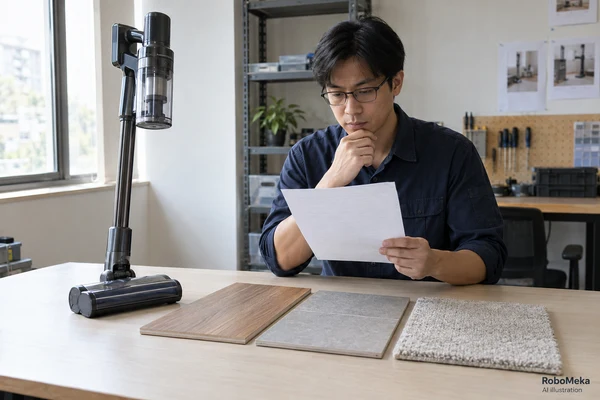
Start surface evaluation with clean, representative coupons or panels approved for the exercise. Use consistent illumination and viewing positions for before-and-after inspection. Record any magnification, photographic settings or instrumental method used. A specialist laboratory may be needed when a claim requires more than a visual comparison.
Agree the cleaning direction, speed or timing approach, number of passes and operating mode before the trial. Note whether the test is intended to represent ordinary use or a specific agreed condition. A result from one unusual procedure should not become a broad claim about everyday homes.
For debris pickup, use only materials within the machine's permitted use and a controlled method appropriate to the objective. Do not scatter sharp grit onto valuable flooring to see whether it scratches. If contamination tolerance needs formal evaluation, use sacrificial samples and a qualified procedure with clear limits and supplier agreement.
A practical approval matrix for hard-floor heads
Organize decisions by evidence category rather than by a single overall star rating. This helps purchasing distinguish an unresolved application question from a manufacturing defect or a maintenance requirement. A supplier can then respond with the relevant document, revised part or additional evaluation.
| Evaluation item | Evidence to collect | Decision it supports |
|---|---|---|
| Flooring care permission | Product-specific flooring instructions | Whether the proposed cleaning method is appropriate to assess |
| Cleaner-head configuration | Part reference, roller and wheel details | Whether trials and production use the same assembly |
| Initial physical condition | Photographs and inspection notes | Whether a sample is fit for evaluation |
| Controlled surface trial | Declared procedure and before-and-after record | What limited compatibility conclusion the trial supports |
| Approved debris pickup | Tool, mode, material and outcome | Whether the head performs its intended cleaning job |
| User maintenance | Demonstrated access and clear instructions | Whether the customer can maintain the evaluated condition |
| Replacement parts | Compatible part numbers and availability | Whether wear can be addressed after sale |
Define the acceptance criteria before comparing samples. If the buyer requires no visible change under a specified inspection method, write that exact condition into the evaluation record. Do not later translate it into guaranteed never to scratch. The first is a bounded observation; the second is an unlimited promise.
Send your requirements to RoboMeka with the intended flooring categories, available care instructions and the surface claims you want to make. Request a model-specific head configuration and an agreed compatibility evaluation before finalizing retail copy.
Make maintenance part of the compatibility decision
A head that is clean at sample approval will not remain in that state throughout ownership. The buyer should understand how a user inspects it, removes ordinary accumulated debris and recognizes worn contact parts. This is central to the product application, not merely a maintenance appendix.
Ask the supplier to demonstrate removal of the components intended for user care. Establish which roller or cover parts are washable and which contain electrical or other components that must remain dry. Instructions should provide drying and reassembly requirements for the specific model rather than borrowing guidance from a similar product.
Consider the transition between rooms. A customer may move from a gritty entrance area to a more delicate living-room floor. The handover should explain appropriate pre-cleaning inspection and removal of visible hard debris, within the machine and floor instructions. Do not present suction alone as a substitute for inspecting an unsuitable object.
Use the vacuum filter and maintenance sourcing guide to coordinate these requirements with the wider cleaning routine. If roller care is unusually complicated, that affects the customer segment the product can serve and the support materials needed at launch.
Evaluate wear without inventing a universal lifespan
A fixed replacement interval is only useful when it has a documented basis for the intended application. Different floors, debris and use patterns can produce different wear. Ask what the supplier's maintenance criteria actually are and what evidence supports them. Do not invent a number of months to make the article or packaging appear precise.
Inspect agreed wear samples or supplier-provided durability records where available. Note the method, configuration and conclusions, including whether wheels and protective strips were included. A roller-only durability claim does not describe the life of the complete cleaner head.
Define visible conditions that require service according to the approved manual. These may concern damaged parts, abnormal contact or a wheel that no longer moves correctly, but the final wording must match the supplied design. Stop-and-check instructions should be easy for an ordinary customer to understand.
Plan the replacement offering before approving the range. A consumable roller is useful only if its correct version remains identifiable and available. Where smaller wear components are not user-replaceable, determine whether the service solution is a complete head and how that changes support cost. The spare-parts planning guide provides a framework for this decision.
Write a defensible hard-floor product claim
A useful claim names the application and its conditions. For example, a buyer might describe an approved head as intended for compatible sealed hard floors when used and maintained according to both manufacturers' instructions. The final wording should follow the actual evidence and relevant market requirements, not this example alone.
Separate construction language from performance language. Soft roller included describes a component. Evaluated on specified floor samples describes a particular assessment. Scratch-proof or safe for every floor asserts a much broader outcome and would require correspondingly stronger evidence that a small sample trial does not supply.
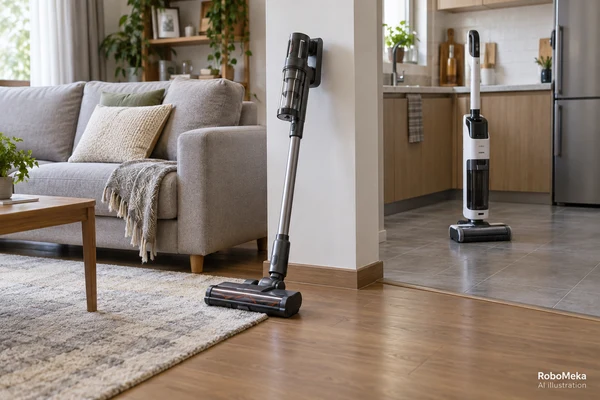
Show realistic care in application images and videos. A clean head on an identified surface explains intended use; a dramatic pass over stones can imply a tolerance the product has never established. Illustrative or AI-generated images must be labeled appropriately and should not be presented as factory testing evidence.
Give customer-support teams the same boundaries used by marketing. If sales copy describes every hard floor as suitable while support excludes several finishes, the inconsistency creates avoidable friction. The approved wording, manual and training notes should come from the same product record.
Investigate a marking complaint systematically
When a customer reports marks, begin by preserving useful information. Ask for the machine and head reference, flooring identification if known, care history and photographs taken under ordinary and angled light. Record when the marks appeared and which areas were cleaned. Avoid deciding causation from a single distant photograph.
Recommend stopping use of the suspected head on the affected floor while the issue is reviewed. The next step should follow the supplier's support procedure and the flooring manufacturer's care guidance. Do not ask a customer to reproduce damage on another valuable section as proof.
Inspect the head safely for trapped material, damaged contact parts and incorrect assembly. Keep those findings separate from a conclusion about the floor. A removable residue, an existing finish defect and a physical scratch may require different expertise to distinguish. Where uncertain, seek an appropriate flooring professional's assessment.
Track complaints by configuration and production lot where possible. Repeated problems associated with a particular wheel or protective strip may justify a product investigation. An isolated complaint without sufficient evidence should still receive a clear response, but it should not be turned into an unsupported general claim about all soft rollers.
Connect factory controls to the approved contact design
The factory specification should identify the contact materials, relevant component versions and assembly requirements that were approved. If the supplier proposes a change, assess whether it affects the surface-contact evaluation. A visually similar replacement wheel or strip may warrant review even when the marketing name of the head remains unchanged.
Factory testing can include agreed checks for correct assembly, wheel movement, roller operation and abnormal contact or noise. Request traceable records appropriate to the production process. These checks support consistency; they are not substitutes for a material-specific compatibility assessment.
Shipment inspection should confirm that the selected samples match the approved construction and arrive without contamination or damage. Review packing protection around rollers and bristles and check that the correct care instructions are included. Record discrepancies against the product specification so corrective action is concrete and reviewable.
Frequently asked questions
Can a soft vacuum roller scratch a wood floor?
Soft construction alone cannot rule out damage from the complete head, trapped material, worn parts or an unsuitable cleaning method. Follow the floor manufacturer's care instructions and inspect the approved head before use. Buyers should base compatibility language on documented samples and conditions rather than treating the word soft as a guarantee.
Is every hard floor suitable for a rotating roller?
No universal permission follows from the term hard floor. Finish, treatment, condition and product-specific care restrictions matter. Obtain the flooring guidance and the vacuum's approved applications before conducting a trial. If either source is unclear, resolve that uncertainty with the relevant supplier instead of assuming that one successful demonstration covers other surfaces.
Does a scratch-free sample test justify a scratch-proof claim?
No. A sample test supports a conclusion about the evaluated configuration, surface and procedure. It cannot establish every possible future condition, contaminant or wear state. Describe what was evaluated and its limits. Broad wording that implies immunity to damage goes beyond what a routine procurement trial can show.
What parts should be checked besides the soft roller?
Check the wheels, roller ends, soleplate, protective strips, accessible fasteners and other possible contact areas according to the maintenance instructions. Look for debris, damage, incorrect assembly and restricted wheel movement. The assembly should match the approved reference. Isolate the machine before inspection, and do not modify parts to make a suspect head usable.
Should a buyer specify a fixed roller replacement interval?
Only when the supplier provides an appropriate documented basis for that interval. Otherwise, follow the model's inspection and condition-based replacement guidance. Procurement should still establish part identification, availability and service responsibility. A clear replacement process is more useful than an arbitrary calendar promise that ignores floor type and usage.
Conclusion
Buy a hard-floor cleaner head as a complete contact system. Floor-care permission, physical condition, controlled surface evaluation and maintainable components belong in the same approval record. That record supports credible product language and gives service teams a practical basis for investigating problems without overstating what a soft roller can guarantee.
Ask RoboMeka for a product configuration review with your intended floor applications, head requirements and proposed compatibility claims. Use the response to define an evidence-based sample plan and the production checks needed for your range.