The short answer
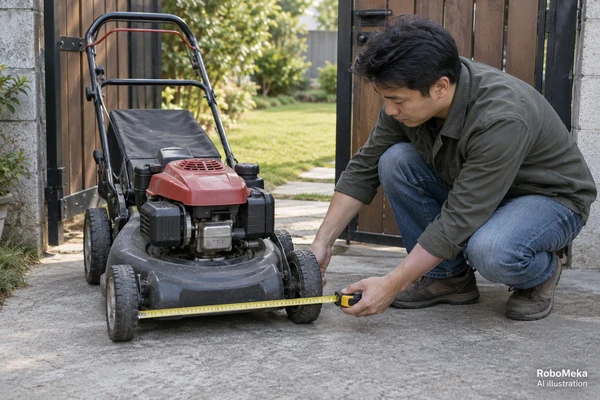
Robotic mower edge performance depends on boundary geometry, permitted wheel travel, cutting-system reach, and installation settings. Inspect walls, level paving, beds, and corners separately. Agree which strips still need manual trimming and evaluate landscaping changes only when they remain compatible with the mower manual and the site’s safety requirements.
Introduction
A robotic mower can leave the middle of a lawn looking consistent while a narrow strip remains beside a wall. That strip may be an expected consequence of the installation, a boundary that needs adjustment within approved limits, or a finish the customer never agreed to accept. Those are different situations with different remedies.
Robotic mower edge performance depends on boundary geometry, permitted wheel travel, cutting-system reach, and installation settings. Inspect walls, level paving, beds, and corners separately. Agree which strips still need manual trimming and evaluate landscaping changes only when they remain compatible with the mower manual and the site's safety requirements.
This guide helps dealers, distributors, and property managers turn “cuts to the edge” into a usable purchasing specification. It focuses on boundary finish and remaining work rather than repeating general cutting-width comparisons. The proposed evaluation methods and scenarios are planning examples, not reported RoboMeka test results or promises about an unspecified model.
Define the finish before comparing features
Ask what the customer means by a finished edge. They may want all upright grass cut beside a wall, a clean line where turf meets a path, or removal of grass spreading across paving. Those outcomes involve different geometry and may require different tools or maintenance activities.
Define the inspection location and viewing condition. A photograph taken from across the garden can hide a narrow strip that is obvious beside the patio. Conversely, an extremely close image of one blade of grass may not represent the agreed appearance requirement. Choose a practical acceptance method with the customer before the sample session.
STIHL's lawn-edge trimming guide explains that mowing and edge trimming can be separate tasks, particularly around borders and raised beds. This supports including residual trimming in the purchase discussion. It does not mean every edge requires the same tool or that every robotic installation leaves an identical strip.
Write the desired result for each boundary type on a plan. The final specification can accept different outcomes at a front entrance, a rear fence, and a low-visibility planting bed. A single promise of “perfect edges” is less useful than a clear agreement about those locations.
Separate body clearance from cutting reach
A mower's external outline, wheel position, and cutting reach are related but different. The body must remain within the approved operating arrangement while the cutting system reaches the intended grass. A machine that can drive beside a wall may still leave grass beyond the cutting system's reach.
Ask the supplier for the dimensions and installation instructions relevant to edges, not only the headline cutting width. Request clarification about dedicated edge mechanisms, permitted approach behavior, and any settings that influence the result. Avoid deriving unsupported reach measurements from product photographs or animations.
The cutting-width and height buyer guide explains the general dimensional comparison. For edging, add the boundary material, its height relative to the lawn, available wheel support, and the direction from which the mower approaches. These details connect a specification to an actual finish.
Do not attempt to improve reach by fitting unofficial blades, changing guards, or altering the cutting mechanism. Installation adjustments must remain within the manufacturer's instructions. If the desired finish cannot be obtained within those limits, include appropriate trimming or consider a professionally assessed landscape change.
Classify every lawn boundary
A level paved strip can offer different conditions from a raised curb or a flower bed. A wall prevents the mower body from continuing beyond the lawn, while a permitted level surface may allow a different supported path. The exact arrangement still depends on the machine and its installation instructions.
Soft borders deserve their own review. Loose mulch, exposed soil, irregular stones, and changing plant growth should not be treated as equivalent to a stable paved edge. Ask the installer and landscape professional which surfaces can support the intended arrangement and what ongoing maintenance keeps them suitable.
Corners introduce another distinction. Cutting along a straight boundary does not prove that the same mower reaches an inside corner. Approach direction, turning space, and the boundary system can change the finish. Include corners in the survey instead of accepting a demonstration on a long straight edge as representative of the entire garden.
Identify boundaries beside hazards separately. A cosmetic improvement never justifies reducing a required barrier or safety margin near a road, drop, water feature, or another excluded area. Use the model's instructions and the applicable site assessment to determine the approved arrangement before discussing appearance.
Use a boundary-finish comparison table
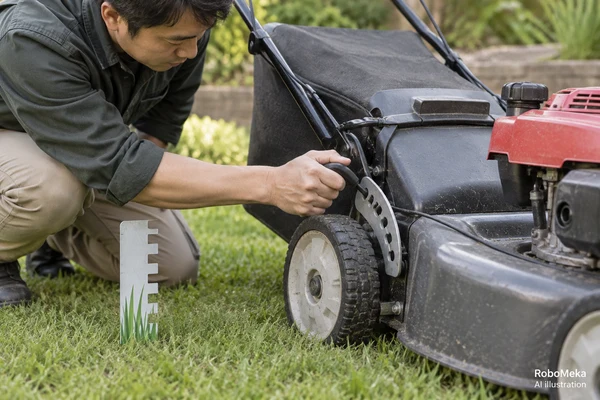
This worksheet is a proposed evaluation structure. It does not prescribe universal installation distances or claim that any listed outcome is guaranteed for a particular model.
| Boundary type | Main question | Observation to record | Possible remaining work |
|---|---|---|---|
| Wall or solid fence | How close can the approved cutting system reach? | Continuous uncut strip and changes along the wall | Suitable manual trimming |
| Stable paving level with the lawn | Is supported wheel travel permitted on the surface? | Finish along the transition and stable movement | Occasional edge maintenance as agreed |
| Raised curb or border | What clearance does the model require? | Grass left beside the vertical obstruction | Trimming or a reviewed landscape redesign |
| Flower bed or loose-material edge | Can the boundary remain stable and clearly defined? | Missed grass and movement of border material | Border upkeep and separate trimming |
| Internal corner | Does the approved route reach the corner? | Remaining patch and required turning space | Localized manual work |
| Boundary beside a hazard | What protective arrangement is required? | Compliance with the approved safety design | Accept finish limits and maintain separately |
The useful output is a marked plan with an accepted finish and responsibility for each section. It lets the dealer explain what the robot will maintain and what the property owner or contractor will still do, without using an average that conceals difficult edges.
Examine dedicated edge-cutting features precisely
A dedicated edge feature should be evaluated as a defined mechanism with operating conditions. Ask which exact model includes it, how it is activated, where it applies, and which maintenance requirements it adds. Similar model names or app layouts do not prove identical hardware and behavior.
Husqvarna's EdgeCut support description explains a dedicated rear cutting disc and a boundary-related maneuver on specified models. It also distinguishes how different types of stay-out zones interact with the feature. This demonstrates why “edge cutting” needs model and boundary context rather than being treated as a universal function.
For another supplier's product, request equivalent explanations in its own documentation. Does the feature apply around both the outer lawn and internal exclusions? Does the approved behavior require particular approach space? What finish should a buyer reasonably evaluate beside a raised obstruction? Leave unanswered questions visible in the comparison.
Include service implications in the purchase specification. An additional cutting mechanism may require its own inspection or replacement parts. The buyer should know the correct part identities and maintenance instructions rather than assuming that the main cutting assembly covers every service need.
For an edge-performance and configuration review, send your lawn boundary requirements. Include photographs of walls, paving, beds, and corners, together with the finish expected at each location, so a proposed mower can be assessed against the actual application.
Review installation before proposing landscaping
Installation preparation should establish the current boundary geometry and the permitted setup. If a sample leaves a strip, first ask whether the configuration matches the manufacturer's instructions and the approved plan. Do not immediately blame the machine or begin moving boundaries closer to obstacles without understanding the cause.
The robotic mower installation checklist can support that review. Record the relevant settings, boundary position, and actual surface condition. A support discussion becomes more useful when it includes those observations instead of a single photo labeled “missed edge.”
If the installation is correct and the customer wants a different result, compare manual trimming with a professionally designed landscape change. The comparison should include construction, drainage, surface stability, future maintenance, and any necessary boundary reinstallation. Do not recommend a paved strip of an invented universal width.
Confirm the proposed design with both the mower installer and landscape professional before construction. A surface that looks level in a drawing may not preserve the intended support or clearance in service. The quotation should identify who accepts the finished surface before the robotic mower is commissioned against it.
Evaluate edge finish under controlled conditions
A proposed sample session should cover representative boundaries on a suitable, inspected site. Confirm approved settings and keep people, pets, and wildlife outside the operating area. Observe the mower from a safe position without placing hands or measuring tools near moving cutting equipment.
After stopping and isolating the mower according to the instructions, inspect the selected boundaries. Record any residual strip or corner patch using an agreed method and consistent reference points. Photographs should show enough context to identify the boundary, not only a cropped close-up that hides the surface and installation arrangement.
Keep actual measurements separate from expected values. If a supplier claims a particular edge result, record the conditions attached to that claim and determine whether the sample matches them. Do not substitute an unmeasured visual impression or repeat a catalog figure as though it were an observed result.
Evaluate the complete supported mowing behavior required for the feature, rather than judging only a partial pass. If the manufacturer's procedure needs a specific sequence, document that sequence. The final statement should identify what was observed, which boundaries were included, and what remains unverified.
Price the remaining trimming as a real task
Remaining trimming is an operational requirement, not necessarily evidence of a faulty mower. Identify the affected length or locations, access restrictions, tools, and frequency to be determined from actual growth and customer expectations. The contractor should assess the task rather than inherit a vague promise that only “a little touch-up” remains.
Plan trimming separately from robotic operation. Follow the instructions for both tools and ensure the robot is stopped and kept out of the shared work area. Avoid scheduling a person to work around borders while the mower continues close by simply to shorten the visit.
Compare complete ownership options. A model with different edge capability may reduce some manual work but have a higher purchase or service cost. Landscaping may change the finish but require construction and upkeep. A conventional trimming visit may fit the property better than either option, depending on the customer's priorities.
Do not invent annual savings from a single trial. Record observed work and identify the seasonal assumptions. The mower price-factor guide can help compare complete quotations, while the boundary worksheet identifies which costs and tasks belong specifically to edge finish.
Consider a hypothetical mixed-boundary property
Imagine a proposed garden with a level patio edge, a raised planting bed, a long fence, and an inside corner near the entrance. This example is a planning exercise, not a customer case study. The owner expects a particularly neat entrance but accepts periodic contractor work at the rear fence.
The dealer should evaluate the patio under the model's approved surface and boundary conditions. The planting bed and fence need separate finish records because the mower cannot be assumed to use the same approach there. The entrance corner deserves an explicit observation rather than being averaged into the overall lawn result.
Suppose the accepted proposal retains manual work at the fence and corner while the patio meets the desired appearance under the observed conditions. The quotation should say exactly that. If the customer wants the corner handled differently, compare a suitable alternative product or reviewed landscape change before promising a different outcome.
This process can support a smaller, clearer product range. Instead of stocking every model that claims an edge feature, a distributor can identify the boundary types each verified configuration serves and the support work it requires. The recommendation then follows evidence about the application rather than the wording on a feature badge.
Connect supplier evidence to the promised finish
Request sample evidence for representative boundaries and ask whether the same configuration is supplied in production. Factory testing can verify agreed mechanisms or controls, but a generic factory pass does not establish the finish beside every customer's wall. Keep product-function evidence separate from the site observation.
Shipment inspection should confirm the ordered model, cutting-system configuration, approved accessories, correct manual, and regional supply components. If edge performance depends on a specific version, the purchase order and inspection record should identify it. A product-family description is too broad when neighboring variants use different features.
For private-label documentation, use claim language that matches the evidence. Describe the supported feature, installation conditions, and expected remaining work. Do not replace “reduced trimming under defined conditions” with “no trimming required” unless the broader statement is supported for the stated application.
Retain the customer's accepted boundary plan after handover. A later change to beds, paving, or fences can change the finish without a mower defect. The record helps determine whether the installation needs adjustment, the landscape needs review, or the customer is requesting a different level of appearance from the original agreement.
Frequently asked questions
Do robotic mowers eliminate all manual edge trimming?
Do not assume that they do. The result depends on the cutting system, installation, boundary type, and expected finish. Walls, raised beds, and corners can require separate work even when open lawn mowing is satisfactory. Evaluate representative edges and record the remaining task before choosing a model or promising a complete maintenance service.
Does a wider cutting deck mean better edge coverage?
Not by itself. Edge coverage depends on the relationship between the cutting system, mower body, permitted travel, and boundary geometry. A headline width does not describe how close the blades can reach a wall under the approved installation. Ask for model-specific evidence and inspect the actual boundary types in the proposed application.
Will adding level paving solve every missed edge?
No. A suitable paved surface can change the available operating arrangement, but its design must fit the model instructions and site requirements. Corners, hazards, drainage, surface support, and construction quality still matter. Obtain a coordinated assessment from the installer and landscape professional rather than applying a generic strip width to every property.
Can I move the boundary closer to get a cleaner cut?
Only within the manufacturer's supported setup and after reviewing the site. Reducing required clearance can create problems that are more significant than the remaining strip. A qualified installer should assess the configuration and explain the permitted options. Never alter guards, fit unsuitable blades, or compromise a protective boundary to improve appearance.
What should an edge-performance acceptance record include?
Include the mower configuration, boundary types, relevant settings, site conditions, observation method, actual findings, and any remaining manual work. Identify which areas were not evaluated. Photographs and measurements should be taken safely after the mower is stopped and isolated, and the customer should accept the finish against the original boundary-specific requirements.
Conclusion
Edge performance becomes a manageable buying decision when each boundary has a defined requirement and an observed result. Compare cutting reach, supported installation, dedicated features, landscaping options, and residual trimming together. A clear boundary plan gives customers a realistic picture of the lawn finish and gives dealers a precise basis for support.
To discuss suitable configurations and evaluation requirements, contact RoboMeka with your lawn-edge brief. Share boundary photographs, the desired finish, destination market, and order scope so the proposed solution can account for both robotic mowing and the work that remains.