The short answer
Inspect brushes and tracks when the robot loses contact or its cleaning changes, but do not treat every missed area as wear. Confirm the approved configuration, separate debris blockage from damaged material, and match replacement parts to the exact model and revision. A successful short recheck verifies function, not a universal wear life.
Introduction
A cleaner begins slipping on a wall it previously climbed, and the customer asks for a new track. Another robot leaves debris behind despite traveling normally, and the owner orders replacement brushes. Both requests may be reasonable, but neither symptom identifies the failed component by itself. A parts recommendation needs evidence about condition, configuration, and the actual change in behavior.
Pool robot brush and track wear should be assessed through safe inspection and task-specific observations. Distinguish worn material from trapped debris, incorrect parts, or a different cleaning problem. Match any replacement to the exact model and revision, then verify the relevant function under approved conditions. Avoid promising that a generic spare will restore every missed area.
This guide focuses on contact components and replacement decisions for distributors, service teams, and private-label buyers. It complements routine care instructions without becoming a universal repair manual. Proposed inspection records and buyer trials are recommendations, not evidence of completed RoboMeka testing. The selected manufacturer's instructions determine which tasks an owner may perform.
Understand what the contact components contribute
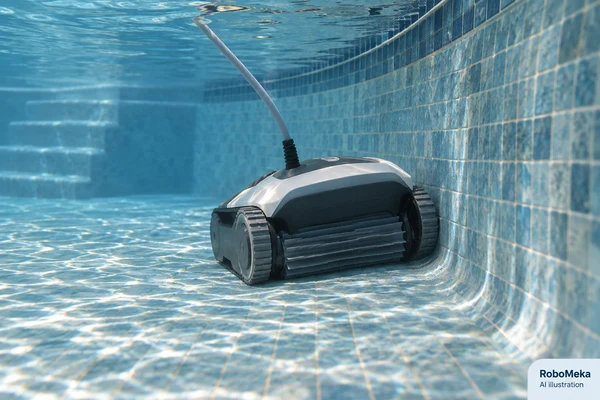
Brushes contact the pool surface to perform the cleaning action specified for the model. Tracks or wheels support travel, while the complete contact arrangement affects how the machine engages the floor and walls. The exact roles vary by design, so a visible component should not be assigned a function solely from its appearance.
Maytronics' brush replacement guidance links brush condition to scrubbing and grip and recommends checking for wear. This supports paying attention to the contact system. Its replacement method and component advice apply to the covered Dolphin products, not automatically to another manufacturer's roller or brush assembly.
Ask the supplier to identify each user-replaceable contact part on the actual configuration. A sales sheet that calls several components brushes can hide important differences in mounting, material, and permitted service. An illustrated parts reference helps the dealer order the correct item and prevents customer photographs from becoming the only compatibility evidence.
Separate wear from four other explanations
Debris can interfere without material being worn out
Hair, fibers, and other permitted removable debris may interfere with the contact or drive area. Inspect only as the manual allows, with the robot safely retrieved and isolated. Do not reach into a live mechanism or run the machine on a bench to watch its moving parts. If access requires service work, stop at that boundary.
Maytronics' LIBERTY track-care guide distinguishes debris, wear, damage, and other contributors to slipping. Its value for buyers is that a symptom needs an inspection path. Use the actual model's care procedure rather than transferring its disassembly or cleaning instructions to unrelated equipment.
The installed component may be incorrect
A track can look similar to the original while differing in fit, profile, or material. A brush intended for another model or surface may also appear plausible in a photograph. Ask when the part was installed and obtain its identification. A recent replacement is relevant context, not proof that the part is correct.
For private-label programs, link the approved spare to the production configuration rather than the marketing name alone. Different revisions may share a name while requiring different components. If the supplier cannot confirm compatibility, do not solve the uncertainty by forcing the part into position or trimming it to fit.
Surface conditions may have changed
Record whether the pool was recently resurfaced, treated, or returned from seasonal closure. A new deposit or surface condition can change the task the cleaner faces. A service team should obtain the appropriate pool-professional assessment when the surface or water condition is uncertain, instead of assuming every traction complaint proves wear.
The pool-surface compatibility guide explains why the installed finish and approved brush configuration belong in the product specification. A machine previously used successfully elsewhere is not automatically approved for the current pool, even if the owner has replaced its contact components with new ones.
Missed coverage may occur without poor traction
A robot can maintain contact wherever it travels yet leave part of the pool untouched. That observation raises a coverage or access question. Conversely, a robot may reach a wall but repeatedly slide there. Keep those patterns separate so a support request does not turn every incomplete cleaning result into a spare-parts sale.
Use the wall and waterline testing guide to define the required outcome and record what the cleaner actually does. Replacing a brush cannot be assumed to create a cleaning mode or shallow-area capability that the model never supported.
Establish a safe inspection boundary
Before examining contact components, follow the manufacturer's stopping, retrieval, isolation, and placement procedure. Use the specified support arrangement so the robot and its surface-contact parts are not damaged during inspection. Keep hands away from drive mechanisms and do not open sealed electrical or battery compartments for a wear assessment.
Record visible condition before removing permitted debris. This preserves the evidence that may explain the customer's complaint. Then perform only the owner tasks explicitly allowed by the manual. If the component is damaged, displaced, or difficult to access, seek the authorized service procedure rather than improvising with tools.
An inspection record should name the person performing it and distinguish observation from diagnosis. Visible cracking is an observation; a conclusion about the underlying material failure may require supplier analysis. This distinction helps warranty discussions remain factual and avoids creating unsupported statements about product durability.
Use condition evidence that another person can interpret
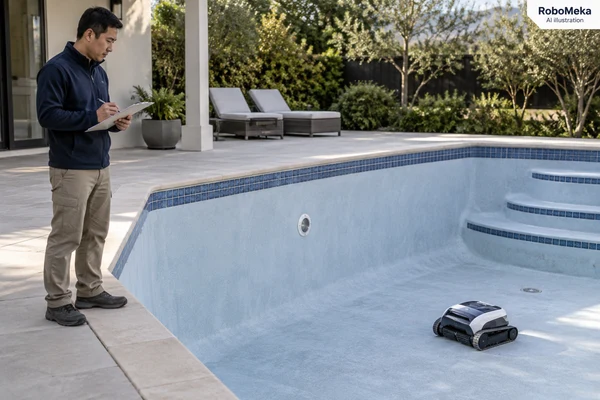
Photograph the relevant part under ordinary light with enough context to identify its position on the robot. Include the model label separately when appropriate. Avoid extreme closeups that hide scale or orientation. Do not place a hand or measuring tool into a mechanism while the machine can move.
Where the manufacturer provides a wear indicator or replacement criterion, use that criterion and record it accurately. If no criterion is supplied, ask for one rather than inventing a minimum tread depth or brush height. A buyer can request clearer documentation without pretending that visual judgment establishes a universal replacement threshold.
Retain the removed part when the supplier requests it for assessment, following its handling instructions. Label its origin and service record so a later review can connect the physical component to the reported symptom instead of relying on memory.
| Condition recorded | Immediate question | Appropriate next evidence |
|---|---|---|
| Flattened or missing contact material | Does it meet the maker's replacement criterion? | Model-specific wear guidance |
| Loose or displaced track | Is continued use permitted? | Authorized inspection and fit review |
| Debris around a contact area | Can the owner remove it safely? | Manual procedure and post-care observation |
| Different parts on similar machines | Are both approved configurations? | Parts references and revision records |
| No obvious physical change | Is the symptom actually contact-related? | Travel and cleaning observations |
The table organizes a conversation; it does not authorize continued operation of a damaged machine. When the manual requires stopping, follow that instruction. A dealer's desire to complete a video demonstration should never override the product's service boundary.
Decide whether replacement is justified
A useful replacement decision combines the approved criterion, visible condition, and the affected task. It should state the identified part, why replacement is proposed, and who may install it. If the evidence is incomplete, describe the additional inspection required rather than presenting a speculative part order as a confirmed repair.
Send RoboMeka your contact-component requirements with the robot configuration, intended pool surfaces, service arrangement, and spare-parts expectations. These inputs help define the documentation and compatibility evidence needed for a supportable sourcing program.
For an established dealer, keeping known-compatible spares may shorten the response to a confirmed issue. That does not justify routinely fitting a new part as a diagnostic experiment without manufacturer permission. A replacement can alter the evidence and create another variable if the original symptom had a different cause.
Verify the spare before it reaches the workbench
Match identity, revision and installation scope
Use a controlled part number tied to the robot model and relevant revision. Confirm whether the spare includes associated clips, fasteners, or supports and whether those items must be renewed together. The supplier should specify the required installation scope; do not assume that a bare track is a complete service kit.
Ask whether replacement is an owner task, a trained-dealer task, or an authorized-service task. Include that boundary in customer materials. An online video showing a similar shell being opened is insufficient authorization for the supplied model, particularly when access passes near sealed, electrical, or spring-loaded components.
Confirm the approved surface application
Replacement should preserve the approved finish compatibility. A harder-looking material or more pronounced tread is not automatically better. Ask the supplier what surface application the component supports and whether the change alters any operating instruction. Keep the finish manufacturer's restrictions in view when the surface is vulnerable or newly installed.
For mixed product ranges, avoid bins labeled only small or large track. Store parts with their identifiers and compatibility references. A simple inventory practice can prevent an attractive but incorrect spare from being selected during a busy service visit, when the original packaging and manual may be elsewhere.
Recheck the function that prompted the service
After an authorized replacement, perform the manufacturer's required checks and a permitted operational observation. Return to the original complaint: slipping on a particular wall, poor contact on a floor, or inadequate scrubbing in a reached area. A robot powering on does not establish that the relevant task has been restored.
Use comparable conditions where practical, and record unavoidable changes. If the pool was treated, the filter was replaced, and the brushes were renewed together, a better result cannot be attributed solely to the brushes. The report can still document successful operation while remaining honest about what the intervention proves.
A short recheck establishes immediate function under observed conditions. It does not establish a new part's service life or guarantee that all future coverage complaints are resolved. Give the customer the applicable care instructions and a clear path to support if the same behavior returns.
Build a wear record for procurement
Record use rather than assuming a calendar lifespan
There is no universal brush or track replacement interval for every pool robot. Ask the supplier for its inspection guidance, replacement criteria, and applicable operating assumptions. Usage, surface, care, and conditions belong in the record when buyers review component life. A date alone describes elapsed ownership, not the work performed.
Dealers can gather useful field information without claiming a controlled durability study. Record model, part revision, reported use, observed condition, and the reason for replacement. Keep uncertain customer estimates labeled as estimates. Over time, this may support better stocking decisions, while remaining distinct from a verified lifetime specification.
Compare support cost using the whole intervention
The part price is only one element of the service arrangement. Consider availability, shipping, authorized labor, inspection time, and the customer's downtime. A low-cost component that requires unavailable specialist work may be less practical than a clearly documented service kit supported in the target market.
The spare-parts planning guide provides broader sourcing context. For contact components, the immediate objective is a usable connection between the installed robot and its approved replacement. Keep that connection intact when a supplier changes packaging, a distributor changes its internal code, or an older model leaves the main catalog.
Keep factory and shipment checks relevant to wear
Factory testing can confirm that a sample's contact configuration performs the agreed task under stated conditions. A brief demonstration cannot prove years of wear resistance. If a supplier presents durability results, ask about the method, surface, duty, component revision, inspection criteria, and relationship to the proposed product application.
Shipment inspection should verify the specified parts, installation quality within the agreed inspection scope, and spare-kit identity. Appearance checks can detect an obvious mismatch, but they cannot establish an unseen material formulation or long-term behavior. Ask for supplier change control where the purchasing decision depends on a particular contact component.
For a hypothetical distributor serving several pool finishes, a sensible assortment may include separate approved spare configurations. The benefit comes from documented application fit, not from claiming that every pool needs a specialized brush. Keep the ordering process simple enough that the dealer can reliably select the correct option after the sale.
Frequently asked questions
How can I tell whether a pool robot brush is worn out?
Use the manufacturer's wear indicators or replacement criteria for the exact component. Visible loss, cracking, flattening, or other damage should be recorded and assessed through the approved support process. Do not invent a universal measurement. A change in cleaning alone is incomplete evidence because surface condition, debris, filters, and coverage can also affect the result.
Does slipping always mean the tracks need replacement?
No. Slipping is an observation that needs a model-specific inspection. Trapped debris, an incorrect component, surface conditions, or another issue may be relevant. Safely isolate the robot and follow permitted checks, then seek support if the cause remains uncertain. Do not keep operating a damaged or displaced track simply to complete a comparison.
Can I install a generic track that appears to fit?
Use a replacement approved for the exact model and revision. Similar appearance does not establish the required dimensions, material, profile, or operating compatibility. Obtain written confirmation from the supplier and follow the authorized installation procedure. Trimming, stretching, or otherwise modifying an uncertain part introduces another uncontrolled condition and should not be treated as normal service.
Should brushes and tracks always be changed together?
Follow the manufacturer's component and service-kit instructions. Some work may require related parts, while another model may allow individual replacement. Ask for the defined installation scope and inspect other components only as permitted. A blanket rule can create unnecessary expense or omit a necessary item, so the decision should follow the supplied product documentation.
Can a short test establish replacement-part durability?
No. A short approved recheck can verify immediate installation and the relevant operating function under recorded conditions. Durability requires appropriate evidence over a defined duty and environment. Keep those conclusions separate when reporting to customers or comparing suppliers, and avoid turning a successful demonstration into a fixed service-life promise.
Conclusion
Brush and track replacement should follow evidence about the contact system, not a broad assumption that every cleaning complaint is wear. Inspect safely, identify the exact component, preserve surface compatibility, and recheck the task that triggered service. Clear parts records and realistic durability claims make a pool robot easier for dealers to support.
Request a pool robot contact-parts and service review from RoboMeka with your target surfaces, model requirements, expected duty, and regional support plan. The resulting brief can connect sample evaluation, shipment inspection, and compatible spare supply.