The short answer
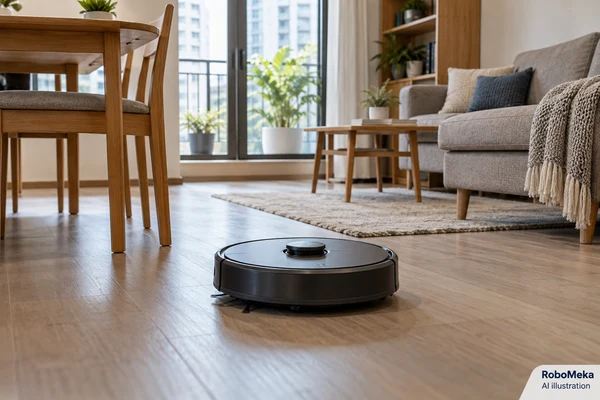
Choose a navigation platform by testing the complete system in representative layouts. Mapping, localization, object handling and cleaning coverage are different outcomes. Record hardware and software versions, evaluate supported lighting and recovery scenarios, and review data handling and service responsibilities alongside the sensor architecture.
Introduction
Choose between LiDAR and camera robot vacuum platforms by evaluating the complete navigation system in the intended home environment. Mapping, localization, obstacle handling and cleaning coverage are separate capabilities. A sensor label does not establish all four, and a hybrid platform may use different sensors for different jobs rather than fitting a simple either-or category.
For distributors and private-label brands, the purchasing question is practical: can this configuration complete the intended cleaning routine with acceptable setup, intervention and support? That requires documented trials, a clear software scope and an understanding of what data the connected product handles. A technology comparison is useful only when it leads to a better application decision.
This guide proposes an evaluation for robot vacuum configurations. It does not rank untested platforms or claim that RoboMeka has demonstrated particular navigation performance. Use the framework to prepare a supplier discussion, compare samples and define the evidence required before approving consumer-facing claims.
What are LiDAR and camera systems doing inside a robot?
LiDAR uses light-based distance measurement to help describe surrounding geometry. Camera systems use images as inputs to functions that may include visual localization or object recognition. The implementation matters: a camera used to identify objects is not necessarily the sensor responsible for building the room map, and a LiDAR unit does not by itself define the avoidance behavior of low objects.
Robots can also use wheel movement information, bumpers, floor tracking and other sensors. The control software combines available inputs according to the platform's design. Ask the supplier for a functional explanation of the offered system, including which features rely on which hardware. Avoid requesting only a sensor list and assuming that the rest of the behavior follows automatically.
iRobot's navigation documentation describes different model-dependent navigation approaches, including camera-based and LiDAR systems. It demonstrates why model identity matters; it is not evidence that another supplier's implementation performs similarly. Use manufacturer explanations to frame questions, then evaluate the exact platform offered for your project.
Why are mapping and localization different?
Mapping creates a representation of the environment. Localization estimates where the robot is within that representation. A platform can create a plausible initial map yet struggle to recognize its position after being moved or encountering changed furniture. Evaluate both functions and record the conditions under which the map is reused, updated or recreated.
Cleaning coverage is another outcome. A map can look complete while a robot leaves practical gaps around furniture or fails to reach a room during the cleaning job. Compare the physical result and run history with the displayed map. A attractive app screenshot should not be treated as proof that every reachable area was cleaned.
Which customer environments should drive the choice?
Start with representative layouts: an apartment with narrow furniture gaps, a mixed-floor home, or another clearly defined use case. Record floor transitions, room connectivity, docking location and relevant lighting conditions. Keep the trial within the product's operating instructions, and identify excluded areas before testing so the expected cleaning zone is unambiguous.
Low furniture clearance deserves a separate check. A raised sensor housing or other body feature may limit physical access regardless of mapping quality. Measure the complete robot and the intended furniture opening with appropriate allowance for normal movement, then observe entry and exit. Do not assume that a nominal body-height figure covers every protruding part.
Mirrors, glass, dark surfaces and changing light can be useful application questions, but avoid blanket statements that one technology always fails or always succeeds around them. The complete implementation and environment determine the result. Include relevant conditions in a controlled trial, record what happened and keep the conclusion limited to what was actually evaluated.
How should mapping, avoidance and cleaning be compared separately?
Use a matrix that makes each function visible. This prevents an impressive mapping demonstration from masking frequent cleaning interruptions or a strong avoidance demonstration from being mistaken for complete room coverage.
| Function | Proposed buyer observation | Evidence to retain |
|---|---|---|
| Initial mapping | Can the defined layout be represented? | Map, time and interventions |
| Localization | Can an authorized restart resume correctly? | Starting condition and recovery path |
| Coverage | Does the intended reachable area get cleaned? | Physical inspection and job record |
| Object handling | What happens around approved test objects? | Contact, avoidance and missed area |
| Docking | Does the job end at the intended base? | Approach, retries and final state |
| User control | Do room selection and exclusions work as described? | App version, settings and observed behavior |
Choose pass criteria according to the retail proposition. A scheduled cleaner intended for unattended use may have a different tolerance for intervention from a budget product marketed for supervised sessions. Define that expectation before observing the sample. Otherwise, the team may reinterpret rescue events as acceptable simply because the demonstration eventually finishes.
The sample evaluation framework can organize valid runs, exceptions and configuration changes. Keep navigation trials linked to firmware and app versions, because software revisions can affect behavior even when the physical product appears unchanged.
How should lighting and object trials be designed?
What should a lighting comparison establish?
Use lighting conditions that the target customer is likely to encounter and that the manual permits. Record them consistently, including whether blinds or room lights change during the run. The purpose is to determine suitability for the proposed cleaning schedule, not to create a dramatic extreme that the product never claims to support.
If a platform is intended to clean at night, test that task with its actual settings and accessories. Do not infer night performance from a LiDAR label, because other functions may use additional sensors. Similarly, do not assume every camera-equipped platform has the same low-light limitation; ask how the offered system supports the intended condition and verify the result.
What objects should be used safely?
Select permitted, non-hazardous objects that represent the application and can be positioned reproducibly. Record dimensions, placement and contrast where relevant. Never use a live animal, exposed electrical hazard or biological waste to create a purchasing demonstration. Object-recognition claims should identify the categories and conditions actually supported by the supplier's evidence.
Distinguish avoidance from cleaning access. A robot may keep a wide distance around an object and leave more surrounding floor untouched. Another may approach closely but require an intervention. Record both outcomes rather than assigning a single success label. The best choice depends on the customer expectation and the consequences of the observed behavior.
No practical trial should encourage users to ignore the manual's floor-preparation instructions. Even when a platform recognizes some objects, unsupported items can remain a problem. Clear onboarding helps buyers position automation realistically and reduces the temptation to describe a feature as universal obstacle immunity.
Prepare a robot navigation inquiry brief with your target layouts, cleaning schedule and acceptable intervention level. Those requirements are more useful for platform selection than requesting LiDAR or a camera without defining what the finished product must do.
How can a hypothetical buyer compare two platforms fairly?
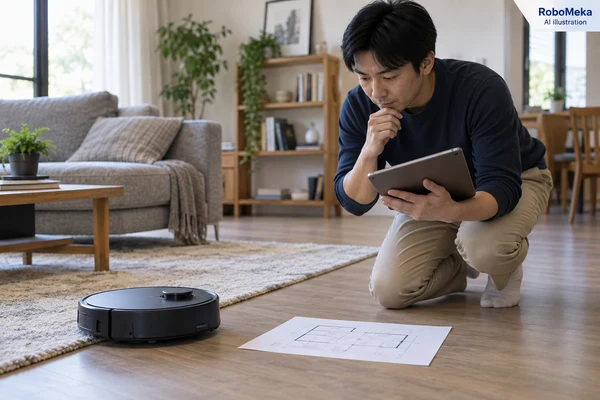
Imagine a distributor considering Platform A, which uses LiDAR for mapping, and Platform B, which uses a camera-based localization approach. This is a hypothetical comparison with no implied result for actual products. The intended customer has a furnished apartment and expects scheduled cleaning of a living area and two bedrooms.
The buyer creates one documented layout and defines the reachable cleaning zones. Both samples start with their specified preparation, approved dock placement and current recorded software. Initial mapping is evaluated separately from subsequent cleaning jobs. The team records setup steps, physical coverage, interventions and whether the robot finishes in a usable state.
Suppose the hypothetical observations show that A completes mapping with fewer setup steps, while B handles a relevant furniture arrangement with fewer missed patches. Neither result determines the purchase alone. The team checks whether the difference repeats, whether it matters to the intended customer and whether the offered production version matches the sample.
Next, the buyer runs a supported recovery scenario after a pause and tests the planned evening schedule. The scorecard contains essential gates for task completion and docking, plus secondary preferences for setup convenience. A beautiful map cannot compensate for failing an essential room-cleaning requirement, and a one-time success cannot establish long-term reliability.
How should uncertain outcomes be reported?
Use three categories: demonstrated under the stated conditions, not demonstrated, and inconclusive. A network outage unrelated to the robot may make an app-control trial inconclusive, while repeated failure to reach an approved room is an observed product outcome. Explain the difference and state the rerun rule before repeating a failed or interrupted scenario.
Record every valid run and the number of samples. Avoid reporting a success percentage as a field reliability rate when it comes from a small controlled trial. The purpose is to support the next purchasing decision and identify issues requiring investigation, not to create a statistical claim beyond the available evidence.
What privacy and software questions accompany camera or LiDAR selection?
A camera can raise obvious questions about images, but a camera-free product can still handle maps, identifiers and usage records. Ask what information is created, processed locally, transferred, stored and deleted. The answer should cover the app and related services as well as the physical robot. Do not equate sensor choice with a complete privacy assessment.
NIST's consumer IoT profile addresses cybersecurity outcomes for consumer connected products. It provides a useful reference for supplier questions, not a certification of the platform. Request documented responsibilities for updates, vulnerability handling and information provided to users, with appropriate expert review for destination-market requirements.
Clarify whether room mapping, scheduling or other essential functions depend on an account, internet access or a particular service. Test the supported offline behavior without assuming that an app failure means the robot is unusable or that all advertised functions continue offline. Describe the actual supported behavior in distributor materials.
For private-label projects, determine who controls the app listing, software releases, translations and support escalation. A hardware quotation does not answer these questions. Document what happens when a platform is updated or discontinued so the brand can make a realistic support commitment to retailers and customers.
How should maintenance and support influence the decision?
Navigation depends on a maintained product. Obtain the correct instructions for cleaning accessible sensor surfaces, wheels and other relevant parts. Evaluate whether users can find those instructions and understand the robot's messages. Do not apply another manufacturer's cleaning chemicals or procedures to the sample simply because the sensors look similar.
A support checklist should capture the layout, starting state, map, firmware, app version and recent changes when a customer reports navigation trouble. This gives engineering teams useful context. A vague statement that the robot gets lost is harder to investigate than a traceable sequence describing where it started, what changed and which message appeared.
Check repair and replacement procedures for navigation-related components. Replacing a part may require alignment, calibration or software steps that are outside normal user maintenance. Ask who is authorized to perform the work and what tools or records are needed. Service capability should match the complexity of the platform the distributor plans to sell.
Review these operational questions alongside the OEM manufacturer selection guide. Navigation is one part of a supportable product; clear configuration control, spare parts and escalation responsibilities remain important regardless of sensor architecture.
What should the RFQ and final claim say?
Specify outcomes before preferred technology: supported layouts, scheduled operation, room selection, map behavior, docking and allowed intervention. Then identify any genuine technology constraints, such as a customer preference about cameras or a furniture-clearance requirement. This allows the supplier to propose a suitable platform and clearly flag deviations.
Request evidence for claims such as object recognition, multi-floor maps or low-light operation on the exact configuration. Confirm whether optional hardware or software is required. A feature present in a demonstration unit should not silently become an assumption about a lower-cost production variant quoted later.
Write consumer language around supported behavior and meaningful limitations. Avoid blanket promises such as never gets stuck or sees every obstacle. Retain version references and retest relevant scenarios after material changes. Final approval should identify both the hardware and the software baseline so later updates can be reviewed against the intended application.
Frequently asked questions
Is LiDAR always better than a camera for robot vacuums?
No universal winner follows from the sensor name. The complete platform determines mapping, localization, object handling and cleaning behavior. Compare the intended layouts, lighting, furniture access and support requirements. A hybrid design may also use LiDAR and cameras for different functions, making a simple either-or label incomplete.
Does a robot that maps a room also avoid every object?
No. Mapping and object handling are different functions, and their supported conditions should be documented separately. Evaluate relevant objects safely, record contact and missed cleaning area, and follow floor-preparation instructions. Do not turn a successful mapping demonstration into a claim of universal obstacle detection or unattended safety.
Are camera-free robot vacuums free of privacy questions?
No. Maps, device identifiers, account information and usage records can still be relevant. Ask what the entire connected product processes and stores, which services it depends on and how users control their information. Sensor selection is one input to a broader software and data-handling review.
Should navigation be retested after a software update?
Retest relevant scenarios when an update could affect approved behavior, and record the new version separately. The scope should follow the documented change and purchasing risk. Preserve earlier results so the team can distinguish an improvement, a regression and a change in test conditions rather than merging unlike evidence.
Conclusion
Evaluate LiDAR and camera robot vacuums through the tasks customers expect them to complete. Separate mapping, localization, avoidance and coverage, then review software dependencies and support needs. The right platform is the one whose documented behavior fits the application and whose configuration can be maintained through the product's commercial life.
Discuss your robot vacuum navigation requirements with RoboMeka. Include representative layouts, furniture clearance, cleaning schedules and software preferences so a proposed platform can be reviewed against a concrete evaluation brief.