The short answer
A usable dirty-water care routine begins when floor cleaning ends and finishes when the required parts are clean, dry and correctly reassembled. Buyers should evaluate emptying access, residue traps, permitted washing, drying space and clear task ownership. Odor observations guide maintenance investigation but do not establish sanitation or health performance.
Introduction
The floor is clean, the washer is back on its stand and the dirty-water tank is still full. That gap between completing the visible task and completing machine care is where a useful ownership routine matters. A product can offer convenient floor washing while still requiring the owner to remove collected water, clean accessible parts and prepare them for storage.
A practical floor washer dirty-water routine specifies what happens after use, who completes it, which parts need drying and how the owner knows the machine is ready for the next session. Odor is a reason to investigate the care sequence and product condition. It is not a measurement of sanitation or evidence for a health claim.
For importers and distributors, tank care should be evaluated alongside pickup and handling. This guide proposes a task-based review, using actual instructions and ordinary permitted cleaning conditions. The examples are hypothetical procurement scenarios. They do not describe completed RoboMeka testing or promise that any model prevents odor in every household.
Define the endpoint of a cleaning session
The session ends when the required after-use tasks are complete, not simply when the motor stops. Write down the sequence from finishing the floor to leaving the machine and removable parts in their instructed storage condition. That definition makes ownership effort visible before buyers approve a convenience claim.
BISSELL's CrossWave and CrossWave Pet Pro tank-care guidance calls for emptying after each use and allowing cleaned parts to dry. Those instructions apply to the models listed on that page. Their relevance to sourcing is the explicit after-use responsibility; the offered washer still needs its own care sequence.
Avoid substituting the tank-full indicator for a maintenance schedule. A tank can contain a small amount of dirty water after a brief kitchen clean without reaching its maximum level. The owner needs to understand both kinds of instruction: when to empty during a task and what to do when the task has finished.
Treat an interruption as a separate situation
A customer may pause to answer the door or leave a larger cleaning job unfinished. Ask the supplier how the machine should be left during a short pause and what care is required if the session ends. The instructions should avoid a vague “clean regularly” statement that leaves the owner guessing about collected water.
There is no useful universal number of hours after which every tank will develop odor. The contents, environment, machine design and care history differ. Follow the manufacturer's after-use instructions and evaluate whether customers can perform them. Do not publish an unsupported countdown or suggest that water is acceptable to store until a particular smell appears.
Map the wet components the owner can actually clean
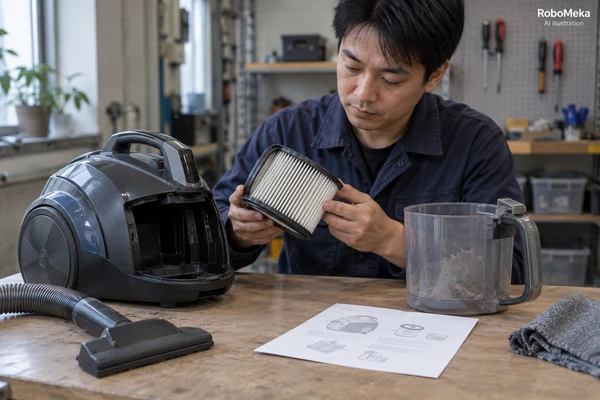
The dirty-water tank may include a lid, strainer, float arrangement, filter or other removable pieces. Identify the exact assembly and distinguish user-accessible components from parts that require service. A transparent tank wall does not mean every surface inside the assembly is accessible or intended for washing.
Use an unpowered sample to follow the removal and reassembly instructions. Check whether fingers can reach the intended release, whether the lid separates predictably and whether the supplied cleaning tool reaches the areas the manual tells owners to clean. Do not dismantle sealed sections merely to create a more thorough-looking inspection.
BISSELL's CrossWave Cordless Max maintenance page distinguishes the strainer, filter, float sensors and tank seating, with different care actions for different locations. This model-specific example shows why a single instruction to rinse everything can be inadequate. Confirm the permitted treatment for each component of the product being sourced.
Separate washable parts from wipe-only surfaces
The owner-facing diagram should make this distinction easy to see. Ask the supplier to mark which pieces can be removed, which may be washed and which must be kept away from running water. The complete machine and powered base should never be treated as washable simply because one tank is removable.
Inspect the readability of part names across the manual, spare-parts list and support page. If one document says “filter cover” and another says “tank top” for the same assembly, users may clean the wrong location or miss a step. Consistent identification is a practical maintenance feature, not just an editorial preference.
Evaluate the route from machine to disposal point
Tank care takes place in a home, not only on a bench. Consider how the owner releases the tank, carries it, removes the permitted components and disposes of the collected material according to local guidance. Check whether the handle, grip and opening support that ordinary sequence without awkward repositioning.
Observe the supplied configuration at the normal permitted fill condition. Do not overfill a tank for demonstration or deliberately create spills. A preliminary handling review can use clean water where the supplier permits, with the machine safely powered off and the evaluation area prepared for ordinary water handling.
The route also includes solid debris separation where the model provides it. Ask whether the owner can identify the strainer and remove ordinary collected debris without searching through an unclear assembly. Disposal instructions should suit the material and local arrangements; a generic global article should not prescribe one drain for every household waste stream.
| Care stage | Owner action to evaluate | Useful procurement evidence |
|---|---|---|
| Removal | Release and lift the tank correctly | Observed grip and instruction clarity |
| Emptying | Handle liquid and separated debris as directed | Route, opening access and required equipment |
| Cleaning | Reach permitted tank and lid surfaces | Component diagram and approved cleaning method |
| Drying | Position the required parts correctly | Space needed and documented readiness condition |
| Reassembly | Refit components and secure the tank | Uncoached completion and visible fit confirmation |
This review can reveal a practical mismatch before an operating trial. A tank might be easy to remove but difficult to handle in the intended utility area. That finding should influence the product selection or owner guidance rather than being hidden by a short demonstration filmed beside a large workbench sink.
Measure hands-on time and elapsed time separately
Hands-on care time measures the owner's active work. Elapsed time includes waiting required by the instructions, such as drying before reassembly. These figures answer different questions and should not be combined into an attractive but misleading “maintenance takes only a minute” statement.
Time the complete agreed routine with the retail components and instructions. Include fetching the supplied cleaning tool, dealing with normal debris, returning parts to their storage position and later reassembly when required. Record interruptions and any coaching. A technician who already knows the assembly does not represent every first-time owner.
Define what counts as ready for reuse
Follow the exact product's readiness requirements rather than judging by the outer appearance of a component. If a filter must be fully dry before installation, a dry-looking tank wall is irrelevant. Ask the supplier what the customer should check and how any minimum drying instruction should appear in the manual.
The floor washer self-cleaning and roller-drying guide addresses automated roller care in more detail. Keep that function distinct from the dirty-water workflow. A cycle-complete message may describe completion of the automated program while leaving manual tank tasks outstanding.
For a product evaluation, send RoboMeka your after-use care and storage requirements. Describe the target household, available utility space and expected cleaning frequency so the sample review can assess whether the tank routine fits the intended owner.
Provide a realistic place for parts to dry
The care routine is incomplete if it tells the owner to remove several components but provides no understandable storage arrangement. Review the permitted drying position, the space the parts occupy and how they are kept together. Follow the manufacturer's requirements for location and drying; do not invent heat-assisted shortcuts.
Small homes make this especially relevant. A countertop may already be occupied, and the machine's charging stand may not support every detached component. Measure the actual parts in their approved drying arrangement and include that space in the ownership explanation. A compact machine body does not establish a compact maintenance footprint.
Evaluate the next session, not only today's cleanup
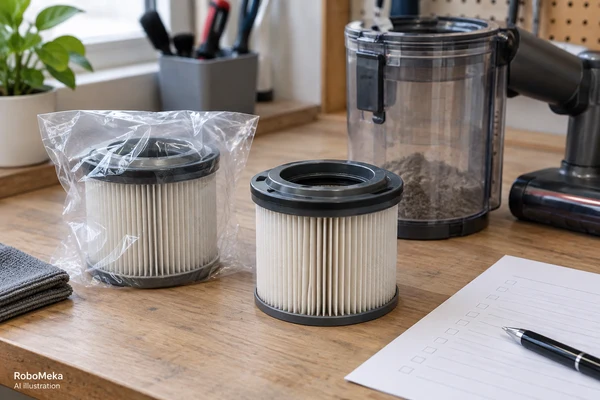
Ask an unfamiliar participant to reassemble the unit after the instructed drying period. Can they identify the correct orientation, seat the filter without distortion and confirm that the tank is secure? If a part can appear fitted while remaining loose, request clearer guidance or a supplier review of the design.
Where repeat cleaning is expected before a component is ready, discuss the supplier-approved options. A compatible spare part may be useful, but it must be identified and stored correctly. Do not recommend operating without the component or installing a damp replacement simply to preserve a daily schedule.
The resulting record should distinguish required storage from optional convenience. An accessory rack might improve organization, but the base offer must still explain a workable care process. Buyers can then compare the complete package rather than discovering after launch that a useful component was omitted from the quotation.
Investigate odor without turning it into a hygiene claim
An odor report should trigger questions about timing, collected material, completed care and the affected component. Ask whether the smell is associated with stored wastewater, a removable part or the machine during operation. Those descriptions help direct support without pretending that a smell identifies a specific cause.
Keep ordinary odor complaints separate from unusual burning smells, electrical symptoms or other warning signs. Those require stopping use and following the manufacturer's service guidance. Do not ask a customer to keep running the machine to determine whether an unfamiliar smell eventually disappears.
Record observations without deliberate exposure
A buyer review can note an odor encountered during normal permitted use and care. It should not require evaluators to inhale closely from tanks, retain dirty water to create an extreme condition or stage contamination. When a more specialized investigation is warranted, agree the appropriate method and competent personnel with the supplier.
“No odor noticed during the documented routine” is a limited observation. It does not establish disinfection, microbial performance or a permanent odor-free result. Likewise, fragrance can change perception without answering whether the care instructions were completed. Avoid adding deodorizing chemicals unless the exact product instructions approve them.
If a complaint persists after the documented care, request supplier support rather than progressively stronger household cleaning recipes. The relevant component may need inspection or replacement. Customers should receive a clear escalation route, with the model and affected part identified, instead of a succession of improvised treatments.
Design a sample review around ordinary ownership
Use the intended manual, supplied tools and approved solution in a normal permitted cleaning scenario. Define the task and care endpoint in advance. Observe what the owner actually does, including any skipped step, confusing label or difficulty holding a component. Record the instruction gap before proposing that the participant simply needs more practice.
A hypothetical comparison might show that two washers clean a floor acceptably, but one requires a difficult tank-lid maneuver over the disposal point. The other has a more understandable removal sequence. That does not prove a universal preference, but it gives the buyer a concrete handling trade-off to discuss for the target customers.
Repeat the review after revised instructions where appropriate. A clearer diagram may solve a documentation problem without changing the machine. A physically inaccessible surface cannot necessarily be solved by better wording. The review should identify which type of change is needed and who must verify it.
Connect the findings to the sample acceptance guide. Keep the observed configuration, care procedure, unresolved issues and acceptance decision together. Do not convert a successful demonstration by a trained technician into a general claim that maintenance is effortless for all owners.
Prepare service parts and handover before delivery
A practical after-sales package identifies the tank assembly and separately available user-replaceable parts. Confirm which components are supplied individually, which arrive as an assembly and which require service intervention. A small lost or damaged part should not leave support staff guessing from an illustration with no item reference.
The cleaning-product spare-parts planning guide helps connect those identities to stocking and availability decisions. Base quantities on your actual sales and service assumptions. Do not infer failure rates or replacement intervals from an odor complaint or a short sample review.
At handover, demonstrate the point at which floor cleaning becomes machine care. Show the approved removal, cleaning, drying and reassembly actions using the delivered unit. Ask the owner to locate the instructions and identify the parts themselves. This checks understanding without assuming that watching a demonstration guarantees recall later.
Shipment inspection should confirm the correct tank, removable components, cleaning tool and care documents are present. Check that illustrations match the supplied revision. If a tank design changes, review both handling and instructions before carrying an earlier approval forward. A minor component change can alter an everyday task even when the main product name stays the same.
Frequently asked questions
Should the dirty-water tank be emptied after a short cleaning session?
Follow the exact model's after-use instructions rather than waiting for the full-tank indicator. A short session can still leave collected water and debris. Buyers should make this distinction clear in the manual and demonstration, because the during-use emptying trigger and the end-of-session care requirement answer different questions.
Does a self-cleaning cycle replace tank cleaning?
Only if the manufacturer explicitly describes that complete outcome, including the parts concerned. Many product routines still require manual dirty-water handling after automated roller care. Review the entire sequence for the offered model and explain which tasks remain when the automatic program finishes. Avoid interpreting a completion tone as universal maintenance completion.
Can a stronger detergent solve a persistent tank smell?
Do not change the formula or dose beyond the product instructions to investigate odor. First check the completed care steps and consult the supplier if the issue remains. Unapproved additives can introduce another compatibility question and make the original problem harder to evaluate. Persistent or unusual symptoms may require component inspection or service.
How should a buyer compare maintenance time?
Record active owner work and elapsed waiting separately. Use the same defined endpoint, permitted routine and retail accessories for each sample. Include later reassembly where required, and disclose coaching or special preparation. A short hands-on task does not mean the machine is immediately ready for reuse if components still need to dry.
Does an odor-free observation prove that the tank is disinfected?
No. An ordinary sensory observation cannot establish disinfection or health performance. Describe the limited observation and the care conditions under which it occurred. Any separate sanitation claim would require appropriate evidence for the specific product and method; it should not be inferred from fragrance, appearance or completion of an automated cleaning cycle.
Conclusion
Dirty-water tank care becomes manageable when the product defines a complete routine and the home provides a workable place to perform it. Evaluate access, handling, component-specific cleaning, drying space and reassembly before approving convenience claims. Treat odor reports as evidence for maintenance investigation and keep the conclusions within what the observed routine can support.
To select a supportable floor washer package, ask RoboMeka to review your tank-care workflow and handover brief. Share the intended users, storage constraints and service expectations so sample approval covers the tasks that follow every cleaning session.