The short answer
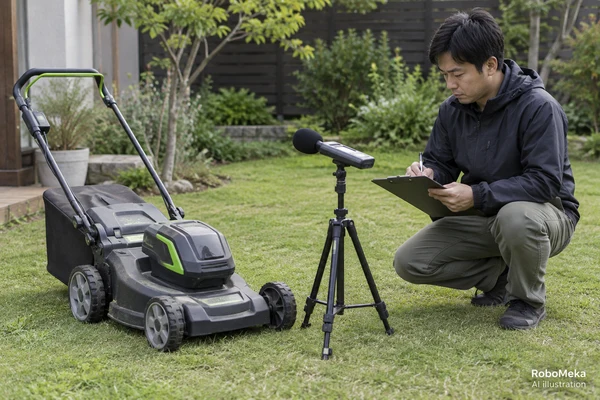
Assess cordless mower noise using defined acoustic evidence, and describe environmental benefits with a clear boundary around the claim. A fully battery-powered mower has no onboard combustion-engine exhaust during mowing, but it still produces sound and has impacts associated with electricity, manufacture, transport and eventual component replacement. Battery power alone does not justify silent or zero-impact language.
Introduction
Assess cordless mower noise using defined acoustic evidence, and describe environmental benefits with a clear boundary around the claim. A fully battery-powered mower has no onboard combustion-engine exhaust during mowing, but it still produces sound and has impacts associated with electricity, manufacture, transport and eventual component replacement. Battery power alone does not justify silent or zero-impact language.
For buyers serving noise-sensitive customers, the useful question is whether the actual mower and operating pattern meet the application’s requirements. For environmental messaging, ask which impact is being discussed and what data supports the comparison. These questions should be answered separately rather than combined into a broad green label.
This guide supports B2B procurement and claim review for cordless walk-behind equipment. It does not publish RoboMeka acoustic measurements, lifecycle results or environmental certifications. Confirm the available model and obtain qualified review for the relevant market, site and proposed wording before making specific claims.
Start with the customer’s actual concern
A homeowner may want less disturbance to neighbors, while a professional buyer may need information about workplace exposure or a tender requirement. A retailer may simply need an accurate product comparison. These use cases can require different metrics and evidence, so define the decision before requesting a number.
Ask whether the requirement concerns a declared product value, sound at a particular location or the overall duration and timing of work. One specification may not answer all three. Record any local or site requirements for appropriate review rather than assuming a cordless category label satisfies them.
OSHA’s landscaping hazard resources identify noise as a relevant workplace concern. They provide context, not a determination of exposure for a particular mower and task. Professional customers may need their own competent assessment alongside the product information.
Avoid promising that neighbors will not hear the mower or that a product can be used at any time. Actual sound propagation and local requirements can vary. The buyer should communicate verified product characteristics and identify where site-specific judgment remains necessary.
Request the correct acoustic metric
Sound power and sound pressure are different quantities. Sound power characterizes emission from a source under a defined method; sound pressure concerns a measurement position and conditions. A buyer should not rank one supplier’s sound-power value against another supplier’s sound-pressure value as if the labels were interchangeable.
Ask for the method, configuration, operating state and relevant uncertainty or declaration information. Identify the blade, clipping arrangement and any control setting that matters to the result. The report should be traceable to the model being quoted, not only to a broadly similar product family.
Decibels are not ordinary linear quantities. Avoid converting a numerical difference into an unsupported percentage of perceived quietness. Have qualified acoustic reviewers assess interpretations that will appear in comparative marketing or a technical tender response.
The European Commission’s outdoor equipment noise information provides context for relevant EU requirements. Applicability and obligations need product-specific review. A link to the framework does not prove that a particular cordless mower has the required evidence or declarations.
Evaluate the cutting system, not only the absence of an engine
The blade, airflow, drive and interaction with grass contribute to sound. Battery power removes one source associated with combustion equipment, but it does not make the complete machine acoustically inactive. The actual design and operating conditions remain important.
If a supplier proposes a quieter blade or control mode, ask for evidence of the assembled configuration and the useful mowing result. A lower-sound setting that changes the task may still be useful, but the claim should explain the conditions and any relevant trade-offs.
The cordless cutting-system guide describes why blade, deck and energy configuration belong in one approval record. Use that same identity when reviewing acoustic claims so that a later component change does not silently inherit an earlier result.
Do not present an informal phone recording as a standardized comparison. Recording equipment, settings and playback affect what listeners perceive. Demonstrations can show context if labeled honestly, but they should not be used to manufacture precise acoustic claims that the method cannot support.
Keep local exhaust claims narrow and accurate
A fully battery-powered mower without a combustion engine does not generate local engine exhaust while mowing. That statement describes a particular operational boundary. It does not establish that the product has no emissions associated with electricity generation, manufacturing or other lifecycle stages.
The US EPA’s small-equipment emissions resources address relevant engine-emission frameworks. They help distinguish combustion-equipment questions from a broader environmental comparison, but they do not supply a lifecycle result for an unidentified cordless mower.
Avoid extending the local-exhaust statement into claims about indoor suitability or the absence of other hazards. The product’s intended use and safety instructions remain controlling. No engine exhaust is not equivalent to safe in every environment.
If the customer asks for a comparison with an engine-powered mower, identify the actual products, useful task and analytical boundary. A broad category comparison may conceal important differences in size, service life or use. The claim should be no more general than the evidence allows.
Examine the battery lifecycle boundary explicitly
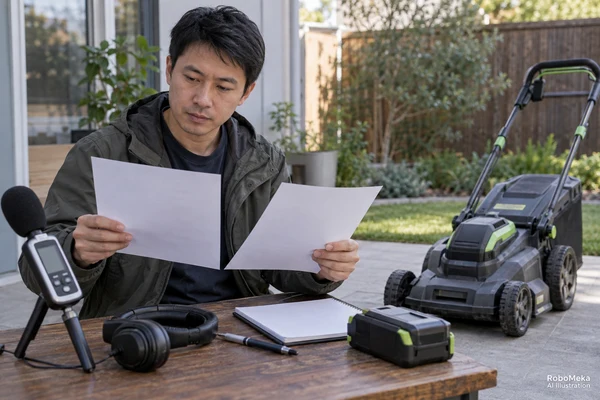
A broader environmental assessment may consider battery manufacture, electricity used in charging, replacement, transport and end-of-life treatment. Which stages are included must be stated. Without that boundary, a result can be interpreted as a complete lifecycle conclusion when it addresses only one part.
Do not invent a battery lifetime or replacement schedule to create an attractive comparison. Use applicable evidence and label assumptions clearly. Warranty duration, observed runtime and retained capacity under a defined method are different types of information; none automatically supplies all the data needed for a lifecycle model.
Ask whether the comparison uses equivalent useful service. Energy per minute, energy per mowing session and impact over a defined ownership period answer different questions. The functional basis should match the customer benefit being claimed rather than whichever measure produces the most favorable number.
The NIST conformity-assessment overview supports a general evidence discipline: understand what was assessed and what the result covers. A transport document or a component certificate should not be repurposed as a general environmental endorsement of the entire mower.
Use a cordless claim-review worksheet
This worksheet helps purchasing and marketing teams review proposed language together. It is not legal advice or a complete environmental assessment method. Qualified reviewers should determine applicable requirements for the market and claim.
| Proposed message | Evidence or boundary required | Question to ask before approval |
|---|---|---|
| Quieter than a comparison mower | Matching metric and defined products and conditions | Is the comparison technically valid? |
| Low-noise operation | Applicable acoustic data and relevant context | What does low mean for this customer? |
| No local engine exhaust | Confirmed fully electric architecture | Is the statement limited to mowing operation? |
| Lower energy use | Same useful task and suitable measurement | Was acceptable work actually equivalent? |
| Lower lifecycle impact | Defined stages, data and assumptions | Which impacts and period were assessed? |
| Longer-lasting battery | Identified method and configuration | What life characteristic is supported? |
| Suitable for a sensitive site | Product evidence plus site requirements | What local assessment remains necessary? |
| Responsible end-of-life support | Actual available process and market arrangements | Can the promised service be delivered? |
Record approved wording and conditions with the supporting files. If a distributor shortens or translates the statement, review the meaning again. A carefully bounded claim can become misleading when the qualifying phrase disappears from a headline or image caption.
Unsupported wording should remain unapproved rather than being softened into an equally vague superlative. Sometimes the best content is a clear description of the power architecture and available evidence, with an invitation to discuss the customer’s specific requirements.
Send your cordless noise and sustainability requirements with the intended use, market and claim you need to substantiate. The downloaded brief can organize a scope discussion with RoboMeka; it does not establish an acoustic rating, environmental result or available product configuration.
Connect charging and runtime with useful work
Charging energy is part of the operating system, but a charger label alone does not establish energy used per completed lawn. The mower, pack, charger, starting conditions and useful outcome all matter. Any measurement should use an appropriate method and competent technical review.
The cordless mower power-and-runtime guide explains why active cutting time and total session time need separate treatment. Apply that distinction before claiming that a longer-running package necessarily uses less energy for the task.
EGO’s mower information provides a manufacturer example of disclosing runtime variables. Its figures remain specific to its products. Use the example to request clear conditions from your supplier, not to estimate another model’s environmental performance without evidence.
Similarly, adding spare packs may improve scheduling for a defined user, but it does not automatically improve every environmental metric. Assess the actual package and use pattern if making a broader comparison. Commercial convenience and lifecycle impact are related questions, not interchangeable conclusions.
Include maintenance without inventing guaranteed savings
Maintenance and component condition can affect the way a mower operates. Follow the actual manual for care and the response to abnormal sound or vibration. Do not advise customers to continue with a suspect component simply because the model is marketed as quiet or efficient.
HSE’s machinery-maintenance guidance emphasizes planned work and competence. It supports an appropriate service model, while the product instructions define specific procedures. A marketing claim should not encourage unapproved blade modification or control changes in pursuit of lower sound or energy use.
Lawn-care practices also influence the task. University of Minnesota Extension’s mowing guidance discusses height, frequency and blade condition. Use local advice where appropriate, without presenting a universal maintenance routine as proof of a quantified environmental saving.
If repairability or replacement support is part of the brand message, document the actual parts and service arrangements. Do not promise indefinite availability or guaranteed waste reduction without a basis. A clear support process is valuable even when no unsupported lifecycle percentage is attached to it.
Separate transport compliance from environmental claims
Battery shipments require review of the actual components, packaging, condition and route. IATA’s battery transport resources provide air-transport guidance, but qualified logistics staff must assess the consignment. This is a distinct responsibility from evaluating the product’s environmental footprint.
A battery test summary or shipment document should not be labeled an eco certificate. It addresses a specific transport-related purpose. Keep the terminology precise in the procurement file and in any customer-facing content that mentions documentation.
End-of-life arrangements are also market-specific. Ask what collection, recycling or service options actually exist for the destination and obtain appropriate local advice. Do not tell customers that every battery can be handled through one universal route or promise a take-back service the business has not established.
If the supplier or distributor offers a defined program, describe its scope and access conditions accurately. A real, limited service is more credible than a broad circularity claim unsupported by logistics, partners or customer instructions.
Preserve claims through product revisions
Changes to the blade, controller, pack or charger can affect the evidence behind noise, runtime or environmental statements. Require the responsible technical team to assess whether existing claims remain applicable before the revised configuration is released.
Keep the product identity and claim version connected. Marketing staff should be able to determine which statement applies to which kit, while service staff should identify what the customer received. An unchanged commercial model name is not enough if the underlying configuration has changed.
Shipment inspection supports agreed lot-release checks, not every broader claim. NIST’s acceptance-sampling introduction explains the limits of sampling. A passed inspection does not create a new acoustic result or establish a lifecycle benefit.
Review distributor copy and imagery after revisions as well as the main specification sheet. An obsolete comparison may remain in a downloadable brochure or graphic after the website text changes. A controlled claim set helps keep the public offer aligned with the evidence.
Prepare a useful response for noise-sensitive buyers
Consider a hypothetical buyer serving residential customers with concerns about disturbance. The supplier response should identify the available acoustic data, operating configuration and limitations, then ask what site or schedule requirements need further assessment. Selecting cordless power alone does not complete that review.
For a sustainability-focused buyer, provide the verified operational description and any applicable broader evidence separately. State the boundary and assumptions of an analysis, and identify missing information honestly. Do not fill a gap with a generic claim that all battery products are environmentally superior in every respect.
These are proposed communication practices, not completed RoboMeka customer cases. Their purpose is to make the inquiry useful and the resulting content defensible. Buyers can explain meaningful benefits while preserving the distinction between product facts, measured comparisons and questions that still require qualified review.
Frequently asked questions
Are cordless lawn mowers silent during use?
No. The blade, airflow, drive and grass interaction produce sound even without a combustion engine. Request applicable acoustic data for the actual model and configuration. Avoid category-wide promises of silence or claims that neighbors will not hear the machine under every site condition.
Can a cordless mower be called zero emissions?
Use a clear boundary. A fully battery-powered mower has no local combustion-engine exhaust during mowing, but electricity supply, manufacture and other lifecycle stages can have impacts. An unqualified zero-emissions statement can imply more than that operational fact. Broader claims need suitable scope, data and review.
Does a longer runtime prove lower environmental impact?
No. Runtime describes a particular operating result and does not by itself establish energy per useful task or lifecycle impact. The pack, charger, mowing outcome and analytical boundary matter. Keep endurance evidence separate from environmental conclusions unless a suitable method explicitly connects them.
What should buyers request for a noise-sensitive application?
Ask for the acoustic metric, method, configuration and relevant conditions, then compare them with the actual site or tender requirements. Obtain qualified assessment where needed. Do not substitute a generic quiet label for a defined requirement or compare sound-power and sound-pressure figures as equivalent values.
Can battery shipping documents support a sustainability claim?
They serve transport-related purposes and should not be presented as general environmental certification. Review them for the actual shipment, while using separate appropriate evidence for lifecycle or sustainability statements. Accurate document descriptions help prevent a valid record from being used to support an unrelated claim.
Conclusion
Cordless mower noise and environmental claims should remain tied to a defined metric, configuration and boundary. Verify acoustic comparisons, distinguish local exhaust from lifecycle impacts and keep charging, service and transport evidence in their proper roles. Buyers can then communicate useful benefits without promising silence or impact-free ownership.
Prepare a cordless claim-evidence inquiry, review the downloaded brief and email it to info@RoboMeka.com. The form does not send the document automatically or establish acoustic performance, environmental certification, product availability or commercial terms.