The short answer
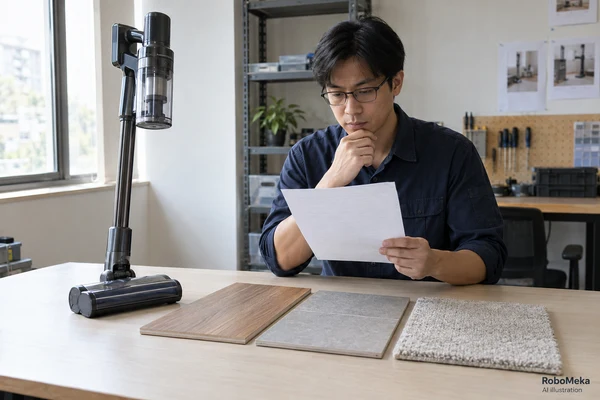
Design a retail demonstration around a documented customer task, a safe prepared surface and a repeatable reset routine. Explain the operating mode, preparation, limitations and cleanup rather than only the visible pickup. Keep sales wording aligned with approved evidence, and distinguish a showroom illustration from a controlled performance test.
Introduction
A floor washer can look impressive during one pass across a prepared display and still be a poor fit for the customer standing beside it. The missing information may be the supported surface, the preparation, the tank-cleaning routine or the space needed for storage. A credible retail demonstration explains those conditions as part of the product, not as fine print after the sale.
Design demonstrations around a documented customer task, an approved configuration and a repeatable reset routine. Show the operating mode, preparation and after-use work alongside the visible cleaning result. Keep the sales explanation within supported claims, and distinguish a showroom illustration from controlled product testing or evidence of performance in every home.
This playbook proposes a training and demonstration framework for cleaning-appliance importers and distributors. It does not report RoboMeka test results or authorize any particular demonstration setup. The appliance instructions, premises rules and an appropriate safety assessment determine what a store can actually operate and show.
Decide what the demonstration must help a buyer understand
Choose a small number of meaningful decisions instead of attempting to display every feature. A cordless-vacuum demonstration might explain handling, attachment changes and routine emptying. A floor-washer demonstration might explain compatible surfaces and the complete fill-clean-empty-care sequence. A robot demonstration may focus on setup and user interaction without pretending a small display represents an entire home.
Start with the customer question. If the question concerns convenience in an apartment, the display should not be dominated by a maximum-power pickup stunt. If the question concerns maintenance effort, staff need to show the relevant removable parts and explain their care. The demonstration should reduce uncertainty about the intended application.
For assortment planning, compare the tasks in the floor washer versus stick vacuum guide. Complementary products need different demonstrations. Showing a wet appliance on an unsuitable surface or implying that a dry vacuum handles liquid can create confusion that a later verbal disclaimer does not adequately repair.
Write a demonstration brief before buying fixtures
The brief should identify the product revision, approved accessory, intended audience, surface, permitted debris or liquid and the outcome being illustrated. Include the starting condition and reset procedure. These details make it possible to compare store setups and explain why two demonstrations may look different even with the same appliance.
Specify which statements staff may make and what evidence supports each one. A visible pickup event supports a description of that event under those conditions. It does not automatically support a quantified efficiency claim, a hygiene claim or a comparison with every competing product. Keep the distinction clear in training materials and display artwork.
Record exclusions as part of the brief. A display may be unsuitable for stairs, live mower operation, open-water pool demonstrations or unsupervised customer handling. Saying that an activity is outside the store's scope is more useful than leaving individual employees to improvise a way to show it during a busy sales period.
Choose surfaces and debris responsibly
Use surfaces permitted by the appliance manufacturer and suitable for the premises. Confirm the condition and finish, not just the broad material name. A removable hard-floor display should be stable and designed so the appliance can be used without catching an edge, spilling into an electrical area or creating a trip hazard.
Tineco's iFloor product information describes a hard-floor washing application. It provides a simple example of why product category and intended surface should shape the display. Another machine's surface claims cannot be transferred to a private-label model without its own documented support.
Use only approved demonstration materials in appropriate quantities. Do not choose sharp, hazardous, hot, combustible or otherwise unsuitable material simply because it looks dramatic on camera. A retail demonstration should not invite staff or customers to copy an unsafe experiment at home. The approved instructions and risk assessment remain the boundary.
Keep a clean reference surface
Inspect the demonstration area before each session. Existing marks, residue or trapped grit can affect the observed result and make comparisons unfair. Record damage and remove unsuitable surfaces from service. Staff should not have to decide whether a scratch was already present while a customer is watching a product demonstration.
Show the whole ownership routine
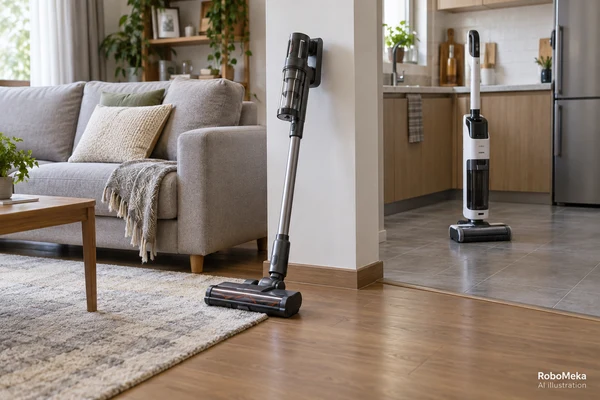
Include preparation, operation, disposal, permitted care and storage in the demonstration plan. Not every step needs to be performed live during every conversation, but staff should be able to explain it accurately and show the relevant parts safely. Otherwise the display can create an impression of convenience that omits the work customers will actually do.
The Dyson WashG1 owner page provides separate material for use and care, including tank and debris-tray handling. That separation illustrates why a cleaning pass is only one part of the routine. Use the exact instructions for the offered appliance rather than copying another brand's sequence or maintenance claims.
For an unpowered handling demonstration, show how the user identifies removable components and where permitted care information is found. Do not take the appliance apart beyond its intended user procedures. A display intended to explain maintenance should not normalize access to electrical assemblies, battery cells or moving mechanisms.
Make comparisons interpretable
If two products are compared, define the comparison question and keep relevant conditions consistent. Use the documented accessories and modes, disclose any necessary differences and record the preparation. A demonstration in which one machine starts ready to use while the other requires setup is not a neutral comparison of cleaning performance alone.
Do not hide interventions. If a second pass, accessory change or manual finishing step is needed, make it part of the explanation. A complete result after several actions may still be useful to a customer, but it should not be described as a single-pass result. Staff should learn to distinguish honest context from an excuse.
| Demonstration question | What to show | What not to infer |
|---|---|---|
| Is handling comfortable? | Approved grip, reach and attachment change | Universal suitability for every user |
| What does the cleaner remove here? | Defined material on a supported surface | Laboratory performance across all debris |
| What work remains afterward? | Disposal and permitted component care | Maintenance-free ownership |
| How does a robot start a task? | Supported controls and setup sequence | Reliable navigation in every property |
| How does the product fit the home? | Storage footprint and relevant access | Suitability without checking the actual site |
If you are preparing a distributor range, send your retail demonstration and training requirements. Include the intended channels, available display space and the customer questions staff must answer, so demonstration support can be considered during product selection.
Train staff to explain limitations naturally
Provide short, accurate explanations of common boundaries. A floor washer may be intended for particular hard floors; a robot may need floor preparation; an accessory may fit only a specified revision. These points should be part of the ordinary sales conversation, not warnings that staff avoid because they fear losing the sale.
Teach employees to say when they need to check the documentation. A confident guess about battery compatibility, a cleaning solution or a permitted surface can be more damaging than a brief pause to verify the answer. Give staff a reliable model-specific information source and a route for questions the store cannot resolve.
Practise customer scenarios rather than only memorized feature lists. A shopper with mostly rugs needs a different conversation from someone with sealed hard floors and limited storage. The employee should identify the application, explain relevant options and avoid presenting the most expensive bundle as automatically the best fit.
Use teach-back to check understanding
Ask trainees to explain the approved routine in their own words and demonstrate a safe reset. An instructor can then identify whether they understand the reason for a condition or have merely memorized a script. Record specific gaps and retrain those tasks instead of treating attendance at a presentation as proof of readiness.
Treat the reset as a controlled operation
A repeatable demonstration needs a defined end state. The surface, appliance, consumables and relevant containers should be returned to the approved condition before the next session. A hurried reset can change both the visible result and the safety of the display, particularly where water, debris or removable components are involved.
Allocate time and materials for the reset in the staffing plan. If the routine is too involved for ordinary store traffic, change the demonstration format rather than quietly skipping required care. An unpowered explanation, a shorter supervised session or a clearly labelled recorded example may be more appropriate for that location.
Identify who checks the display at opening, after use and before closing. The responsible person needs authority to stop demonstrations when a component is damaged, a required item is missing or the approved conditions cannot be maintained. A sales target should not override that stop decision.
Keep visitor interaction within a safe boundary
Decide whether customers may handle the product and under what supervision. Explain any permitted activity before handing over the appliance. Consider floor access, cables, wet areas, nearby displays and the presence of children or other visitors. The setup should remain controlled even when the store is busy or a customer unexpectedly changes direction.
Do not place people or animals in a robot's path to prove detection, and do not stage cliff-sensor or mower-blade demonstrations around living subjects. Such displays confuse safety features with guarantees. Where a capability cannot be shown safely and meaningfully in the store, explain the documented conditions and use an appropriate non-operating illustration.
For camera-enabled or connected products, protect customer and staff privacy. Avoid displaying personal household maps, account details or recorded footage. Use an authorized demonstration account where supported and define how it is maintained. A convenient shared login should not become an uncontrolled route into somebody's private device or home information.
Distinguish sales demonstrations from acceptance tests
A retail display is designed to communicate a use case. Product acceptance testing answers a purchasing question under agreed methods and criteria. They may use some similar materials, but their purposes and evidence standards differ. A successful display should not be used to close an unresolved quality or conformity review.
Use the sample testing framework for a proposed technical evaluation and keep those records separate from promotional clips. If the buyer wants a claim derived from testing, arrange a suitable method and review. Do not create a percentage improvement from an informal demonstration just because the footage appears persuasive.
Factory testing and shipment inspection can help verify the specified configuration, included demonstration accessories and approved documentation within their scopes. They do not establish that every store will use the product correctly. Training, display maintenance and local supervision remain operational responsibilities after the shipment arrives.
Plan demonstrations across several stores
Issue a controlled kit list and a versioned training brief for each approved product. Include the display materials, permitted accessories, care supplies, documentation and support contacts relevant to the format. A missing accessory should trigger a defined response rather than an employee substituting a similar-looking component from another model.
Collect feedback about the questions customers ask and the steps staff struggle to explain. Use that information to improve the brief or identify a product-application mismatch. Do not treat anecdotal enthusiasm as proof of conversion impact. Commercial evaluation requires an appropriate measurement plan and enough context to distinguish the display from other sales factors.
Review training when a product, app screen, accessory or instruction changes. The multilingual manual workflow can help keep local-language explanations aligned with the released configuration. Stores should know which training version applies and where to find corrections without searching through old messages.
Compare the operating effort of different display formats
Before extending a demonstration to more stores, run a proposed staff rehearsal using the intended opening check, customer explanation and complete reset. Record where time, space or consumables become constraints. A format that works beside a dedicated showroom sink may be impractical in a small retail aisle. Compare a full live sequence, a supervised handling display and a clearly labelled video against the same customer questions. Select the format that the location can maintain correctly; do not assume that live operation is always the most informative choice or omit required care to make the staffing calculation look easier.
Frequently asked questions
What is the best cleaning task for a retail demonstration?
Choose a common customer task that the exact product is documented to support and that the premises can safely accommodate. Define the surface, material, mode and reset routine. The most dramatic task is not necessarily the most useful one; a credible demonstration should help the customer understand fit, handling and the remaining ownership work.
Can a showroom demonstration prove a performance percentage?
Not by itself. A numerical comparative claim requires suitable evidence, a defined method and appropriate review. A showroom event can illustrate what happened under disclosed conditions, but should not be presented as a controlled laboratory result or a universal outcome. Keep the wording proportional to the evidence actually available.
Should staff show cleaning and maintenance after every demonstration?
The required care must be performed according to the approved routine, although not every explanatory step needs a full live presentation for every customer. Plan sufficient reset time and make the ownership work visible through a safe explanation or permitted handling example. Do not omit necessary care to create an impression of maintenance-free use.
Is a recorded demonstration acceptable when live operation is unsuitable?
Yes, if it is clearly presented as recorded material and accurately identifies the product, relevant conditions and limitations. It should not imply that the same result has just occurred in the store. Use an unpowered product to explain handling where appropriate, and keep claims aligned with the evidence rather than relying on editing to hide preparation or interventions.
What should a supplier provide for distributor training?
Ask for model-specific operating and care information, approved feature explanations, accessory identification, relevant application limits and a route for unresolved questions. Agree whether localized materials or training sessions are included. The distributor still needs to adapt the demonstration to its premises and staffing, rather than assuming a generic product video establishes store readiness.
Conclusion
A useful demonstration earns trust by showing the task and its conditions together. It helps shoppers choose an appropriate product while giving staff a repeatable way to explain preparation, operation and care. Controlled materials, honest claims and a reliable reset matter more than a single impressive cleaning pass.
Contact RoboMeka with your retail training brief, including target customers, product categories, languages and store formats. Those details help define the product information and demonstration support needed for a range that distributors can explain consistently.