The short answer
Receive a cleaning-appliance shipment in separate stages: record its arrival condition, reconcile logistics quantities, inspect selected retail bundles and authorize stock release. Preserve evidence before repacking, segregate unresolved goods and distinguish receiving observations from conclusions about transport liability or manufacturing cause.
Introduction
A shipment can pass a factory inspection and still arrive with a missing accessory carton, a crushed retail box or a mismatch between the packing list and the warehouse count. Destination receiving is therefore a separate control point. It establishes what arrived, in what condition, and which goods are ready for the next step.
For cleaning appliances, a useful receiving process separates arrival evidence, quantity reconciliation, selected product checks and authorization to release stock. Combining those decisions into a single signature makes later questions harder to answer. The person acknowledging delivery may not be the person qualified to accept the product configuration or investigate damage.
This guide proposes a receiving workflow for importers and distributors. It does not report a completed RoboMeka shipment inspection or prescribe transport-claim deadlines. Start with the approved order and pre-shipment inspection records, then define what your own warehouse must verify before goods become available to customers.
Prepare the receiving brief before the shipment arrives
Give the warehouse a concise version of the information it needs: expected logistics units, carton counts, saleable configurations, accessory-only cartons and any agreed exceptions. Include the relevant shipment and purchase-order references. A commercial invoice can support reconciliation, but it may not explain the physical packing structure well enough for receiving staff.
State which records are expected from the supplier and when they should arrive. A carton list delivered after the warehouse has broken down every pallet loses some of its operational value. If shipment changes occur, update the receiving brief and identify the superseded version rather than circulating several files with identical names.
Name the people who can answer quantity, product and transport questions. Warehouse staff should know how to record an exception even when the purchasing manager is unavailable. Escalation instructions are especially important for goods that require specialist handling; an unexpected condition should not be resolved through improvisation at a busy loading bay.
Define the release states in advance
Use distinct states for received, awaiting inspection, held for investigation and released. The exact labels can match your inventory system, but their meanings should be clear. Receiving an item into the building should not automatically make it available for a customer order while its identity or condition remains unresolved.
Decide how a hold will be enforced physically and in the system. A handwritten note on a carton can be overlooked if the stock-management software still shows it as pickable. Conversely, a system hold is difficult to manage if staff cannot identify the affected goods on the warehouse floor.
Record the shipment as it arrived
Capture enough context to connect observations with the actual delivery. Record the time, shipment reference, visible package identifiers and the condition of the relevant logistics units before ordinary handling changes the arrangement. Photographs should show both an overall view and the specific concern, without exposing unrelated personal or commercial information.
Describe what is visible rather than immediately assigning a cause. A compressed corner, wet outer surface or torn wrap is an observation. A conclusion that the carrier dropped the pallet requires additional evidence. This distinction keeps the receiving record useful to purchasing, the supplier and any party investigating the transport history.
Use the applicable carrier, forwarder and insurer process for notification and documentation. Requirements differ by service and contract, so obtain them before shipment and confirm current deadlines with the responsible provider. This article is an operational planning guide, not legal advice or a promise that a documented discrepancy will result in compensation.
Preserve packaging evidence before tidying the area
DHL's damaged-shipment guidance recommends photographs of the exterior, interior packing and contents, with pre-shipment images where available. That is a useful evidence principle. Its service-specific procedures and notification deadlines should not be copied into a universal receiving policy for every freight mode or destination.
Where safe and appropriate, keep the relevant packaging and goods available for the agreed investigation. Record any opening, movement or repacking that changes their condition. Do not stage a more convincing damage photograph by rearranging items or compressing packaging; the record should distinguish the original state from subsequent inspection steps.
If the goods present signs that could indicate a battery, electrical or other safety issue, stop ordinary inspection and follow the site's trained response procedure. Do not energize, charge, open or experimentally dry a suspect appliance to see whether it still works. Seek qualified guidance appropriate to the observed condition and product.

Reconcile quantities at the correct packaging level
Count logistics units, cartons and saleable units as separate quantities. A pallet count that matches the delivery document does not establish that every carton or accessory is present. Identify whether the order includes master cartons, individual retail boxes, consumables or loose service parts so the same quantity is not interpreted differently by each team.
Mixed configurations require separate reconciliation. Suppose a hypothetical order includes a vacuum-only bundle and a version with an additional battery. An equal total appliance count can conceal a shortage of the premium bundle. Check the order's configuration references instead of treating visually similar boxes as interchangeable stock.
| Receiving question | Evidence to retain | Decision it supports |
|---|---|---|
| Did the expected shipment arrive? | Transport reference and logistics-unit record | Match delivery to the expected order |
| Are carton quantities consistent? | Count by carton type and identifier | Identify shortages or unexpected packages |
| Are retail configurations correct? | Bundle references and selected content checks | Assign the correct saleable stock |
| Is there visible damage? | Context and detail photographs | Hold and investigate affected goods |
| Are labels and records connected? | Selected scans and record matches | Preserve traceability through receiving |
| Can goods be released? | Authorized decision and unresolved exceptions | Prevent accidental dispatch of held stock |
Record count corrections explicitly. If a second count resolves an apparent shortage, retain the initial discrepancy and the reason it was closed. That history can reveal a confusing packing-list format without incorrectly attributing the problem to a missing shipment.
For a new sourcing project, send your receiving and warehouse requirements, including carton data, bundle identification and exception-report formats. Agreeing these interfaces early helps the supplier provide information your team can actually use at arrival.
Inspect selected retail bundles against the released order
Use an agreed inspection plan suited to the product, order and risk. The number of boxes to open should not be chosen solely because it is convenient during unloading. Clarify what the sampling can establish and what would trigger additional investigation. No limited sample can prove that every delivered appliance is free from defects.
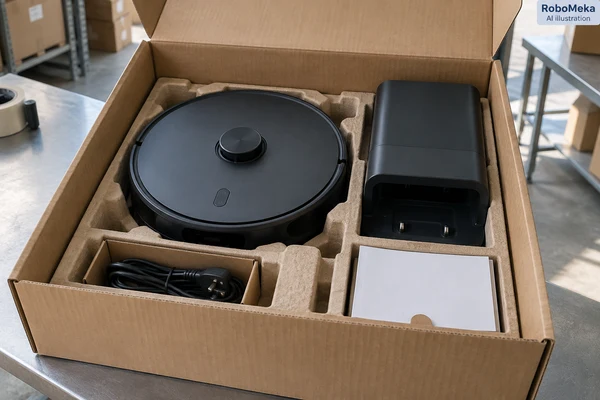
Compare selected contents with the approved configuration. Check the relevant appliance, dock or charger, attachments, consumables and instruction version. A correct-looking body does not settle whether the saleable bundle is complete. Keep the inspection tied to the released reference rather than a remembered sample from an earlier quotation.
SGS describes incoming inspection for purchased or provided parts before production. Its emphasis on planned inspection, reporting and supplier evaluation illustrates the value of a defined incoming control. Finished-appliance warehouse receipt is a different scope and should be designed for the distributor's own goods and decisions.
Separate unpacking checks from functional evaluations
A receiving bench may be suitable for identity and visible-condition checks without being suitable for powered testing. If operational checks are required, move eligible goods to an appropriately prepared area and follow the product instructions and approved method. Keep the results distinct from the unloading record.
Do not improvise tests with water, moving blades or exposed electrical components to demonstrate that stock is acceptable. The sample testing guide helps distinguish intended-use evaluations from specialist assessments. Receiving should use the agreed scope, not invent a new technical approval process after the goods arrive.
Classify discrepancies without losing important detail
Useful categories can include quantity mismatch, configuration mismatch, document mismatch, packaging condition and product condition. Allow more than one category where appropriate. A damaged box containing the wrong charger represents two questions, and closing the packaging issue should not accidentally close the configuration investigation.
Give every discrepancy an identifier connected to the affected physical goods. Record what was checked, what was expected, what was observed and which evidence supports the observation. Avoid entries such as quality problem with no location or configuration reference; they leave the next reviewer to repeat the investigation.
Keep suspected cause separate from confirmed finding. Warehouse handling, transport events, packing choices and manufacturing defects can produce overlapping symptoms. The receiving team can document the symptom accurately while the responsible specialists establish cause. A neutral record makes cooperation easier without minimizing a serious concern.
Control affected stock while the investigation continues
Define the scope of the hold from available evidence and revise it when justified. If the concern is a carton-specific missing accessory, the investigation may begin there. If the problem suggests a wider configuration or safety issue, a broader hold and specialist review may be appropriate. Do not assume either scope without examining the facts.
Record any authorized sorting or repacking as a separate activity. Identify the work instruction, approved materials, responsible personnel and verification method. A warehouse correction should not silently alter the product's identity, conceal original damage or create a bundle that no longer matches the retail description.
For replacement cartons or labels, preserve the relationship with the original shipment record. The export packaging guide explains why protective structure and presentation need deliberate approval. Destination repacking is not permission to use any available box simply because the appliance fits inside it.
Send a supplier escalation that can be acted on
A concise escalation should identify the shipment, affected configuration, number observed, inspection scope and evidence. State the immediate decision needed, such as confirming a packing-list interpretation or proposing a documented correction. Distinguish a request for information from acceptance of a proposed remedy.
Ask the supplier to connect its response to production and dispatch records where relevant. A general statement that every unit was checked does not explain a specific mismatch. Equally, a receiving observation should not be presented as proof that the entire order is defective when only a limited set has been examined.
Set a communication owner so evidence and decisions are not scattered across purchasing chats, warehouse emails and sales messages. Keep the original files, the supplier's explanation and the buyer's decision together. This supports a later review of whether the response solved the actual problem rather than merely moving it out of the receiving area.
Release stock through an explicit decision
Release should state which goods are approved, which remain held and whether any follow-up conditions apply. An approval for unaffected configurations should not automatically release all stock on the purchase order. The inventory system and physical warehouse labels should reflect the same decision at the same time.
For corrected goods, retain verification of the correction. If accessories were added, confirm both the item identity and the revised bundle completeness. If a label was replaced, check that it matches the underlying product and does not duplicate another unit's identity. Corrections deserve evidence proportionate to the issue they address.
Notify sales and fulfillment of any limitation that affects promises to customers. A delivery date should not be based on held stock unless the release condition is satisfied. Release controls prevent an unresolved inbound problem from becoming an outbound service problem.
Learn from the next receiving cycle
Review recurring discrepancies by configuration and process step. Separate actual shortages from counting errors caused by unclear packing lists. Separate transport-related packaging observations from product issues identified during later evaluations. Combining everything into one supplier defect rate can obscure the action that would help.
Use the findings to update the next order's requirements. A confusing accessory carton may need clearer identification; repeated packing-list differences may need a better release check. Record the proposed change and its approval rather than asking the supplier to improve quality without explaining which evidence or operation needs attention.
Frequently asked questions
Is destination inspection necessary after a passed factory inspection?
It answers different questions. Factory inspection describes the checked goods and conditions before dispatch, while receiving establishes arrival identity, quantities and condition. The appropriate receiving scope depends on the order and risk. Use the earlier report as a reference, but do not assume it documents transport events or destination warehouse handling.
Should every carton be opened on arrival?
Not automatically. Agree a suitable inspection plan, the records needed and the triggers for further checks. Opening every box may affect presentation and workload without addressing every technical question. Conversely, checking only an easy-to-reach carton may provide inadequate evidence. The plan should be deliberate and its limitations understood.
Does a damaged carton mean the appliance must be rejected?
Not necessarily, but it requires an appropriate assessment. Packaging condition, product condition and saleable presentation are separate considerations. Preserve evidence, follow safe handling rules and obtain the authorized decision for the affected goods. Do not use a quick power-on attempt to dismiss potential damage or claim that the appliance is fully verified.
What if the packing list and warehouse count disagree?
Reconcile the packaging levels and configurations first, then perform a controlled recount where appropriate. Check accessory cartons, mixed bundles and any split-shipment notices. Record the discrepancy until the evidence resolves it. An equal overall appliance count does not prove that the quantities of every ordered configuration are correct.
Can the warehouse repair or repackage goods immediately?
Only within an authorized, safe and documented scope. Preserve evidence before changing the condition of goods, and confirm any carrier or insurer requirements with the responsible provider. Technical repairs may require qualified personnel and separate approval. Repacking should retain identity and use materials appropriate to the approved packaging arrangement.
Conclusion
Good receiving inspection creates a reliable boundary between goods that have arrived and goods that are ready to sell. Record the initial condition, reconcile the right quantities, inspect against the released configuration and keep unresolved stock under control. Close discrepancies with evidence rather than an assumption that someone else has already accepted them.
For a RoboMeka order discussion, send your destination inspection and stock-release requirements. Include the product families, bundle structure and warehouse reporting format so the proposed shipment documentation can support the decisions your receiving team must make.