The short answer
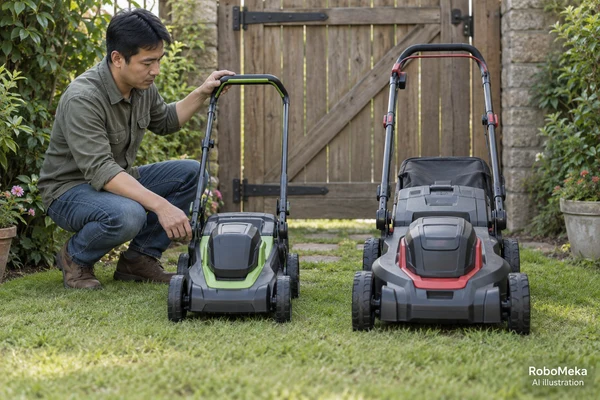
When choosing cutting width and height for a cordless lawn mower, balance access, useful coverage and the workload placed on the approved battery system. A wider deck can reduce the number of straight passes, but obstacles, overlap, handling and grass conditions affect whether that advantage becomes a shorter completed session. Height settings also change the task and must be appropriate for the turf.
Introduction
When choosing cutting width and height for a cordless lawn mower, balance access, useful coverage and the workload placed on the approved battery system. A wider deck can reduce the number of straight passes, but obstacles, overlap, handling and grass conditions affect whether that advantage becomes a shorter completed session. Height settings also change the task and must be appropriate for the turf.
For B2B buyers, the goal is to create a supportable deck-and-kit combination. Do not approve a width tier independently of the pack configuration, clipping mode and customer application. A compact mower with a suitable package may fit one customer better than a wider machine whose access or energy assumptions do not match the site.
This article proposes a selection and verification method for cordless walk-behind products. It does not provide verified dimensions, battery results or availability for a RoboMeka model. Obtain the actual product documentation and use approved operating and measurement procedures for any sample evaluation.
Define the width that matters to the customer
Separate nominal cutting width, deck enclosure width and overall operating width. The first relates to the potential swath; the others help determine access and clearance. Ask the supplier to label each measurement and identify the accessories installed when it was taken.
For a cordless product, include the operational package when assessing handling and dimensions. The battery arrangement and collection accessories should be in their approved positions. A photograph of a stripped display unit may not communicate the space and handling characteristics of the mower customers will use.
Record gates, narrow strips and storage openings in the application brief. A wider cutting swath is not useful if the machine cannot be moved through the required access route in accordance with the instructions. Avoid treating a folded storage dimension as an operating-clearance guarantee.
Keep measurement precision honest. A rounded nominal width should not be converted into an exact-looking value that implies a tighter tolerance than the manufacturer specifies. If a dimension is critical, request a defined measurement and acceptance method rather than relying on a category label.
Understand effective swath and overlap
The nominal cutting width is not necessarily the effective width achieved on every pass. Operators may overlap adjacent passes to avoid missed strips, and obstacles can interrupt a straightforward route. The resulting useful swath is a practical observation that should be documented in a representative session.
Consider a hypothetical 0.48-meter nominal cutting width with 0.05 meter of overlap in a particular evaluation. The resulting 0.43-meter effective swath is a planning calculation for that route, not a universal specification. Different conditions or technique may produce a different practical value.
Do not use the example to prescribe an operating method for an unidentified product. The actual mower’s instructions and application should govern use. The purpose is to show why deck width alone cannot establish a guaranteed lawn area or completion time.
For an assortment comparison, record the number and nature of turns, narrow sections and interrupted passes. These observations help explain when a wider deck is useful and when maneuverability matters more. They also give the supplier a concrete customer requirement instead of an abstract demand for maximum width.
Relate cutting height to workload carefully
The amount and condition of grass being removed affect the cutting task. A low setting on tall or dense grass can represent a different workload from routine maintenance at an appropriate height. Buyers should not compare cordless runtime results without understanding that difference.
Mowing height should suit the grass and local conditions. University of Minnesota Extension’s mowing guidance discusses height, frequency and avoiding excessive removal. Its regional recommendations should not be copied as universal settings for every export market.
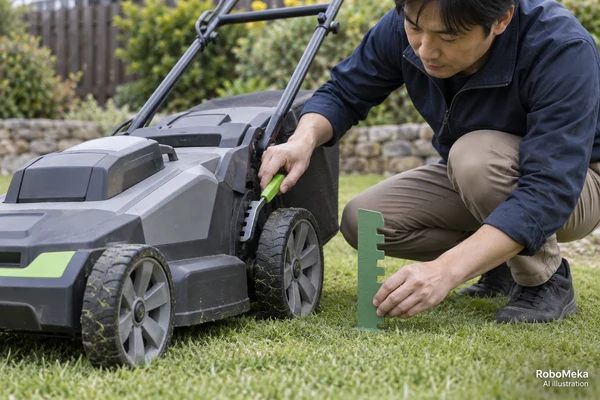
Ask how the manufacturer defines the adjustment range and each position. A lever number may be a reference to a table rather than an exact finished grass measurement. Surface variation, wheel behavior and the method of observation can affect the result on a real lawn.
The University of Maryland’s lawn-problem guidance provides context for mowing-related turf issues. Use such guidance to distinguish a product setting from an appropriate application. A lower mechanical capability is not automatically a better customer outcome.
Evaluate adjustment usability under the approved procedure
Review whether the customer can understand and select the required setting using the manual. Confirm whether one mechanism adjusts the mower or whether several positions require coordination. The physical sample, illustrations and labeling should agree.
All adjustment observations must follow the product’s isolation and safety instructions. Do not change height while operating or reach into hazardous areas to confirm a measurement. Where a technical measurement requires specialist access, use competent personnel and an approved method.
Observe engagement, repeatability and clarity rather than simply counting positions. A range with many settings may still be confusing or poorly suited to the customer’s normal turf height. Conversely, a smaller number of useful, clearly identified settings can support a straightforward mowing routine.
Ask how wear or damage should be handled and how the relevant parts are identified. Toro’s parts resources illustrate the importance of model-specific service information. The selected supplier must provide its own applicable records; another brand’s diagram does not establish a repair method or compatible part.
Connect deck size with the battery package
A wider deck can change the grass encountered across a pass, but actual energy demand depends on more than width. Blade design, height reduction, grass condition, travel pattern, propulsion and clipping mode all influence the complete task. Do not predict runtime by scaling deck width alone.
Request evidence for the exact approved pack configuration offered with each deck. A wider mower sold with more energy may complete a larger task, but that comparison does not isolate deck efficiency. State whether the evaluation concerns complete customer packages or a controlled technical characteristic.
Manufacturer examples such as EGO’s mower information show why runtime conditions need explanation. Those results are specific to the named products. Use the disclosure approach to ask your supplier for relevant evidence rather than borrowing another manufacturer’s performance.
Keep spare packs separate from the operating set. A two-pack carton does not necessarily mean two independent runtime opportunities if the mower requires both packs in operation. Package clarity is essential when presenting wider-deck or extended-session offers to first-time customers.
Use a deck-and-kit comparison worksheet
The following worksheet organizes a buyer’s review. It does not define universal acceptance limits. Choose criteria appropriate to the customer and record the measurement method and responsible reviewer for each important characteristic.
| Characteristic | Record for each candidate | Why it matters |
|---|---|---|
| Nominal swath | Manufacturer definition and units | Establishes the stated cutting width |
| Overall dimensions | Approved operating and storage configurations | Checks access and handling |
| Height range | Settings and measurement basis | Connects adjustment to intended turf |
| Effective route | Overlap, turns and interrupted passes | Explains practical coverage |
| Energy package | Approved pack models and operating quantity | Defines the evaluated system |
| Clipping arrangement | Blade, bag, insert or other approved parts | Makes results comparable |
| Finished lawn | Consistent observations and site conditions | Prevents runtime-only approval |
| Support records | Parts identities and change policy | Preserves the selected configuration |
Include unresolved questions rather than forcing every candidate into a complete score. A supplier may need to clarify a dimension or provide evidence for a particular kit. The purchasing team should know which observations are verified and which remain proposals.
For a range decision, identify the customer each candidate is intended to serve. A compact and a wider model can both be appropriate without one being universally superior. The worksheet should explain the trade-off in language that a dealer can use accurately.
Send your cordless deck-and-kit requirements with the access dimensions, intended turf and expected session. The downloaded brief can support a scope discussion with RoboMeka, subject to confirmation of actual product availability and technical information.
Design a comparison that answers the buying question
Document the sample identities, blade condition, height settings, clipping mode and approved packs. Select representative permitted conditions and a consistent observation method. If the comparison is intended to isolate width, acknowledge any other design differences that prevent a clean conclusion.
Record useful mowing and non-cutting activities separately. Turns, emptying and transitions can influence the customer’s completed-session time. A wider mower may reduce straight passes while offering little advantage on a highly fragmented site; the evaluation should capture that distinction rather than only timing one open strip.
Observe the finished result before declaring the session successful. Missed areas, inconsistent appearance or unsuitable clipping handling may require additional work. A runtime figure that ignores corrective passes does not fully describe the energy and time needed to complete the customer’s task.
The NIST conformity-assessment overview supports matching evidence to a defined claim. A buyer’s sample exercise can provide useful application observations, but it should not be represented as a standardized laboratory comparison unless the method and execution justify that description.
Consider terrain and access independently of capacity
A battery package that supports a longer session does not expand the mower’s approved terrain limits. Review the exact model’s instructions for slopes, surfaces and handling. If the property includes uncertain areas, obtain appropriate assessment rather than treating additional capacity as a solution to every site problem.
Uneven ground can affect both the finished height and the ease of maintaining a route. The relationship between wheels, deck and surface matters, so nominal dimensions should be interpreted alongside actual application evidence. Avoid attributing every poor finish to insufficient power or an unsuitable blade without investigation.
The cordless mower site-fit guide examines fragmented properties and route planning in more detail. Use it alongside deck selection so that the width tier and battery package remain grounded in the same site assumptions.
Storage and transport also deserve attention. A mower that fits the lawn may be awkward to move between the storage area and the grass. Review the approved handling and folding instructions, and keep any customer limitations visible in the recommendation rather than focusing only on cutting coverage.
Preserve dimensions and settings through production
Record the approved wheel, blade, deck and adjustment configuration. Ask how the supplier controls relevant characteristics in production and how proposed changes are reviewed. An unchanged width label does not prove that a revised wheel or height linkage produces the same application result.
Shipment inspection can include agreed dimensional, identity and functional observations using safe procedures. Provide inspectors with current criteria and a clear disposition process. NIST’s acceptance-sampling introduction explains that sampling supports lot decisions without guaranteeing every unit’s lifetime behavior.
If a cost-reduction proposal changes the battery, blade or adjustment system, revisit the evidence affected by that change. Technical and commercial records should remain aligned. Do not reuse the original deck-and-kit comparison simply because the revised product carries the same brand and nominal width.
Keep service documentation current as well. HSE’s maintenance guidance emphasizes planned, competent work, while the product manual supplies specific procedures. Staff need correct part identities and approved instructions rather than generic advice based on deck size alone.
Present the range with meaningful trade-offs
Imagine a distributor considering a compact deck for narrow access and a wider deck for open lawns. The comparison should identify each model’s complete kit, approved conditions and observed application fit. It should not label the wider option better in every respect or imply that the compact model is merely a lower-quality version.
Publish cutting width and overall dimensions distinctly, and state which package supports any runtime or area claim. Explain height adjustment in terms customers can use without promising an exact finished grass height under every condition. Important limitations belong near the claim, not only in a remote document.
Use later customer and service feedback to refine the recommendation, while distinguishing actual evidence from anecdotes. If a particular access or package misunderstanding recurs, improve the information. Range quality depends partly on helping customers choose correctly, not just on the dimensions printed in the catalog.
Frequently asked questions
Does a wider cordless deck always require a larger battery?
There is no universal rule based on width alone. The complete cutting and drive system, lawn conditions and intended session determine the workload. Use the manufacturer’s approved configurations and relevant evidence. Do not select or substitute a pack solely by scaling its capacity to the deck dimension.
Why should overall width be listed separately?
Customers need the physical operating dimensions for gates, passages and storage planning. Nominal cutting width describes the swath and may exclude parts that affect clearance. Identify the measurement configuration and accessories so that a buyer does not mistake a cutting specification for a guarantee of access.
Can a low cutting setting shorten the mowing schedule?
Do not assume so or recommend it as a general strategy. Appropriate height depends on turf and local conditions, while a greater height reduction can change the workload and result. Follow suitable lawn-care guidance and the product manual rather than using an extreme setting to justify a capacity claim.
What should be held constant in a deck comparison?
Record and, where the comparison requires, control relevant lawn conditions, height reduction, clipping mode, route and energy configuration. Acknowledge design differences that cannot be isolated. This lets buyers distinguish a comparison of complete customer offers from a technical claim about the effect of width alone.
Which changes can affect an approved width-and-height result?
Blade, deck, wheel, adjustment and relevant accessory changes can matter, and energy-system changes may affect session evidence. The responsible technical reviewer should assess applicability and required verification. Preserve the revision record and update published information when the production configuration no longer matches the original evaluation.
Conclusion
Cordless mower width and height selection should connect turf needs, access, effective route and the approved energy package. Verify definitions, evaluate a complete session and keep production changes traceable. Buyers can then build understandable deck tiers without assuming that the widest swath or lowest setting is always the best choice.
Prepare a cordless deck selection inquiry, review the downloaded document and email it to info@RoboMeka.com. The form does not automatically send the brief or confirm dimensions, runtime, compatibility or product availability.