
The short answer
Evaluate supplier terms as one order plan. Clarify what MOQ applies to, when lead time begins, which evidence permits each release, and how warranty claims and replacements operate. Name the owners of approval, inspection, logistics and service decisions, then document changes so delivery commitments remain connected to the accepted configuration.
Introduction
Supplier selection, minimum order quantity, lead time, warranty, and delivery planning belong in the same vacuum purchasing discussion. Each condition changes the others. A special color can affect the order structure; late artwork can delay production release; incomplete inspection instructions can delay dispatch; and an unclear service agreement can leave both parties arguing about responsibility after the goods arrive.
The practical goal is an order plan with identifiable milestones, required evidence, and named decision owners. A supplier should know what the buyer must approve, and the buyer should understand what the supplier can commit to before those approvals exist. This makes commercial negotiation more useful than collecting isolated promises about low minimums, fast delivery, or generous support.
This guide concerns manually operated vacuum cleaners, including handheld, stick, and related regular vacuum configurations. It focuses on connecting commercial terms to execution rather than providing a generic factory ranking. The suggested arrangements are negotiation frameworks, not RoboMeka commitments. No minimum order, production duration, warranty period, or delivery date should be assumed without a written project-specific agreement.
Evaluate the supplier through the proposed order
Begin with the exact product the supplier is offering. Confirm the contracting party, the proposed manufacturer, the model configuration, and the people responsible for technical questions, production coordination, quality review, and service. These roles may overlap in a small project, but they should not remain ambiguous. A helpful sales contact still needs access to the people who can answer and implement the agreed requirements.
Ask the supplier to demonstrate how the order would move from sample review to production release and dispatch. Request an example of the record structure or a project-specific proposal without asking for another customer's confidential information. Look for clear revision control, approval ownership, and escalation. A polished presentation has limited value if nobody can explain how an unresolved accessory change is handled.
Use the cordless stick vacuum category to establish the product family and the manufacturing overview to frame a discussion of relevant processes. Then request evidence for the actual configuration and order. General company information provides context, while purchasing acceptance depends on the product, documents, and responsibilities attached to your project.
ISO's quality management principles emphasize decisions based on evidence and the management of relationships. Those principles support a practical approach to supplier discussions, but citing them does not establish that a particular factory is certified or that an order will succeed. See ISO's quality management principles. Evaluate the records and responses relevant to the work you are buying.
Ask what the minimum order actually applies to
Minimum order quantity can describe several different constraints. Ask whether the figure applies to the appliance platform, finished model, color, printed carton, accessory combination, or a purchased component. A supplier may be able to combine some quantities but not others. The buyer needs this structure to understand which changes could make a launch order more practical.
Request an explanation tied to the proposed configuration. A standard product with existing packaging may have different conditions from a special material color or custom printed insert. The OEM and ODM customization overview provides context for that discussion. Avoid treating the minimum as a single arbitrary number that negotiation must always reduce. The more useful question is which part of the order creates the constraint and what approved alternative changes it.
Discuss order mix with realistic demand assumptions. A buyer may prefer fewer variants for the first release while retaining a plan for later additions. Alternatively, shared components across related bundles may allow a different arrangement if the supplier confirms it. These are options to investigate, not promises that quantities can always be pooled across colors or product types.
Clarify ownership of custom material commitments. If packaging or components must be purchased beyond the immediate shipment quantity, define who authorizes that commitment and what happens to the remainder. Record storage, use, obsolescence, and cancellation terms as relevant. A low finished-goods minimum is not fully understood until the buyer knows whether it carries a separate material obligation.
Define when the lead-time clock begins
Ask the supplier to identify the conditions needed before its production duration starts. These may include an accepted configuration, approved artwork, available components, commercial confirmation, and any agreed financial milestone. The important point is to name the actual conditions for this order. A date described only as after confirmation can mean different things to purchasing, engineering, and the factory.
Distinguish sample preparation, buyer review, material readiness, production, inspection, dispatch preparation, and transport. A supplier's production estimate should not silently become the buyer's arrival promise to retailers. Each stage has its own dependencies and owner. Show the sequence in the working order plan and identify which stages can overlap safely after the necessary approvals exist.
Ask what assumptions support the estimate. Which components are already confirmed, which remain subject to sourcing, and which changes would require rescheduling? Request a realistic update process for new information. A useful lead-time commitment includes how delays are reported and reforecast, rather than relying on a single optimistic date that nobody revisits until it is missed.
Include buyer review time in the plan. If several departments must approve the sample or carton, assign a coordinator and an internal decision window. The supplier cannot control an open-ended artwork review. Equally, the buyer should not be asked to approve incomplete evidence just to preserve an earlier estimate based on assumptions that no longer hold.
Link negotiation to clear release milestones
Create a small number of milestones that correspond to meaningful decisions. Too many minor approvals can slow execution, while one broad approval can conceal unresolved issues. The table below is a recommended starting structure. Adapt it to the product and agreement, and keep proposed conditions distinct from terms that both parties have accepted.
| Milestone | Evidence or decision needed | Responsibility to define |
|---|---|---|
| Configuration agreement | Model, accessories, claims, and open questions | Buyer acceptance and supplier technical confirmation |
| Sample approval | Identified sample, review results, accepted deviations | Consolidated buyer decision and supplier acknowledgment |
| Production release | Final artwork, package, materials, and order terms | Named release authority and readiness confirmation |
| Inspection disposition | Agreed checks, findings, and corrective action status | Inspector, supplier response, and buyer release decision |
| Dispatch handoff | Agreed documents, packing identity, collection readiness | Supplier and appointed logistics responsibilities |
| Service activation | Parts identities, claim route, and agreed remedies | Buyer support owner and supplier service contact |
Define what happens when a milestone is not met. A minor cosmetic issue may receive a documented decision, while a functional or safety concern requires appropriate technical handling. The buyer and supplier should agree how issues are classified and who can accept deviations. An inspector's report should inform that decision; it should not create commercial authority that was never assigned.
Connect any agreed payment milestones to clear events in the contract. This article does not recommend a universal deposit or balance structure. The practical requirement is that the event can be identified and documented by both parties. If a payment condition depends on inspection, specify the report and disposition needed rather than relying on a vague phrase such as quality approved.
Negotiate warranty as an operating process
A warranty period alone does not explain how support works. Ask what starts the period, which products and components are covered, how claims are submitted, and which remedies are available under the proposed agreement. Clarify the treatment of consumables, wear, damage, and incorrect use without assuming every supplier defines those terms identically.
Separate the commercial supplier agreement from the buyer's customer-facing obligations. The arrangements may interact, but they should not be assumed to have identical scope or timing. Have the relevant commercial and local compliance teams check the final terms for the destination market. This guide provides operational questions and does not establish a universal legal warranty rule.
Agree the information needed for a claim. Useful records may include product identity, shipment reference, symptom description, photographs or video where appropriate, and relevant maintenance history. Ask for a method that is practical for the buyer's support channel. Excessive evidence requests can slow resolution, while vague complaints make it difficult for the supplier to identify a suitable response.
At this point, send your vacuum order and service requirements with the configuration, launch constraints, order mix, intended delivery handoff, and support model. A single brief helps RoboMeka discuss MOQ, timing, and after-sales responsibilities together. It also exposes tradeoffs before the buyer negotiates each condition as though it were independent of the rest.
Make replacement support specific
Identify the service parts needed for the actual product. These may include user-replaceable filters, accessories, chargers, batteries, or other assemblies where applicable. Record their part identities and compatibility. A promise to provide spare parts is incomplete if the parties do not know which revision fits the units already supplied or who decides whether a replacement is appropriate.
Discuss how replacements are supplied and accounted for. Possible arrangements can involve a separately purchased initial stock, replenishment orders, approved claim replacements, or other agreed methods. Ask what each option includes and how stock decisions will be revisited. Avoid assuming that a particular spare-parts allowance or free replacement quantity is standard across suppliers.
Define escalation for repeated symptoms. A buyer should be able to group cases by model, batch, or configuration and ask for a technical review when a pattern emerges. The supplier should explain how it investigates and communicates findings. Keep the process distinct from routine individual claims so a recurring issue receives the attention needed for an effective corrective action.
Protect service continuity when parts change. Ask for advance notice of changes affecting compatibility, identification, or support instructions, with the timing agreed for the project. Review proposed alternatives before they enter service stock. A replacement that looks similar can still create a poor customer experience if the fit or operating behavior differs from the supplied unit.
Separate production readiness from delivery responsibility
Define the commercial delivery basis with an exact named place and the applicable rule version where Incoterms are used. ICC's guidance explains that delivery, transfer of risk, and allocation of costs require careful attention. These matters should be aligned with the actual transport arrangement. See the ICC Incoterms 2020 checklist.
Do not use a shipping abbreviation as a substitute for the rest of the order plan. Confirm who arranges collection, who provides required documents, who checks the packing information, and who communicates changes in readiness. Ask the appointed logistics provider to verify the transport and documentation requirements for the exact shipment, including its actual battery configuration where relevant.
Keep factory completion, shipment release, collection, departure, and arrival as distinct dates. A product can be physically finished while inspection disposition or dispatch documentation remains open. The buyer should know which milestone a supplier's update describes. That precision helps sales teams avoid promising customer availability based on a date that only indicates production has ended.
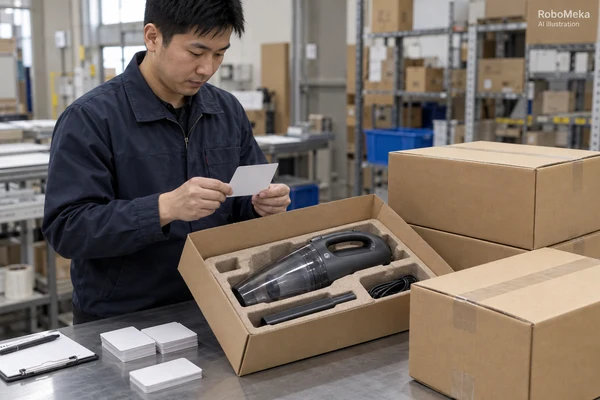
For practical installation preparation after arrival, ensure the approved manual, storage support instructions, and included parts are ready with the shipment. This is especially useful for vacuum bundles that need assembly before use. Delivery readiness includes an understandable product package, not only a count of cartons waiting for collection.
Plan exceptions before they become urgent
Discuss how both parties will handle a proposed change after sample approval. A supplier may need to report a component availability issue; a buyer may request revised artwork. Record the change, affected milestones, new evidence, commercial effect, and approval authority. The order should not accumulate informal exceptions that become impossible to reconcile at inspection.
A hypothetical first order could face a late accessory change while the main appliance is ready. The buyer and supplier would compare an approved unchanged bundle, a revised bundle requiring new package review, and any other feasible option. The correct decision depends on the accepted requirements and evidence. The example illustrates a decision process, not a promise that partial shipment or substitution is always available.
Set a communication rhythm around meaningful milestones and emerging risks. Updates should state what is complete, what remains dependent, the effect on the plan, and the decision needed. Avoid status reports that say only on schedule without identifying the basis. A concise exception record is often more useful than repeated assurances that omit the unresolved issue.
After delivery, review the first order against the agreed plan. Compare approved configuration, received contents, documentation quality, service questions, and milestone accuracy. Use actual findings to improve the next order. This creates a practical supplier evaluation based on execution, while avoiding unsupported claims about long-term reliability from one successful sample or shipment.
Frequently asked questions
Is the lowest MOQ always the best supplier offer?
No. Determine what the minimum applies to and whether custom material, packaging, or component commitments sit outside it. Compare the offered configuration and realistic order mix. A lower finished-unit minimum can be useful, but it should be understood together with variant restrictions, readiness conditions, and the obligations created by the agreement.
When should a supplier's lead time start?
It should start from the conditions expressly agreed for that order, such as final configuration approval and confirmed material readiness. Ask the supplier to identify those conditions and distinguish production duration from sample review, inspection, dispatch, and transport. A clear start event makes changes and delays easier to assess fairly.
What makes a warranty agreement useful in practice?
A useful agreement defines its scope, start event, claim information, decision process, remedies, exclusions, and responsibilities for replacement handling. It also connects claims to identifiable products and parts. The stated period matters, but support becomes workable only when the buyer and supplier understand how a case moves toward resolution.
Can shipment inspection replace supplier and sample evaluation?
No. Shipment inspection reviews the order against an agreed definition and inspection scope. It cannot resolve every missing design requirement or establish all long-term performance. Approve the configuration and relevant evidence beforehand, then provide inspectors with clear references, checks, and reporting instructions that support the named release decision.
Conclusion
Evaluate a vacuum supplier through the order it can define and execute. Understand the basis of MOQ, identify the conditions behind lead time, connect approvals to release milestones, and translate warranty language into a service process. Align those commitments with the real delivery handoff and preserve a clear record whenever the plan changes.
For your next project, prepare a vacuum supplier and delivery inquiry brief with the product configuration, expected order mix, launch milestones, preferred handoff, and after-sales needs. Include the decisions that remain open. RoboMeka can then discuss the commercial conditions and responsibilities needed for a concrete, project-specific sourcing plan.