
The short answer
Buyers should scope lawn mower customization by separating cosmetic changes, package changes and engineering changes. Confirm the approved product platform, ownership of design assets, required evidence and release responsibilities before negotiating a private-label order. Adding a logo is different from changing a deck, battery, controller or safety-related instruction.
Introduction
Buyers should scope lawn mower customization by separating cosmetic changes, package changes and engineering changes. Confirm the approved product platform, ownership of design assets, required evidence and release responsibilities before negotiating a private-label order. Adding a logo is different from changing a deck, battery, controller or safety-related instruction.
This guide is for importers and brands planning OEM or private-label projects. It explains how to turn a broad customization request into a controlled brief. It does not claim that RoboMeka offers every mower format or modification discussed. Examples describe proposed project controls, not completed customer cases, certified designs or guaranteed commercial terms.
Start with the customer promise and base platform
Define what the brand wants the customer to receive: the intended application, included configuration, appearance, documentation and support experience. Avoid beginning with a long list of desired features disconnected from a customer segment. The supplier needs to understand the product role before determining which changes are feasible on an existing platform.
Ask which base configuration has been evaluated and documented. Record the machine, cutting system, power arrangement and accessories. A project called private label may range from a new carton on an unchanged product to a substantial engineering program. Clarify that boundary early so the quotation, schedule and evidence plan describe the same work.
Do not assume that an existing platform's evidence automatically covers every requested variation. A different component, enclosure detail or operating mode can change what must be reviewed. The appropriate technical and conformity personnel should determine the impact. Purchasing should track that decision rather than promise that customization is documentation-free.
The OEM and ODM project page can help organize the discussion with RoboMeka. Use it to confirm scope and available capabilities, not as proof that an unreviewed modification is already offered or that a particular development outcome is guaranteed.
Classify changes before asking for a final quote
Appearance changes may include approved color, surface finish or branding treatment. Packaging changes can involve language versions, carton artwork, accessory arrangement and instructions. Engineering changes may affect components, geometry, controls or software where applicable. These categories can overlap, so the classification should prompt review rather than imply that every visual change is technically trivial.
For example, a label change may seem cosmetic but can affect product identification or required information. A new carton layout can affect protection, included-content clarity or logistics dimensions. A different handle appearance may also change ergonomics or controls. Ask the supplier to identify the implications instead of allowing the category name to determine the answer.
Create a change register with a description, reason, owner and expected evidence impact. Each request should be specific enough to price and review. “Make it premium” is not an actionable instruction; a defined finish sample, approved artwork and a documented customer requirement are. Keep optional ideas separate from the baseline launch scope.
Distinguish feasibility from approval
A supplier saying that a change is possible does not mean it is approved for production. Feasibility, prototype evaluation, document review and release are separate stages. Record the conditions that must be satisfied at each stage. This avoids a common misunderstanding in which a sample discussion is later treated as authorization to manufacture.
Commercial estimates should identify assumptions and exclusions. If tooling, testing or document work remains uncertain, keep that uncertainty visible. A fixed-looking unit price can be misleading when the project definition is incomplete. Buyers should compare quotations against the same released scope, not against different interpretations of an informal request.
Define branding and appearance objectively
Provide controlled artwork files and specify their intended location, size and treatment. Agree the reference used to evaluate color and finish, recognizing that a screen image is not a complete physical standard. Keep approved references and the relevant version history accessible to the people reviewing production output.
Review how the brand treatment interacts with product identity and instructions. The customer and service team still need to identify the exact model and revision. A private-label name should not sever the relationship to technical records. Establish a mapping between the brand's commercial SKU and the supplier's configuration identity.
Evaluate appearance on representative material and geometry. A finish that looks acceptable on a flat sample may appear different on a molded housing or textured surface. Ask for the appropriate approval sample and clarify which aspects it establishes. Do not infer durability or environmental resistance from a color sample alone.
Avoid unsupported badges and claims in the artwork. NIST's conformity-assessment overview helps distinguish the evidence activities behind different statements. A supplier's reference to a standard is not automatic permission to add a certification mark or claim that the complete branded product is approved for every market.
Control manuals, labels and market variants
The manual should describe the actual branded configuration, including accessories and relevant operating limits. Review illustrations, terminology and translations against the delivered sample. A cover-page logo replacement does not make an old or mismatched manual suitable for a new product package.
Market variants need explicit identities. Differences in electrical input, plugs, language packs or included accessories can create distinct SKUs even when the main housing looks identical. Record which documents and labels apply to each variant. A warehouse should not need to infer the destination from a color sticker added late in the process.
Use a controlled approval flow for artwork and instructions. Identify who approves technical accuracy, language, brand presentation and applicable market information. Keep the final files distinguishable from drafts. A production team should be able to determine the released version without searching through an email chain of similar attachments.
Manufacturer documentation systems illustrate the importance of product identity. Toro's parts and manuals lookup is a useful example of model-level support organization. A private-label project needs an equivalent traceable relationship, even if the commercial name differs from the platform supplier's internal designation.
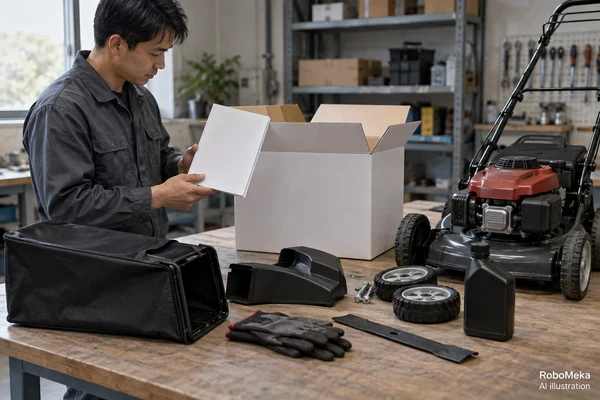
Build the customization approval matrix
The matrix should connect every requested change to a decision owner and a release condition. Not every project needs the same development process, but no material change should be hidden inside a broad “customization included” phrase. Preserve the distinction between confirmed scope and options still under discussion.
| Change area | Information to define | Approval question |
|---|---|---|
| Brand appearance | Artwork, location, finish references and versions | Does the physical sample match the agreed presentation? |
| Package contents | Machine, accessories, documents and spare items | Is the customer receiving the exact approved bundle? |
| Engineering | Changed components, interfaces or behavior | What evaluation and evidence must be renewed? |
| Market variant | Electrical version, language and identity mapping | Do all records refer to the correct destination SKU? |
| Service | Part names, diagrams and support boundaries | Can the branded product be supported without ambiguity? |
| Commercial ownership | Tooling, files, usage rights and change authorization | Who may use, alter or transfer each project asset? |
Keep contractual questions separate from assumptions about industry practice. Tooling ownership, exclusivity and design-file access depend on the agreement. Obtain suitable professional advice for significant terms. This article does not prescribe a universal legal outcome or suggest that paying a development charge automatically transfers every right.
Send your lawn mower customization brief with the base application, proposed changes, target market and launch priorities. Indicate which requests are essential and which are optional. RoboMeka can review whether the project matches its available scope before discussing a configuration or quotation.
Evaluate the changed product, not just the original
The sample plan should reflect what changed. A new accessory bundle may require a package and user-instruction review. A component change may require technical evaluation. The responsible specialists should determine the necessary work, while purchasing ensures that the plan, sample identity and approval conditions are recorded.
Do not use an unchanged reference sample to approve an altered production configuration. Keep the base sample, development sample and final approved sample distinguishable. Record which questions each one was intended to answer. A prototype that establishes appearance may not establish final performance, manufacturing consistency or market readiness.
Product application review should use the intended customer conditions within the manufacturer's instructions. Record configuration, settings and observations. If the customization affects handling or operation, assess that effect rather than assuming a familiar platform name makes the change irrelevant. Any specialized safety evaluation belongs with competent personnel and appropriate methods.
The lawn mower quality-comparison guide explains how to separate evidence gates from optional preferences. That distinction is valuable in customization: a strong brand presentation should not compensate for a technical release condition that remains unresolved.
Prepare support for the private-label identity
The customer will contact the brand they purchased, not necessarily the underlying platform supplier. Define how the branded product is identified, how support staff obtain the correct instructions and who handles technical escalation. A private-label program is incomplete if only the carton and website carry the new identity.
Map service parts to the commercial SKU and its revisions. Clarify which replacements are user-serviceable and which require trained personnel. Do not rename parts in a way that obscures their technical identity. The brand may use customer-friendly descriptions while retaining precise supplier references in controlled support records.
Maintenance information must remain technically accurate through localization. HSE's maintenance guidance emphasizes competence and safe planning in its context. A private-label team should not simplify a procedure by removing important conditions, inventing a repair shortcut or making service promises the distribution network cannot support.
For robotic mower projects, include installation and dealer support in the scope where relevant. A new app label or product color does not resolve site qualification, onboarding or service responsibilities. Those requirements should be discussed as part of the actual product program rather than treated as marketing details after production.
Plan packaging and shipment release
The package should protect and identify the approved configuration and make its contents understandable. Define the carton artwork, internal arrangement, included documents and accessories. If the dimensions or packing method change, review the implications for handling, storage and transport with the appropriate specialists.
Where batteries are involved, shipment planning needs the actual configuration and current documentation. The International Air Transport Association's battery resource provides air-transport guidance. A branded carton or revised kit can affect the information logistics personnel need; do not assume every prior shipment arrangement transfers unchanged.
Shipment inspection should use released specifications and artwork, not a prototype photograph alone. Inspectors need a clear list of identities, contents and agreed checks. Record how deviations are handled and who authorizes release. A last-minute substitution should not be accepted merely because the outward brand presentation still looks correct.
Sampling has limits. NIST's acceptance-sampling introduction describes its role in lot decisions. A passed inspection does not replace engineering approval of the customization or guarantee every unit's long-term behavior. Preserve those evidence boundaries in internal and customer-facing language.
Use a hypothetical change request
Suppose a brand wants a new color, a localized manual and a different accessory bundle on an existing mower platform. It also asks whether a larger battery can be offered later. The first three requests form the proposed launch scope; the battery option remains a separate technical and commercial question until its compatibility and evidence are reviewed.
The team creates distinct artwork and bundle records, evaluates the physical appearance sample and checks the instructions against the final contents. It does not describe the entire project as a new engineered platform. Equally, it does not assume that the future battery option is approved because the existing product already uses battery power.
The release record identifies the initial SKU and the conditions for considering the later option. This prevents an optional discussion from becoming an undocumented production substitution. The example demonstrates scope control, not a completed RoboMeka customization project or a promised development schedule.
Keep a record of deferred options
The project file should distinguish rejected changes from ideas postponed for a later release. A deferred option is not approved inventory and should not appear in a launch quotation, sample label or production instruction. Record what evidence would be needed to reconsider it. This prevents a useful early discussion from becoming an accidental commitment when commercial staff prepare the next order.
Frequently asked questions
Is private labeling the same as developing a new mower?
No. Private labeling can involve an existing approved platform with changes to presentation, while a development project may alter engineering and evidence requirements. Define the actual changes rather than relying on the label. The quotation, sample plan and release process should all refer to the same agreed scope.
Can an existing test report cover a customized product?
Only if its scope and the effect of the changes support that use. The responsible technical and conformity reviewers must determine applicability. A shared housing or model-family name is not sufficient. Record the reviewed configuration and any additional evaluation needed before reusing a claim or releasing the altered product.
Who owns customized tooling and artwork?
That depends on the agreement. Define ownership, access, permitted use, modification and transfer explicitly, with appropriate professional advice where needed. Do not assume that a development payment automatically settles every intellectual-property or tooling question. Purchasing should document the commercial terms alongside the technical project scope.
What should a brand send in its first customization brief?
Provide the intended customer, application, target market, base configuration if known, required changes and launch priorities. Add artwork references and support expectations where available. Separate essential requirements from optional ideas. This gives the supplier a practical basis for assessing fit, evidence needs and a meaningful quotation.
Should a new accessory bundle receive a new identity?
Use an identity system that keeps the exact customer package traceable. Whether that means a new SKU or a controlled variant depends on the business system, but the contents and applicable documents must be unambiguous. Warehouse, inspection and support teams should not have to infer the bundle from appearance alone.
Conclusion
Lawn mower customization succeeds when the brand promise, engineering scope, documentation and support plan remain aligned. Classify changes, preserve configuration identity and define release responsibilities before production. A controlled private-label program is more credible than broad promises that every requested variation is simple or already approved.
Prepare your private-label mower project brief, review the downloaded document and contact info@RoboMeka.com to confirm available project scope. The form does not send email automatically or establish a development commitment, price, MOQ or delivery date.