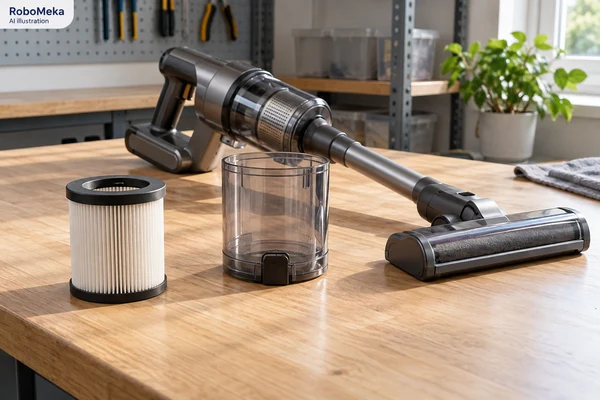
The short answer
Anti-tangle claims should be evaluated with defined hair and mixed debris, while buyers also verify safe access, end-cap cleaning, drying and replacement. Buyers should define the application, exact configuration, evidence and operating responsibilities before approval.
Introduction
The practical answer is this: Anti-tangle claims should be evaluated with defined hair and mixed debris, while buyers also verify safe access, end-cap cleaning, drying and replacement. For a B2B buyer, that answer must be attached to an exact model, configuration, destination market and operating context. A feature name or supplier statement is a useful starting point, but it is not enough to approve a product, publish an unrestricted claim or predict field performance.
This guide is intended for retailers and private-label teams sourcing wet-and-dry floor washers for pet homes, salons and high-hair environments. It is a proposed sourcing and evaluation framework, not a report of completed RoboMeka factory testing, shipment inspection or a customer installation. The example later in the article is hypothetical. Buyers should follow the supplied product manual and involve qualified technical, quality, safety, compliance or trade professionals where the decision requires them.
The decision in one paragraph
For **floor washer brush roll hair wrap**, begin with the customer task and the conditions that change the result. Indoor cleaning performance depends on the task, floor, debris, user routine and maintenance state. Buyers should test the complete configuration rather than treating one headline feature as a complete answer. The buyer should therefore describe the use case, identify the proposed product revision, request evidence that matches it and decide who owns setup, maintenance and after-sales action.
The first requirement is to include long and short hair, pet hair, fibers, wet soil, floor edges, roller ends, drive gears, suction channel and repeated cleaning cycles. Then define debris recipe, floor area, cycles, roller material, combs, end seals, access method, cleaning tools, drying time, replacement and warning behavior. This creates a decision that a supplier can answer and a distributor can later explain. It also prevents a broadly worded feature from being transferred to an unsupported environment, model, accessory, software version or customer routine.
The most important foreseeable error is that a clean roller completes one demonstration, but hair accumulates at end caps, blocks gears or requires tools and direct contact with wet debris. Put that risk into the RFQ and approval record. If it remains unresolved, state the limitation explicitly instead of converting uncertainty into promotional copy.
Who should use this guide?
This framework is useful to product managers, importers, private-label teams, distributors, installers and service organizations. Each role sees a different part of the same system. For this buyer decision, connect representative hair and debris with gear and bearing protection.
Use the cordless vacuum range, floor washer range and robot vacuum range as internal context for the related product or sourcing pathway. Document wrap location and severity before treating wash and dry workflow as resolved.
Convert the use case into buyer requirements
A good requirement names the object, condition, method and decision. It should make clear whether the line is mandatory, preferred, proposed by the supplier or still open. For this topic, the request should cover representative hair and debris, wrap location and severity, safe tool-free access, gear and bearing protection, wash and dry workflow and spare roller continuity.
| Requirement layer | What the buyer records | Why it matters |
|---|---|---|
| Customer application | User, site, task, frequency and exclusions | Prevents evidence from an unrelated use case being transferred |
| Product identity | Model, hardware, software, accessories and documents | Makes samples and reports traceable to the quotation |
| Acceptance logic | Method, condition, limit and decision owner | Turns a preference into a reviewable gate |
| Operational plan | Installation, maintenance, training and service | Shows whether the product can be supported after shipment |
| Change control | Notice trigger, impact review and re-approval | Protects the approved baseline during production and support |
Avoid writing requirements as isolated adjectives such as high quality, powerful, smart, durable or premium. Replace them with the customer outcome and a disclosed evaluation route. The record should show how safe tool-free access affects spare roller continuity.
Identify the exact product configuration
Cleaning appliances are systems rather than single components. The evaluated state can include motors, batteries, chargers, power supplies, brushes, filters, blades, tracks, sensors, apps, firmware, cloud services, accessories, labels, instructions and packaging. Here, gear and bearing protection and representative hair and debris remain the operational anchors.
For this decision, use the production roller, window, combs, gear, firmware and cleaning solution because friction and wrapping belong to the complete foot assembly. Give every sample a durable identifier and a configuration sheet. Photograph labels and supplied accessories, but do not use photographs as the only identity record. A visually similar sample can contain a different battery, controller, charger, material, algorithm or regional document set.
When the supplier offers an alternative, treat it as a proposed change. Compare its function, risk, evidence and support implications before accepting it. Apply this principle specifically to wash and dry workflow and wrap location and severity.
What evidence should the supplier provide?
Ask for an evidence pack that answers the stated requirement and matches the offered configuration. Depending on the question, it may contain drawings, controlled specifications, supplier declarations, laboratory reports, factory records, inspection reports, software release information, user instructions and application observations. Review spare roller continuity alongside safe tool-free access before approval.
Record record hair mass and length distribution, other debris, floor area, wrap location, removal time, tools, damaged fibers, gear condition and restored operation. The evidence register should also show issuer, date, model scope, method, conditions, result, deviations, reviewer and remaining action. If a document applies only to a component or another product variant, note that boundary rather than stretching the conclusion.
Experience-based observations are useful when they say who observed what, on which unit, under which conditions and with what outcome. References to factory testing, shipment inspection, product application and installation preparation should be traceable. Do not invent projects, customers, certifications, field populations or performance results. For this buyer decision, connect representative hair and debris with gear and bearing protection.
Use external sources with their boundaries intact
The BISSELL brush-roll troubleshooting shows hair and debris checks around the roller, ends, gear and housing for covered models. The BISSELL brush-roll cleaning guidance provides a model-specific power-off, removal, rinsing, drying and reassembly workflow. Together they help frame buyer questions, but they do not certify RoboMeka or prove the performance of another untested model.
Check the source owner, region, publication status, product scope and date before relying on it. Manufacturer instructions apply to the named product family and may change with software or model generation. Government guidance describes a framework, not an automatic product classification. Document wrap location and severity before treating wash and dry workflow as resolved.
Summarize official material in your own decision record and preserve the link. If the project needs a formal test, legal interpretation or compliance route, obtain the applicable current document and qualified advice. The record should show how safe tool-free access affects spare roller continuity.
Design a repeatable evaluation
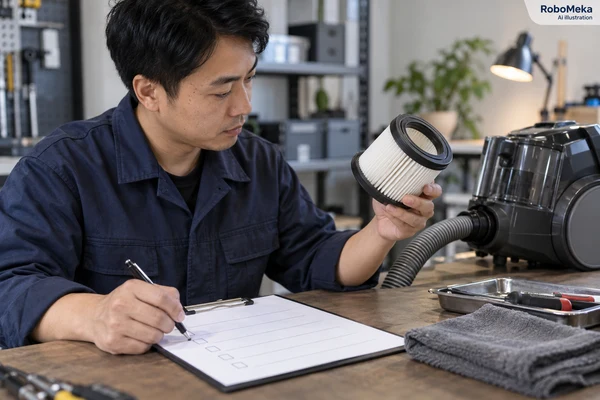
A proportionate proposed evaluation is to run repeatable mixed-debris routes, inspect before unsafe intervention, power off, follow the documented removal routine and retest rotation and water recovery. Write the protocol before seeing the result. It should identify the purpose, samples, starting condition, environment, permitted preparation, observation method, acceptance rule, stop conditions and treatment of assisted or incomplete runs.
Keep the work inside the product’s intended use. Do not bypass guards, defeat protective software, open battery cells, energize wet equipment, touch moving blades, improvise electrical connections or place swimmers near operating pool equipment. Here, gear and bearing protection and representative hair and debris remain the operational anchors.
Report actual sample counts and conditions. A small comparison may expose a design mismatch, poor instruction or maintenance burden. It does not establish a universal lifetime, field failure rate or population claim. Apply this principle specifically to wash and dry workflow and wrap location and severity.
Define acceptance before testing
For this topic, combine retained function during use with a realistic maintenance-time limit; “anti-tangle” should never mean “no maintenance required”. Separate essential pass conditions from observations and preferences. A finding may support approval, conditional approval, corrective action, rejection or “not yet determined.” That final status is important because missing evidence should not drift into artwork as if it were a pass.
| Evaluation question | Evidence expected | Decision output |
|---|---|---|
| Does the configuration match? | Model and revision record | Match, mismatch or open identity |
| Is the use case supported? | Intended-use documents and application evidence | Supported scope and explicit exclusions |
| Can the result be reproduced? | Protocol, conditions, samples and raw observations | Repeatable, conditional or inconclusive |
| Can production preserve it? | Process controls and verification records | Release, corrective action or hold |
| Can the market support it? | Installation and service plan | Ready, conditional or not ready |
Acceptance language should be no broader than the evidence. Review spare roller continuity alongside safe tool-free access before approval.
Include usability, maintenance and recovery
Ask someone who did not write the instructions to follow the permitted setup, operation, routine maintenance and basic recovery sequence. Observe hesitation and assistance rather than coaching every step. For this buyer decision, connect representative hair and debris with gear and bearing protection.
The buyer should also decide what ordinary users may do and what requires a dealer or qualified technician. Safe isolation, cleaning, drying, consumable replacement, software recovery and error escalation should match the final manual. Document wrap location and severity before treating wash and dry workflow as resolved.
Send your requirements with the destination market, application, expected order quantity and the evidence questions you need resolved. The record should show how safe tool-free access affects spare roller continuity.
Connect factory controls to the approved result
Factory testing should preserve the production baseline and catch defined process failures. It cannot substitute for every design, compliance, application or lifetime question. For this topic, the manufacturing plan should control roller fibers, end caps, bearings, comb geometry, gear alignment, window fit, suction path and protective sensing. Map each important check to incoming inspection, assembly control, end-of-line testing, audit sampling or final release.
Records should identify the lot or serial range, method, equipment status, limits, result, date and disposition of failures. A generic pass sticker is weak evidence if the buyer cannot determine what was tested. Here, gear and bearing protection and representative hair and debris remain the operational anchors.
Change control is the bridge between sample approval and later production. The parties should review roller, comb, gear, motor, solution and firmware changes for wrap, wear, noise and recovery impact. The impact review may conclude that no repeat work is necessary, but that conclusion should be reasoned and recorded. Silent changes undermine otherwise sound verification.
Plan shipment inspection separately
Shipment inspection asks whether the presented lot matches the order and release requirements. It should cover identity, quantity, appearance, accessories, regional power arrangement, documentation, packaging and selected functional observations. For this product question, inspectors should check roller rotation, window seating, included tools, instructions and visible contamination on sampled shipment units.
Sampling supports a lot decision under an agreed plan; it does not prove that every unit is perfect or predict service life. Define defect categories, sample method, acceptance criteria and reinspection rules before the inspector arrives. Apply this principle specifically to wash and dry workflow and wrap location and severity.
First-article review, in-process control, end-of-line testing and pre-shipment inspection answer different questions. Review spare roller continuity alongside safe tool-free access before approval.
Prepare installation and customer handover
Installation preparation starts before shipment. Collect site dimensions, surfaces, utilities, network details, pool conditions, grass or debris conditions, access constraints and competent-trade needs as applicable. For this buyer decision, connect representative hair and debris with gear and bearing protection.
For customer handover, show safe power-off removal, rinsing, full drying and correct reassembly while distinguishing washable and non-washable parts. Use photographs or diagrams where they prevent ambiguity, but keep them aligned with the shipped model. Record installed settings and any excluded zones or conditional uses. The service team should be able to reconstruct the starting state without relying on one person’s memory.
A clear handover prevents normal setup variation from becoming a product defect. It also protects the customer from trying unsupported recovery steps when the unit needs qualified service.
Evaluate commercial and service consequences
Unit price is only one line of the sourcing decision. For this topic, buyers should price spare rollers, tools, wear allowances, service time and support content instead of comparing only initial unit cost. Add sampling, verification, packaging, installation, training, spare parts, consumables, connected services, return logistics and unresolved dependencies to the comparison.
The after-sales workflow should define when a roller, end cap, gear or foot assembly is user-replaceable and when qualified repair is required. Define what evidence the customer or dealer should collect, what may be resolved remotely, what requires removal from service and who authorizes replacements. Promise only the support period and parts availability that the commercial system can actually deliver.
Write sales claims after reviewing the final evidence. Avoid absolutes such as maintenance-free, works everywhere, never tangles, fully safe around anyone or guaranteed for life. Document wrap location and severity before treating wash and dry workflow as resolved.
Hypothetical buyer scenario
A washer continues cleaning short pet hair but long hair packs behind one end cap. The buyer scores uninterrupted cleaning and the time required for documented cleanup as separate outcomes.
This scenario illustrates a decision method; it is not a claimed RoboMeka customer project. The team records the starting conditions, chosen configuration, observations, limitations and next action. The record should show how safe tool-free access affects spare roller continuity.
Final sourcing checklist
| Buyer check | Practical decision rule |
|---|---|
| representative hair and debris | Tie it to an exact application and configuration before accepting the offer. |
| wrap location and severity | State the evidence, responsible reviewer and unresolved boundary. |
| safe tool-free access | Evaluate it under permitted representative conditions and retain failures. |
| gear and bearing protection | Carry the approved state into factory testing and change control. |
| wash and dry workflow | Verify it again where relevant during shipment inspection and handover. |
| spare roller continuity | Assign maintenance, support and escalation before launch. |
The checklist is deliberately decision-focused. It does not prescribe one universal sample size, legal route or acceptance limit. Here, gear and bearing protection and representative hair and debris remain the operational anchors.
Frequently asked questions
What information should a buyer send with the RFQ?
Send the destination market, intended application, expected quantity, required launch window, mandatory functions, exclusions, target configuration and known service constraints. Add photographs or site data only when they are safe to share and genuinely clarify the use case. Apply this principle specifically to wash and dry workflow and wrap location and severity.
How can buyers compare two supplier offers fairly?
Normalize the configuration, accessories, software, documents, evidence scope, warranty boundary and service assumptions before comparing price. List exclusions and open dependencies separately. Review spare roller continuity alongside safe tool-free access before approval.
Does one successful sample prove production quality?
No. It shows what the identified sample did under the recorded conditions. Production confidence also requires controlled specifications, supplier and process management, factory testing, change notification and shipment inspection. For this buyer decision, connect representative hair and debris with gear and bearing protection.
When should the buyer repeat the evaluation?
Review affected evidence after changes to components, materials, supplier, tooling, factory, firmware, app, accessories, packaging, instructions, market or intended use. Repeat the work needed to address the changed risk. Document wrap location and severity before treating wash and dry workflow as resolved.
What belongs in the supplier agreement?
Include product identity, approved specifications and samples, evidence access, responsibilities, change-control triggers, nonconformity handling, warranty and service boundaries, records, software or document support, and escalation. The record should show how safe tool-free access affects spare roller continuity.
Conclusion
A credible **floor washer brush roll hair wrap** decision begins with the real customer application and ends with a supportable production configuration. Focus on representative hair and debris, wrap location and severity, safe tool-free access, gear and bearing protection, wash and dry workflow and spare roller continuity. Keep evidence boundaries visible, then preserve the approved identity through factory testing, shipment inspection, installation preparation and after-sales service.
Ask for the RoboMeka product catalog and share the market, use case, quantity range and evidence priorities so the next discussion can begin with a practical buyer brief.