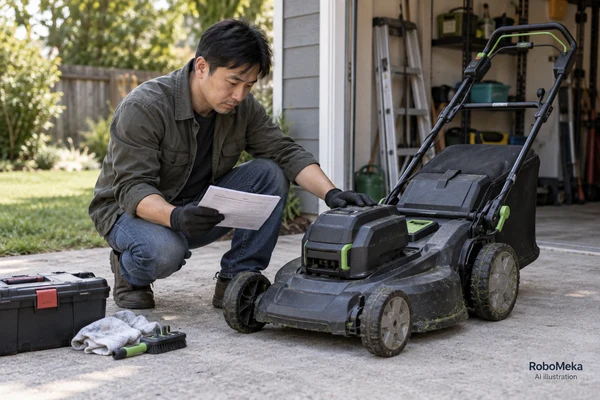
The short answer
When sourcing an electric lawn mower, make safety information and maintenance support part of product approval, not an accessory task after the order. Verify the exact electrical architecture, applicable evidence, user instructions, isolation procedure and service responsibilities. Corded and battery machines have different supply arrangements, but both contain a powered cutting system that requires model-specific precautions.
Introduction
When sourcing an electric lawn mower, make safety information and maintenance support part of product approval, not an accessory task after the order. Verify the exact electrical architecture, applicable evidence, user instructions, isolation procedure and service responsibilities. Corded and battery machines have different supply arrangements, but both contain a powered cutting system that requires model-specific precautions.
For importers, the key question is whether customers and service staff can identify the product, use it within its intended scope and respond appropriately when something is wrong. A generic safety statement or a collection of unrelated certificates does not answer that question. The documents, physical controls and supplied accessories must describe the same configuration.
This article is a procurement framework, not operating or repair instructions. It does not certify a mower, prescribe electrical installation details or replace the actual manual and competent assessment. Confirm RoboMeka’s available product scope and obtain relevant professional review for the intended market before release.
Establish the intended use and responsible reviewers
Define the customer group, sales market, machine format and expected application. A consumer walk-behind product, equipment used by a professional landscaping crew and a robotic installation can involve different requirements and support arrangements. Do not assume that evidence for one format automatically covers another.
Identify who will review product safety, conformity documents, translated instructions and service readiness. Purchasing can coordinate the process, but should not be expected to decide unfamiliar technical matters from a sales presentation. Assign questions to people with the relevant competence and authority.
The CPSC mower standards overview is a starting point for understanding that mower categories have distinct standards contexts. Applicability depends on the product and market. Buyers need current, qualified assessment rather than treating a general resource page as approval of a particular model.
Record what is outside the proposed use. If the supplier excludes certain terrain, conditions or operating arrangements, those boundaries should appear in the customer information. A purchasing team should not quietly expand the intended use to meet a sales opportunity without a corresponding technical review.
Match the evidence to the delivered configuration
Ask for documents identifying the actual model, revision and electrical version. Check that the battery, charger, controls and accessories match the proposed package where they are relevant to the assessment. Similar housings or family names do not establish that every variant is covered by the same evidence.
Understand the purpose of each document. A test report, inspection record, declaration and quality-system certificate answer different questions. NIST’s conformity-assessment introduction explains those distinctions. Do not use a document outside its scope or describe a supplier’s internal check as an independent certification.
Where reports refer to conditions or limitations, preserve them in the review record. Ask the responsible specialist whether additional evaluation is necessary for a market version or requested change. Missing information should remain an open issue rather than being replaced with optimistic wording.
Maintain a release list showing the current documents and their connection to the product. This makes later changes easier to assess and prevents an obsolete manual or report from being reused simply because it remains in a shared folder with a familiar filename.
Review corded-system instructions and external condition
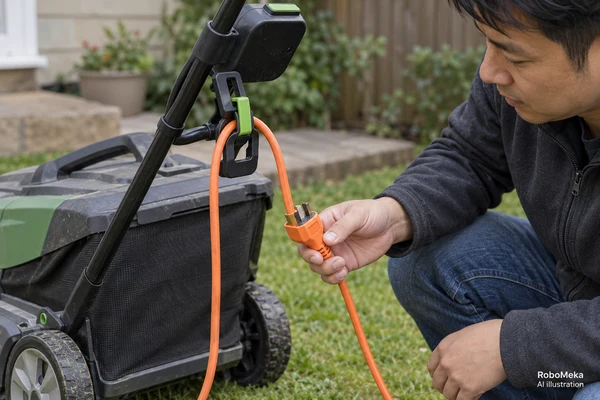
For a corded mower, review the manufacturer’s requirements for supply, permitted cable arrangements and handling. Do not invent universal conductor sizes, cable lengths or protective-device prescriptions in a purchasing guide. Those details must come from the applicable instructions and local requirements, with qualified advice where needed.
Check that the sample’s external features correspond to the instructions: connectors, cord-retention arrangements, controls and labels should be identifiable. Inspection should remain within a safe, approved scope. Do not energize damaged equipment or perform improvised electrical tests to see whether a questionable component still works.
Ask how customers should respond to visible damage or abnormal operation and how the service team will handle the report. The instructions should define when use must stop and how to obtain assistance. Support staff should not recommend temporary repairs or bypasses to keep the customer mowing.
Toro’s residential support resources illustrate the value of model-related operating guidance. They are not a substitute for the selected product’s own manual. Ensure the supplier provides instructions that are accurate for the actual electrical version and accessories being sold.
Review battery-system isolation and charging information
For battery equipment, verify the approved pack and charger combinations and the instructions for preventing unintended operation during permitted maintenance. Do not assume that one visible switch alone defines the complete isolation procedure. Follow the manufacturer’s sequence and confirm any uncertainty with competent personnel.
The manual should explain charging conditions, storage requirements, indicators and abnormal-condition escalation for the actual system. Avoid generic advice that assumes all battery types and designs share identical limits. The supplied charger and regional version must match the reviewed documentation.
Define how a customer reports a damaged, overheated or otherwise suspect pack. The support process should direct them to appropriate assistance without encouraging continued use, internal repair or improvised disposal. Qualified personnel should determine the product-specific response and applicable local handling requirements.
Keep battery transport questions separate from ordinary use instructions. IATA’s battery resources concern air-transport planning; they do not make every damaged battery suitable for return shipment through the original route. Logistics specialists must assess the actual condition and proposed movement.
Check controls through an approved evaluation process
Buyers should understand the intended starting, stopping and user-presence controls without creating their own hazardous test procedure. Ask the supplier for the relevant evidence and demonstration method, and have competent reviewers assess the physical sample within an approved scope. Never defeat a protective feature to make a comparison easier.
Instructions and labels should use consistent terminology. A customer should not have to guess whether a symbol in the manual refers to the lever on the sample or to an older version. Translation review should include technical meaning, not only fluent language.
If a control behaves unexpectedly during evaluation, stop the activity as required by the instructions and investigate. Record the configuration and circumstances. Do not generalize from an unexplained event, but do not dismiss it as normal without a responsible technical explanation either.
For workplace applications, OSHA’s landscaping hazard resources provide broader context on machinery and related exposures. Product review should connect with the customer’s work environment and training needs while remaining clear that a general article does not complete a site-specific risk assessment.
Use a safety-and-support release worksheet
The worksheet below is designed to expose missing responsibilities. It is not a complete compliance checklist and should not be presented as certification. Adapt it with the responsible technical and market specialists for the actual product.
| Review item | Evidence or record | Question before release |
|---|---|---|
| Intended use | Approved application and exclusions | Are sales claims within that scope? |
| Product identity | Model, revision and electrical version | Do documents match the sample and order? |
| Controls | Applicable assessment and instructions | Can users understand normal operation? |
| Isolation | Model-specific maintenance procedure | Is unintended operation addressed? |
| Charging or supply | Approved components and conditions | Does the package support the instructions? |
| Cleaning | Permitted methods and restrictions | Are customer instructions unambiguous? |
| Service boundary | User tasks and competent-service tasks | Is the support network prepared? |
| Abnormal condition | Stop-use and escalation process | Can staff direct the customer appropriately? |
| Change control | Reviewer and release authority | Will later substitutions be assessed? |
Assign an owner to every unresolved item. A product should not be described internally as fully approved when critical records are still waiting for review. If a conditional decision is necessary, state exactly what it permits and what remains prohibited until the condition is closed.
Send your electric mower support requirements with the market, user group and service model. The downloadable brief helps identify the scope of a supplier discussion; it is not a safety approval or a confirmation that a particular electric mower is available from RoboMeka.
Make maintenance information usable in practice
Ask for the routine tasks, intervals or condition-based checks specified by the manufacturer. Some instructions may depend on use and environment rather than a single universal calendar interval. Do not replace that guidance with a simplified schedule unless the responsible product team has reviewed it.
Cleaning deserves particular attention because an electric product may have restrictions that customers do not anticipate. Use the manual’s permitted methods and limits. A water-resistant claim for one part or condition should not be interpreted as permission to wash every surface or use a method the manufacturer has not approved.
HSE’s machinery-maintenance guidance emphasizes planning, safe isolation and competence. Apply those principles when defining service responsibilities, while relying on the mower’s own instructions for specific tasks. The purchasing guide should not become an improvised workshop manual.
Review whether the necessary parts and information will be available locally. A service commitment is difficult to fulfill if staff cannot identify the blade, control or charger revision. Obtain the applicable parts references and a technical escalation contact before the first customer needs them.
Prepare a support workflow for abnormal behavior
Create a concise intake process that records the model, serial or lot identity where available, package configuration and the customer’s description. Request only the information needed for diagnosis and protect personal data appropriately. Do not ask customers to reproduce a potentially unsafe event for a video.
The first support response should follow the manufacturer’s stop-use and escalation guidance where relevant. Staff need to know what they may advise and when the issue requires competent technical review. A desire to resolve an inquiry quickly should not lead to unauthorized troubleshooting or repair instructions.
Distinguish a missing accessory, an application mismatch and a suspected fault without deciding prematurely. For example, an unexpected interruption may require information about the configuration and conditions. The support team should gather that information safely and route it to the appropriate reviewer.
Document the resolution and feed relevant findings back to the supplier. If evidence indicates a broader product issue, follow the organization’s applicable escalation and corrective-action procedures with qualified advice. This guide does not prescribe legal reporting obligations or replace the responsible business’s market-specific duties.
Protect the approved configuration through production
Changes to a plug, cable, battery, charger, controller, enclosure or instruction set can affect the reviewed product. Require the supplier to notify the responsible buyer team before implementing changes that fall within the agreed control scope. A cosmetically identical sample may not be technically identical.
Factory testing should have defined methods and purposes. Ask which checks support production consistency and which product claims require separate qualification. A brief end-of-line function check should not be described as proof of every safety or durability characteristic.
Shipment inspection can confirm agreed identities, contents and observations within its scope. NIST’s acceptance-sampling guidance explains why sampling supports lot decisions without guaranteeing every unit. Keep inspection release separate from unresolved engineering or document questions.
Archive the final release record with the purchase order and package information. Service teams should be able to identify which version reached a customer. Traceability becomes especially important when a later revision changes a control, charger or maintenance instruction while retaining a familiar commercial name.
Test the information system before launch
Run a hypothetical support scenario with the actual documents. Ask a staff member to identify the product, locate the permitted cleaning instructions and find the correct escalation route for an abnormal charger indication. This tests documentation usability without energizing a questionable product or simulating a dangerous fault.
Review where the staff member hesitates. An unclear model label, missing translation or outdated parts reference is a concrete improvement opportunity. Correct those gaps before launch rather than assuming that experienced service personnel will work around them indefinitely.
The rehearsal is not a safety certification or a measured customer study. It is a practical check that the approved information can be used by the people who need it. Combined with appropriate technical evidence, it helps turn a procurement file into a functioning support system.
Frequently asked questions
Is a general electrical certificate enough to approve a mower?
No. Review the document’s scope, identified configuration and relevance to the intended market with competent specialists. The mower, energy components, controls and instructions must be considered as applicable. A document for another model or a different assessment purpose should not be treated as universal product approval.
Can the same manual cover corded and battery models?
It can only be useful if the manufacturer has clearly and accurately distinguished the applicable instructions for each configuration. Buyers should check that users cannot confuse supply, isolation or charging procedures. A shared booklet is not acceptable merely because the products have similar decks or controls.
Should importers publish their own repair instructions?
Only through an appropriately reviewed process using the manufacturer’s model-specific information and authorized service scope. Do not improvise electrical or cutting-system procedures to fill a documentation gap. Separate routine user care from tasks requiring competent personnel, and keep revisions aligned with the products actually supplied.
What should support staff do with a damaged battery report?
Follow the approved stop-use and escalation process for the actual product and seek qualified guidance for handling or transport. Do not advise internal repair, continued use or an ordinary return shipment without assessment. Collect the relevant identity and circumstances without asking the customer to recreate a hazardous event.
Does shipment inspection replace product safety review?
No. Shipment inspection addresses agreed lot-release checks, while product assessment addresses the design, configuration and applicable requirements. Sampling also has limits. A passed inspection cannot resolve a missing technical review, mismatched document or unapproved component change that should have been addressed before shipment release.
Conclusion
Electric mower safety and maintenance procurement requires matching evidence, clear instructions and a prepared service organization. Review the exact supply architecture, preserve configuration identity and give unresolved issues a responsible owner. A supportable product is one whose approved information remains usable from purchase approval through customer service.
Prepare a safety-and-service sourcing brief, review the downloaded document and email it to info@RoboMeka.com. The form does not send the inquiry automatically, certify a product or establish a technical or commercial commitment.